


Perimenopause Rage: Hormones, Stress, Sleep and Mood
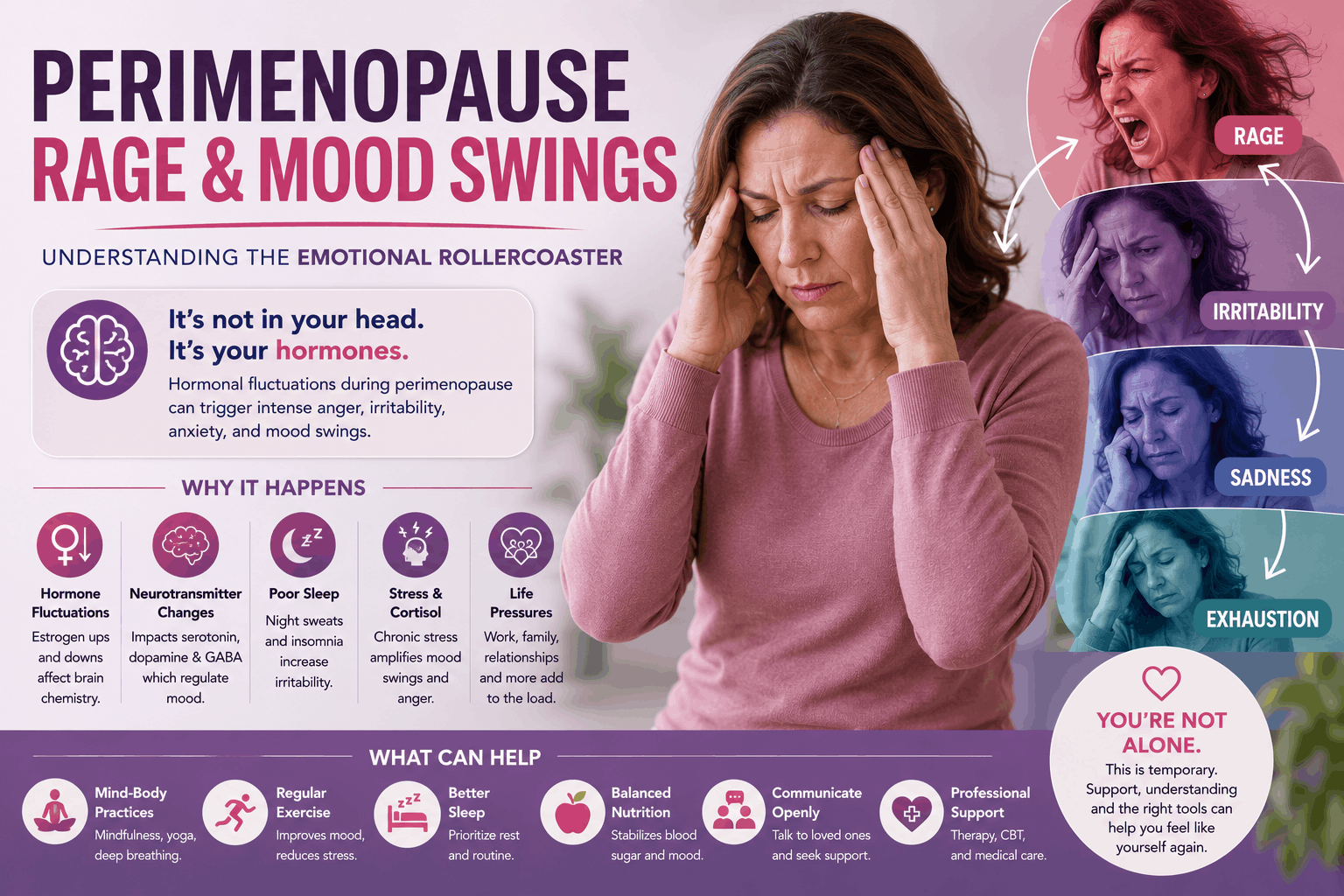
One minute, you feel completely fine. The next, something small suddenly pushes you over the edge. A comment from your partner, a noisy kitchen, traffic, an unanswered message, or one more demand at the end of an exhausting day can trigger an emotional reaction that feels far bigger than the situation deserves.
Then comes the guilt.
You may wonder, Why am I reacting like this? This isn't who I am.
If this sounds familiar, you may be experiencing perimenopause rage, intense irritability, or sudden mood swings during perimenopause.
The important thing to understand is that these emotional changes are not simply a matter of having a "short temper." Hormonal fluctuations during perimenopause can affect mood, sleep, stress responses, and emotional regulation. The American College of Obstetricians and Gynecologists (ACOG) recognizes mood changes, irritability, anxiety, and depressive symptoms as possible experiences during the menopause transition.
That doesn't mean every episode of anger is caused by hormones. Life stress, poor sleep, anxiety, depression, relationship difficulties, and other health factors can all contribute.
But if your emotional responses seem noticeably different from the person you used to be, perimenopause may be part of the picture.
What Does Perimenopause Rage Actually Feel Like?
Perimenopause rage doesn't look exactly the same for everyone.
For some women, it feels like sudden explosive anger. For others, it's a constant sense of irritation that eventually boils over.
Common experiences include:
- Becoming angry over things that previously wouldn't bother you
- Feeling like your patience has disappeared
- Snapping at your partner, children, friends, or coworkers
- Experiencing sudden crying after an angry episode
- Feeling physically overwhelmed by anger
- Having difficulty calming down once you're triggered
- Feeling constantly "on edge"
- Experiencing resentment or frustration more frequently
- Feeling guilty or confused after an outburst
- Not recognizing your emotional reactions
The frustrating part is that these episodes can sometimes seem to appear without an obvious trigger.
However, there may be several things happening simultaneously: fluctuating hormones, disrupted sleep, physical symptoms, stress, and changes in the brain's emotional regulation systems.
Why Does Perimenopause Cause Mood Swings and Rage?
Perimenopause isn't simply a period when estrogen gradually disappears.
Hormone levels can fluctuate significantly during the transition, and those fluctuations can affect the brain as well as the reproductive system. ACOG notes that hormone changes during perimenopause can affect emotions, while physical symptoms and life stress can further intensify mood changes.
Estrogen and the Brain
Estrogen has effects throughout the brain and influences systems involved in mood, cognition, sleep, and emotional regulation.
During perimenopause, estrogen levels can rise and fall unpredictably.
For some women, these fluctuations may contribute to:
- Irritability
- Anxiety
- Tearfulness
- Mood instability
- Difficulty concentrating
- Changes in emotional resilience
This helps explain why someone who has always considered herself calm and patient may suddenly feel much more reactive.
It isn't necessarily that your personality has changed.
Your brain and body are responding to a changing hormonal environment.
Serotonin, Dopamine and Emotional Regulation
Hormonal changes can also interact with neurotransmitter systems involved in mood and behavior.
Estrogen interacts with serotonin pathways, which are involved in mood regulation. Changes in estrogen may therefore contribute to emotional symptoms in susceptible women.
Other brain signaling systems involved in motivation, reward, stress, and emotional regulation can also be affected.
This doesn't mean that perimenopause directly "causes low serotonin" in every woman. The biology is considerably more complicated than that.
But it does help explain why mood changes during perimenopause can feel physical rather than simply psychological.
The Sleep-Rage Connection
Here's an important piece of the puzzle that is easy to overlook:
Poor sleep can make emotional regulation much harder.
Perimenopause can interfere with sleep through:
- Night sweats
- Hot flashes
- Anxiety
- Changes in sleep patterns
- Difficulty falling asleep
- Waking during the night
- Early morning awakening
And sleep deprivation itself can make you more irritable and less able to regulate emotions.
ACOG notes that insufficient or poor-quality sleep can make it harder to control emotions and behavior and can contribute to mental health difficulties.
This can create a cycle:
Hormonal changes → poor sleep → exhaustion → lower emotional resilience → irritability → stress → even worse sleep.
Breaking that cycle can be an important part of managing perimenopause rage.
Stress Can Turn Up the Volume
Perimenopause rarely happens in isolation.
For many women, the menopause transition occurs during a particularly demanding period of life.
You may be managing:
- Career responsibilities
- Children or teenagers
- Aging parents
- Relationship changes
- Financial pressures
- Household responsibilities
- Health concerns
- Changing body image
- Your own changing identity
Add fluctuating hormones and poor sleep to that list, and your emotional bandwidth can become much smaller.
A situation you would normally handle calmly may suddenly feel like the final straw.
ACOG similarly highlights the combination of hormonal changes, physical symptoms, fatigue, and midlife life pressures as contributors to mental health challenges during perimenopause.
Why Small Things Suddenly Feel Huge
One of the most frustrating experiences is disproportionate anger.
You know logically that the situation isn't that serious.
But your emotional response doesn't seem to match your logical understanding.
For example:
Your partner leaves dishes in the sink.
Normally, you might sigh and move on.
During a particularly difficult perimenopause day, it may feel like evidence that you are carrying the entire household alone and nobody appreciates you.
The dishes aren't necessarily the real issue.
They may simply be the trigger that releases accumulated stress, exhaustion, resentment, and hormonal vulnerability.
Learning to recognize this distinction can be incredibly helpful.
What Actually Helps Perimenopause Rage?
There isn't one solution that works for everyone.
The best approach usually combines lifestyle changes, psychological support, and medical treatment when appropriate.
1. Prioritize Sleep
If you're exhausted, emotional regulation becomes much harder.
Start with the basics:
- Keep your bedroom cool
- Maintain consistent sleep and wake times
- Reduce caffeine later in the day
- Limit alcohol if it disrupts your sleep
- Address night sweats and hot flashes
- Create a relaxing bedtime routine
- Avoid stimulating screens close to bedtime
If insomnia continues, speak with a healthcare professional. Menopause-specific cognitive behavioral therapy can be considered for sleep problems associated with menopause.
2. Move Your Body Regularly
Exercise isn't simply about weight management during menopause.
Regular physical activity can support:
- Mood
- Sleep
- Cardiovascular health
- Strength
- Bone health
- Stress management
- Overall quality of life
You don't have to start with an intense workout.
A 20-minute walk, strength-training session, yoga class, cycling session, or other activity you genuinely enjoy can be a good starting point.
Consistency matters more than perfection.
3. Try Mindfulness Before You React
Mindfulness isn't about never becoming angry.
It's about creating a small gap between feeling an emotion and acting on it.
When you feel the familiar wave of anger building:
Stop.
Take a few slow breaths.
Notice what you're feeling.
Then ask:
"What am I actually angry about?"
Sometimes the answer is the immediate situation.
Sometimes it's exhaustion.
Sometimes it's feeling unsupported.
Sometimes it's accumulated stress.
That brief pause can prevent an emotional reaction from becoming an action you later regret.
4. Consider Cognitive Behavioral Therapy
Cognitive behavioral therapy (CBT) can help you recognize thought patterns, identify triggers, develop coping strategies, and respond differently to difficult situations.
NICE recommends considering menopause-specific CBT as an option for certain menopause-associated symptoms, including depressive symptoms associated with vasomotor symptoms and sleep difficulties.
CBT can be particularly useful when anger is accompanied by:
- Anxiety
- Persistent negative thoughts
- Sleep problems
- Relationship difficulties
- Low mood
- Feeling overwhelmed
It doesn't mean your symptoms are "all in your head."
Instead, therapy gives you practical tools for dealing with the emotional and psychological effects of a major biological transition.
5. Pay Attention to Nutrition
Food isn't a cure for perimenopause rage, but your overall eating pattern can support energy, metabolic health, and general wellbeing.
Build meals around:
- Protein
- Vegetables
- Fruits
- Whole grains
- Legumes
- Nuts and seeds
- Healthy fats
- Adequate hydration
It can also be useful to notice whether caffeine or alcohol makes your anxiety, sleep, or irritability worse.
You don't need a perfect menopause diet.
Focus on a sustainable eating pattern that supports your overall health.
6. Manage Your Stress Load
Sometimes the solution isn't simply learning to tolerate more stress.
Sometimes you need less stress.
Consider where you can:
- Say no
- Delegate responsibilities
- Ask for help
- Set boundaries
- Reduce unnecessary commitments
- Take regular breaks
- Spend time outside
- Practice breathing exercises
- Journal
- Meditate
- Talk to someone you trust
Your emotional capacity is not unlimited.
And during perimenopause, you may need to protect it more intentionally.
7. Discuss Medical Treatment With Your Healthcare Provider
If mood symptoms are significantly affecting your life, you don't have to manage them alone.
Depending on your symptoms and medical history, a healthcare professional may discuss options such as:
- Menopausal hormone therapy
- Antidepressant medications
- Other non-hormonal treatments
- Treatment for sleep problems
- Psychotherapy or CBT
- Treatment for other underlying conditions
Hormone therapy can help with several menopause symptoms, particularly vasomotor symptoms, but it isn't appropriate for everyone and shouldn't be viewed as a universal treatment for anger or depression. Treatment decisions should be individualized based on symptoms, age, health history, risks, and preferences.
NICE also emphasizes individualized care and shared decision-making when discussing menopause treatments.
What To Do When Rage Hits in the Moment
You don't always have time to work on the underlying causes when you're already furious.
You need something you can use right now.
Try this simple sequence.
Step 1: Stop
Don't send the message.
Don't make the phone call.
Don't continue the argument.
Step 2: Create physical distance
If possible, leave the room.
Go outside.
Walk around the block.
Sit somewhere quiet.
Step 3: Slow your breathing
Take several slow breaths, focusing on a longer exhale.
Step 4: Name the emotion
Try:
"I'm extremely angry right now."
Naming an emotion can help create distance between the feeling and the behavior.
Step 5: Delay the conversation
You can say:
"I'm too angry to have this conversation properly right now. I need some time and I'll come back to it."
That's not avoidance.
That's emotional regulation.
How to Talk to Your Partner About Perimenopause Rage
Your partner may not understand why your reactions have changed.
And you may not fully understand them either.
Instead of trying to explain everything during an argument, choose a calm moment.
You could say:
"I'm noticing changes in my mood that I didn't have before. I'm working on understanding what's happening, but I need patience while I figure it out."
You can also be specific about what would help.
For example:
"When I become overwhelmed, please give me 20 minutes rather than continuing the argument."
or:
"I'm not asking you to excuse everything I say. I'm asking you to understand that I'm working on a real health issue."
The goal isn't to blame hormones for hurtful behavior.
The goal is to understand the underlying problem and take responsibility for managing it.
When Perimenopause Rage May Be Something More
Not every mood change should automatically be attributed to menopause.
It's particularly important to seek professional help if you experience:
- Persistent sadness
- Loss of interest in things you normally enjoy
- Severe anxiety
- Frequent uncontrollable anger
- Major changes in sleep or appetite
- Difficulty functioning at work
- Serious relationship disruption
- Feeling hopeless or worthless
- Thoughts of harming yourself or someone else
Perimenopause can overlap with depression and anxiety, and these conditions deserve proper assessment and treatment. The Menopause Society notes that women can be particularly vulnerable to depression during the perimenopause years.
If you have thoughts of harming yourself or someone else, seek urgent professional help rather than trying to manage the situation on your own.
You're Not Becoming a Different Person
Perhaps the most important thing to remember is this:
You are not your worst moment.
Perimenopause can change how your body responds to stress, sleep disruption, hormonal fluctuations, and everyday demands.
That doesn't mean every angry reaction should be excused.
It means there may be a biological and psychological explanation for why your emotional responses feel different right now.
And explanations create opportunities for solutions.
You can learn your triggers.
You can improve your sleep.
You can move your body.
You can develop emotional regulation skills.
You can seek therapy.
You can discuss treatment options with your healthcare provider.
You can ask the people around you for support.
Most importantly, you don't have to feel ashamed about needing help.
A Simple Perimenopause Mood Reset Plan
Start small.
This week:
Track your triggers: Write down when anger happens, what happened beforehand, how much you slept, and where you are in your menstrual cycle if you still have periods.
Protect your sleep: Make your bedroom cooler and establish a consistent bedtime.
Move daily: Even a 10 to 20-minute walk counts.
Practice the pause: When anger rises, step away before responding.
Talk to someone: Tell a trusted person what you're experiencing.
Book an appointment: If your symptoms are persistent or disruptive, discuss them with an ob-gyn or mental health professional.
You don't need to change everything at once.
The Bottom Line
Perimenopause rage is real, but it isn't a character flaw.
Hormonal fluctuations can contribute to mood instability, while sleep disruption, stress, physical symptoms, and life circumstances can make emotional reactions more intense.
The answer isn't to simply tell yourself to "calm down."
It's to understand what's happening and build a strategy around it.
Better sleep, regular movement, stress management, CBT, supportive relationships, and appropriate medical care can all have a place in managing mood symptoms during the menopause transition.
You don't have to become the calmest person in the room.
You simply deserve to feel more in control of your own emotions again.

 Arabic
 French
 Spanish
 Portuguese
 Deutsch
 Turkish
 Dutch
Dutch
 Italiano
 Russian
 Romaian
 Portuguese (Brazil)
 Greek
Greek