• The death of single-purpose hardware?

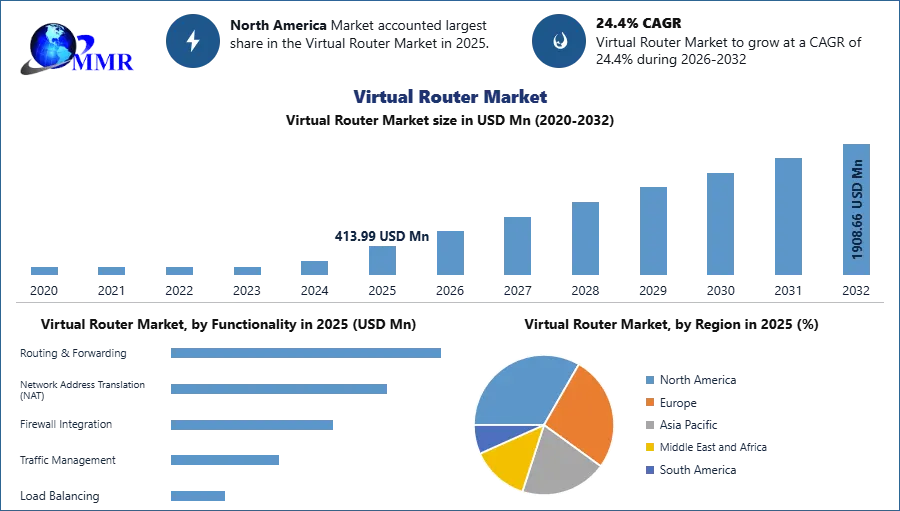
    The global Virtual Router Market is projected to grow from $413.99M in 2025 to $1,908.66M by 2032, expanding at an aggressive 24.4% CAGR!

    Legacy hardware routers can no longer keep up with dynamic multi-cloud workloads, hybrid workforces, and 5G network slicing. By decoupling packet routing from proprietary silicon and running on agile x86/COTS servers and containerized microservices (CNFs), enterprises are:
    Slashing CapEx & hardware refresh costs

    Provisioning branch routing in minutes via automated CI/CD & IaC

    Achieving line-rate 100+ Gbps packet throughput using DPDK & VPP

    Explore the strategic industry report: https://www.maximizemarketresearch.com/market-report/virtual-router-market/14461/

    Download the free brochure: https://www.maximizemarketresearch.com/request-sample/14461/

    #VirtualRouter #Networking #CloudComputing #SDWAN #5G #EnterpriseIT #MarketResearch
    🚀 The death of single-purpose hardware? The global Virtual Router Market is projected to grow from $413.99M in 2025 to $1,908.66M by 2032, expanding at an aggressive 24.4% CAGR! Legacy hardware routers can no longer keep up with dynamic multi-cloud workloads, hybrid workforces, and 5G network slicing. By decoupling packet routing from proprietary silicon and running on agile x86/COTS servers and containerized microservices (CNFs), enterprises are: 🔹 Slashing CapEx & hardware refresh costs 🔹 Provisioning branch routing in minutes via automated CI/CD & IaC 🔹 Achieving line-rate 100+ Gbps packet throughput using DPDK & VPP 👉 Explore the strategic industry report: https://www.maximizemarketresearch.com/market-report/virtual-router-market/14461/ 📥 Download the free brochure: https://www.maximizemarketresearch.com/request-sample/14461/ #VirtualRouter #Networking #CloudComputing #SDWAN #5G #EnterpriseIT #MarketResearch
    WWW.MAXIMIZEMARKETRESEARCH.COM
    Virtual Router Market - Global Industry Analysis and Forecast (2026-2032)
    Virtual Router Market size is expected to reach nearly USD 1908.66 Mn by 2032 with the CAGR of 24.4% during the forecast period.
    0 Commentaires 0 Parts 873 Vue 0 Aperçu
  • Chatbot App Development Services for AI-Powered Applications
    Vegavid provides chatbot app development services for businesses that want to add intelligent conversational capabilities to their applications. We build solutions for customer support, virtual assistance, engagement, and automation, helping organizations create responsive apps that deliver personalized interactions and improved digital experiences.

    Visit: https://vegavid.com/chatbot-development-company
    Chatbot App Development Services for AI-Powered Applications Vegavid provides chatbot app development services for businesses that want to add intelligent conversational capabilities to their applications. We build solutions for customer support, virtual assistance, engagement, and automation, helping organizations create responsive apps that deliver personalized interactions and improved digital experiences. Visit: https://vegavid.com/chatbot-development-company
    VEGAVID.COM
    AI Chatbot Development Company for Smarter Conversations
    Transform customer experiences with AI chatbot solutions. We build custom chatbots for support, sales, automation, and seamless user engagement.
    0 Commentaires 0 Parts 186 Vue 0 Aperçu
  • Custom AI: Why Vegavid Is a Leading AI Agent Development Company in Canada
    Vegavid is a leading AI Agent Development Company in Canada, building customized intelligent agents for businesses across industries. From process automation and virtual assistants to enterprise workflows, Vegavid develops scalable AI solutions that improve productivity, optimize operations, and support smarter business decision-making.
    Visit: https://vegavid.com/ca/ai-agent-development-company
    Custom AI: Why Vegavid Is a Leading AI Agent Development Company in Canada Vegavid is a leading AI Agent Development Company in Canada, building customized intelligent agents for businesses across industries. From process automation and virtual assistants to enterprise workflows, Vegavid develops scalable AI solutions that improve productivity, optimize operations, and support smarter business decision-making. Visit: https://vegavid.com/ca/ai-agent-development-company
    VEGAVID.COM
    Enterprise AI Agent Development Services in Canada | Custom Autonomous Agents
    Leading AI agent development services in Canada. We build autonomous AI agents and PIPEDA-compliant LLM integrations for enterprise growth. Request a free discovery call.
    0 Commentaires 0 Parts 456 Vue 0 Aperçu
  • Education AI: Top AI Voice Agent Use Cases in Education

    Discover the top AI voice agent use cases in education, from student support and admissions assistance to virtual tutoring, course guidance, and administrative automation that improve learning experiences and institutional efficiency.

    Website URL:
    https://vegavid.com/blog/top-ai-voice-agent-use-cases-in-education
    Education AI: Top AI Voice Agent Use Cases in Education Discover the top AI voice agent use cases in education, from student support and admissions assistance to virtual tutoring, course guidance, and administrative automation that improve learning experiences and institutional efficiency. Website URL: https://vegavid.com/blog/top-ai-voice-agent-use-cases-in-education
    VEGAVID.COM
    Top 10 AI Voice Agent Use Cases in Education | Vegavid
    Discover how AI voice agents are transforming education with smarter communication and automation solutions from vegavid.
    0 Commentaires 0 Parts 427 Vue 0 Aperçu
  • In the leading virtual-first world, your internet site is often the very first interaction that prospective customers have with your commercial enterprise.

    Read More: https://foduu.godaddysites.com/f/how-to-choose-the-best-web-design-company-for-your-business-2026
    In the leading virtual-first world, your internet site is often the very first interaction that prospective customers have with your commercial enterprise. Read More: https://foduu.godaddysites.com/f/how-to-choose-the-best-web-design-company-for-your-business-2026
    0 Commentaires 0 Parts 579 Vue 0 Aperçu
  • How Anunta's Managed IT Services Deliver 99.9% Uptime for Enterprise Workspaces

    For enterprises running DaaS environments and cloud-hosted virtual desktops, downtime is not an option. Anunta's managed IT services are designed around SLA-backed availability commitments — delivering 99.9% uptime for desktop virtualisation environments, endpoint services, and cloud infrastructure. Anunta achieves this through proactive monitoring, automated fault detection and remediation, redundant architecture design, and rapid incident response by dedicated on-call engineering teams. The managed services model includes defined SLOs for incident resolution, change management, and service request fulfilment — with full transparency via real-time dashboards and monthly service reporting. For enterprises that have deployed enterprise VDI solutions or hybrid workspace virtualisation at scale, Anunta's managed services act as the operational backbone — keeping the digital workplace running smoothly while the internal IT team focuses on strategic business initiatives. Explore Anunta's SLA-backed managed services commitments.

    Visit Us: https://www.anunta.com/solutions/management/
    How Anunta's Managed IT Services Deliver 99.9% Uptime for Enterprise Workspaces For enterprises running DaaS environments and cloud-hosted virtual desktops, downtime is not an option. Anunta's managed IT services are designed around SLA-backed availability commitments — delivering 99.9% uptime for desktop virtualisation environments, endpoint services, and cloud infrastructure. Anunta achieves this through proactive monitoring, automated fault detection and remediation, redundant architecture design, and rapid incident response by dedicated on-call engineering teams. The managed services model includes defined SLOs for incident resolution, change management, and service request fulfilment — with full transparency via real-time dashboards and monthly service reporting. For enterprises that have deployed enterprise VDI solutions or hybrid workspace virtualisation at scale, Anunta's managed services act as the operational backbone — keeping the digital workplace running smoothly while the internal IT team focuses on strategic business initiatives. Explore Anunta's SLA-backed managed services commitments. Visit Us: https://www.anunta.com/solutions/management/
    WWW.ANUNTA.COM
    Management
    Optimize your cloud environment with Anunta’s cloud management services. Get expert cloud managed solutions for secure, efficient operations.
    0 Commentaires 0 Parts 1KB Vue 0 Aperçu
  • Virtual Desktop Infrastructure: Comparing Citrix, VMware Horizon & Azure AVD for Enterprise

    Selecting the right Virtual Desktop Infrastructure (VDI) platform is one of the most consequential decisions an enterprise IT architect will make — and the market has never been more complex. Citrix Virtual Apps and Desktops, VMware Horizon, Microsoft Azure Virtual Desktop (AVD), and Nutanix Frame each offer distinct advantages depending on your cloud strategy, existing infrastructure, application portfolio, and budget. Anunta's enterprise VDI solutions are platform-agnostic — supporting all leading VDI platforms as well as delivering Anunta's own Desktop as a Service (DaaS) managed service on top of them. This comparison covers deployment models, licensing, performance benchmarks, security capabilities, management tooling, and total cost of ownership for each VDI platform. It also explores how DaaS — as a managed wrapper around any VDI platform — simplifies operations and accelerates digital workspace transformation without requiring a platform rip-and-replace.

    Visit Us: https://www.anunta.com/solutions/daas/
    Virtual Desktop Infrastructure: Comparing Citrix, VMware Horizon & Azure AVD for Enterprise Selecting the right Virtual Desktop Infrastructure (VDI) platform is one of the most consequential decisions an enterprise IT architect will make — and the market has never been more complex. Citrix Virtual Apps and Desktops, VMware Horizon, Microsoft Azure Virtual Desktop (AVD), and Nutanix Frame each offer distinct advantages depending on your cloud strategy, existing infrastructure, application portfolio, and budget. Anunta's enterprise VDI solutions are platform-agnostic — supporting all leading VDI platforms as well as delivering Anunta's own Desktop as a Service (DaaS) managed service on top of them. This comparison covers deployment models, licensing, performance benchmarks, security capabilities, management tooling, and total cost of ownership for each VDI platform. It also explores how DaaS — as a managed wrapper around any VDI platform — simplifies operations and accelerates digital workspace transformation without requiring a platform rip-and-replace. Visit Us: https://www.anunta.com/solutions/daas/
    0 Commentaires 0 Parts 1KB Vue 0 Aperçu
  • In today's fast-changing virtual world, your website is usually the first way your potential customers come in contact with your brand.

    Read More: https://foduu.mystrikingly.com/blog/how-professional-web-design-impacts-branding-traffic-and-sales
    In today's fast-changing virtual world, your website is usually the first way your potential customers come in contact with your brand. Read More: https://foduu.mystrikingly.com/blog/how-professional-web-design-impacts-branding-traffic-and-sales
    FODUU.MYSTRIKINGLY.COM
    How Professional Web Design Impacts Branding, Traffic, and Sales
    In today's fast-changing virtual world, your website is usually the first way your potential customers come in contact with your brand. Whether you are a new startup, a growing or
    0 Commentaires 0 Parts 371 Vue 0 Aperçu
  • https://m2squareconsultancy.com/reports/virtual-companion-care-market
    https://m2squareconsultancy.com/reports/virtual-companion-care-market
    M2SQUARECONSULTANCY.COM
    Virtual Companion Care Market Size, Growth, Forecasts to 2033
    Global Virtual Companion Care Market is expected to Grow from USD 2.8 Billion in 2024 to USD 5.0 Billion by 2033, registering steady growth at a 7.7%...
    0 Commentaires 0 Parts 241 Vue 0 Aperçu
  • Memory IC Market Amplifies Growth: Data-Driven Technology Fuels Global Demand
    Market Definition & Overview
    The Memory IC Market consists of semiconductor memory integrated circuits — key components used for storing digital information in electronic systems. Memory ICs include both volatile memory (such as DRAM and SRAM) that temporarily holds data during device operation, and non-volatile memory (such as NAND flash, NOR flash, embedded storage, eMMC and UFS) that retains data even when power is removed.

    Memory ICs form the backbone of modern digital technology. They are integral to computing devices, data centers, mobile phones, IoT devices, automotive electronics, consumer gadgets, industrial systems and virtually any system requiring data storage or processing capability. With data volumes expanding exponentially and digital experiences becoming more immersive, the market for memory ICs remains critical and rapidly expanding.

    Request Free Sample Report:https://www.stellarmr.com/report/req_sample/Memory-IC-Market/1994

    Market Growth Drivers & Opportunities
    • Exploding Data Generation & Cloud Expansion
    Today, more data is created in months than was generated in years a decade ago. Enterprises, governments and consumers produce, store, analyze and stream data continuously. Cloud computing, big data analytics, blockchain, and digital services require substantial memory bandwidth and storage capacity — pushing global demand for both DRAM and NAND memory ICs.

    • Smartphone & Consumer Electronics Boom
    Smartphones, tablets, wearables, gaming consoles, smart TVs and connected consumer devices rely heavily on memory for operating systems, apps, media, gaming and communication. With each generation of device demanding larger storage and faster memory, the memory IC market benefits from increased per-device memory content.

    • Artificial Intelligence, Machine Learning & High-Performance Computing
    AI/ML workloads — in data centers, enterprise systems and edge computing — depend on high-speed memory, cache, and large storage capacity for rapid data access during model training and inference. This drives demand for advanced memory solutions like high-bandwidth memory (HBM), faster DDR variants, and optimized storage controllers.

    • Automotive & IoT Electrification
    Cars are becoming rolling data centers with infotainment systems, advanced driver assistance, navigation and autonomous driving sensors. Connected vehicles and IoT ecosystems generate and exchange data that needs storage and fast access — fueling memory IC adoption in automotive and industrial electronics.

    • Technological Advancements & Miniaturization
    Progress in semiconductor manufacturing — including 3D NAND stacking, smaller process geometries, and embedded memory solutions — enables memory chips with higher density, lower power consumption, and better performance. These advancements encourage wider adoption of memory ICs across applications.

    What Lies Ahead: Emerging Trends Shaping the Future
    Rise of Embedded & Edge Memory Solutions
    As edge computing becomes mainstream, memory solutions designed for edge nodes and embedded systems (e.g., automotive ECUs, IoT sensors, industrial controllers) will expand, complementing traditional server-oriented memory markets.

    Growing Demand for High-Density Memory for AI/Analytics
    Memory IC portfolios are being tailored for high compute workloads — including high-bandwidth memory (HBM) for GPUs and AI accelerators, and enhanced flash memory for fast data retrieval in analytics.

    Evolution of Storage Memory (NAND) in Consumer & Enterprise Applications
    SSD adoption continues to rise as traditional HDDs are replaced for speed, reliability and lower energy use — expanding the role of NAND flash in both personal and enterprise storage.

    Hardware Refresh Cycles & Migration to New Standards
    Memory IC manufacturers are continually innovating with DDR5, LPDDR5/6, 3D NAND and other next-generation memory standards — encouraging device refresh cycles and supporting ongoing industry investment.

    About us

    Phase 3,Navale IT Zone, S.No. 51/2A/2,

    Office No. 202, 2nd floor,

    Near, Navale Brg,Narhe,

    Pune, Maharashtra 411041

    sales@stellarmr.com

    Memory IC Market Amplifies Growth: Data-Driven Technology Fuels Global Demand Market Definition & Overview The Memory IC Market consists of semiconductor memory integrated circuits — key components used for storing digital information in electronic systems. Memory ICs include both volatile memory (such as DRAM and SRAM) that temporarily holds data during device operation, and non-volatile memory (such as NAND flash, NOR flash, embedded storage, eMMC and UFS) that retains data even when power is removed. Memory ICs form the backbone of modern digital technology. They are integral to computing devices, data centers, mobile phones, IoT devices, automotive electronics, consumer gadgets, industrial systems and virtually any system requiring data storage or processing capability. With data volumes expanding exponentially and digital experiences becoming more immersive, the market for memory ICs remains critical and rapidly expanding. Request Free Sample Report:https://www.stellarmr.com/report/req_sample/Memory-IC-Market/1994 Market Growth Drivers & Opportunities • Exploding Data Generation & Cloud Expansion Today, more data is created in months than was generated in years a decade ago. Enterprises, governments and consumers produce, store, analyze and stream data continuously. Cloud computing, big data analytics, blockchain, and digital services require substantial memory bandwidth and storage capacity — pushing global demand for both DRAM and NAND memory ICs. • Smartphone & Consumer Electronics Boom Smartphones, tablets, wearables, gaming consoles, smart TVs and connected consumer devices rely heavily on memory for operating systems, apps, media, gaming and communication. With each generation of device demanding larger storage and faster memory, the memory IC market benefits from increased per-device memory content. • Artificial Intelligence, Machine Learning & High-Performance Computing AI/ML workloads — in data centers, enterprise systems and edge computing — depend on high-speed memory, cache, and large storage capacity for rapid data access during model training and inference. This drives demand for advanced memory solutions like high-bandwidth memory (HBM), faster DDR variants, and optimized storage controllers. • Automotive & IoT Electrification Cars are becoming rolling data centers with infotainment systems, advanced driver assistance, navigation and autonomous driving sensors. Connected vehicles and IoT ecosystems generate and exchange data that needs storage and fast access — fueling memory IC adoption in automotive and industrial electronics. • Technological Advancements & Miniaturization Progress in semiconductor manufacturing — including 3D NAND stacking, smaller process geometries, and embedded memory solutions — enables memory chips with higher density, lower power consumption, and better performance. These advancements encourage wider adoption of memory ICs across applications. What Lies Ahead: Emerging Trends Shaping the Future Rise of Embedded & Edge Memory Solutions As edge computing becomes mainstream, memory solutions designed for edge nodes and embedded systems (e.g., automotive ECUs, IoT sensors, industrial controllers) will expand, complementing traditional server-oriented memory markets. Growing Demand for High-Density Memory for AI/Analytics Memory IC portfolios are being tailored for high compute workloads — including high-bandwidth memory (HBM) for GPUs and AI accelerators, and enhanced flash memory for fast data retrieval in analytics. Evolution of Storage Memory (NAND) in Consumer & Enterprise Applications SSD adoption continues to rise as traditional HDDs are replaced for speed, reliability and lower energy use — expanding the role of NAND flash in both personal and enterprise storage. Hardware Refresh Cycles & Migration to New Standards Memory IC manufacturers are continually innovating with DDR5, LPDDR5/6, 3D NAND and other next-generation memory standards — encouraging device refresh cycles and supporting ongoing industry investment. About us Phase 3,Navale IT Zone, S.No. 51/2A/2, Office No. 202, 2nd floor, Near, Navale Brg,Narhe, Pune, Maharashtra 411041 sales@stellarmr.com

    0 Commentaires 0 Parts 7KB Vue 0 Aperçu
  • Memory IC Market Size, Share, Key Players, Forecast 2025-2032

    Memory IC Market — Definition & Overview
    Memory ICs (integrated circuits) refer to semiconductor chips used to store data — both volatile (like DRAM) and non-volatile (like NAND flash, NOR flash, embedded memory, etc.). The Memory IC Market comprises design, manufacturing, and supply of these chips, their integration into devices (smartphones, computers, servers, consumer electronics, IoT devices, automotive electronics, data-center storage, etc.), and aftermarket demand (upgrades, replacements, embedded use in industrial applications).

    As digitalization accelerates — driven by smartphones, cloud computing, data centers, IoT proliferation, AI workloads, automotive electronics, and consumer electronics — demand for memory ICs becomes central. Memory ICs are foundational components for storage, caching, buffering and data processing across a vast range of devices and services.

    Request Free Sample Report:https://www.stellarmr.com/report/req_sample/Memory-IC-Market/1994

    Key Market Growth Drivers & Opportunities
    • Explosion in Data Generation, Cloud & Big-Data Services
    With increasing use of cloud computing, streaming services, social media, IoT sensors, and enterprise data storage — data generation and storage requirements are surging globally. This creates robust demand for memory ICs (both DRAM for processing and NAND for storage), fueling growth in memory manufacturing.

    • Rising Demand from Smartphones, Consumer Electronics & Mobile Devices
    Smartphones, tablets, laptops, smart TVs, wearable devices — all rely heavily on memory ICs. As consumer demand for high-performance, feature-rich devices grows, manufacturers require more memory per device, boosting memory-IC consumption.

    • Growth in Data Centers, Servers, AI/ML Workloads & Enterprise Infrastructure
    Enterprise demand for servers, high-performance computing, AI/ML data-processing, virtualization and cloud services drives large-scale memory requirements. Memory ICs are critical in enabling high-speed data access and storage for these applications.

    • Increase in Embedded & Automotive Electronics — IoT, Automotive, Smart Devices
    Embedded memory in automotive systems, industrial equipment, smart appliances, IoT devices and connected products boosts demand for specialized memory ICs — often non-volatile, reliable under various conditions, and tailored for embedded applications.

    • Technological Advancements, Higher Memory Densities & Cost-Efficiency Gains
    Advances in semiconductor manufacturing (smaller nodes, 3D NAND, higher-density DRAM, packaging innovations) allow more storage capacity per chip at lower cost, making memory ICs more affordable and enabling their broader adoption across devices and applications.

    What Lies Ahead: Emerging Trends & Market Dynamics
    Shift to High-Density, High-Performance Memory (3D NAND, LPDDR, HBM, etc.) — As data loads increase, demand for high-density and high-speed memory solutions (for servers, AI, graphics, mobile) will grow.

    Memory Demand in AI, ML, Big Data & Cloud Infrastructure — As AI / ML workloads expand, memory demands for large-scale data processing, model training and inference will increase.

    Embedded and IoT Memory Growth — for Automotive, Industrial, Connected Devices — Growth of IoT, smart devices, connected cars, industrial automation will boost embedded memory IC demand.

    Increasing Use of Non-Volatile Memory (NAND, Flash) for Storage-heavy Applications — For data storage, edge devices, mobile devices, SSDs — demand for NAND and other non-volatile memories will rise.

    Global Supply-Chain Expansion, Diversification & Memory IC Production Scaling — Memory IC manufacturers may expand capacity and diversify production footprint to meet rising global demand and manage supply-chain risks.

    Segmentation Analysis
    The memory-IC market can be segmented along the following lines:

    By Memory Type

    Volatile Memory: DRAM (Dynamic RAM), SRAM, etc.

    Non-Volatile Memory: NAND Flash, NOR Flash, eMMC, UFS, embedded NOR/NAND, other flash technologies

    Specialized / High-Performance Memory: LPDDR (mobile memory), HBM (High Bandwidth Memory), 3D NAND, SSD memory modules

    By End-Use Industry / Application

    Consumer Electronics (smartphones, tablets, laptops, smart TVs, wearables)

    Data Centers & Cloud Infrastructure (servers, storage arrays, networking)

    Automotive & Automotive Electronics (infotainment, ADAS, control systems)

    IoT & Embedded Systems (smart sensors, industrial controls, home automation)

    Enterprise & Industrial Equipment (workstations, industrial PCs, industrial control systems)

    Storage Devices & Peripherals (SSDs, memory cards, USB drives)

    About us

    Phase 3,Navale IT Zone, S.No. 51/2A/2,

    Office No. 202, 2nd floor,

    Near, Navale Brg,Narhe,

    Pune, Maharashtra 411041

    sales@stellarmr.com
    Memory IC Market Size, Share, Key Players, Forecast 2025-2032 Memory IC Market — Definition & Overview Memory ICs (integrated circuits) refer to semiconductor chips used to store data — both volatile (like DRAM) and non-volatile (like NAND flash, NOR flash, embedded memory, etc.). The Memory IC Market comprises design, manufacturing, and supply of these chips, their integration into devices (smartphones, computers, servers, consumer electronics, IoT devices, automotive electronics, data-center storage, etc.), and aftermarket demand (upgrades, replacements, embedded use in industrial applications). As digitalization accelerates — driven by smartphones, cloud computing, data centers, IoT proliferation, AI workloads, automotive electronics, and consumer electronics — demand for memory ICs becomes central. Memory ICs are foundational components for storage, caching, buffering and data processing across a vast range of devices and services. Request Free Sample Report:https://www.stellarmr.com/report/req_sample/Memory-IC-Market/1994 Key Market Growth Drivers & Opportunities • Explosion in Data Generation, Cloud & Big-Data Services With increasing use of cloud computing, streaming services, social media, IoT sensors, and enterprise data storage — data generation and storage requirements are surging globally. This creates robust demand for memory ICs (both DRAM for processing and NAND for storage), fueling growth in memory manufacturing. • Rising Demand from Smartphones, Consumer Electronics & Mobile Devices Smartphones, tablets, laptops, smart TVs, wearable devices — all rely heavily on memory ICs. As consumer demand for high-performance, feature-rich devices grows, manufacturers require more memory per device, boosting memory-IC consumption. • Growth in Data Centers, Servers, AI/ML Workloads & Enterprise Infrastructure Enterprise demand for servers, high-performance computing, AI/ML data-processing, virtualization and cloud services drives large-scale memory requirements. Memory ICs are critical in enabling high-speed data access and storage for these applications. • Increase in Embedded & Automotive Electronics — IoT, Automotive, Smart Devices Embedded memory in automotive systems, industrial equipment, smart appliances, IoT devices and connected products boosts demand for specialized memory ICs — often non-volatile, reliable under various conditions, and tailored for embedded applications. • Technological Advancements, Higher Memory Densities & Cost-Efficiency Gains Advances in semiconductor manufacturing (smaller nodes, 3D NAND, higher-density DRAM, packaging innovations) allow more storage capacity per chip at lower cost, making memory ICs more affordable and enabling their broader adoption across devices and applications. What Lies Ahead: Emerging Trends & Market Dynamics Shift to High-Density, High-Performance Memory (3D NAND, LPDDR, HBM, etc.) — As data loads increase, demand for high-density and high-speed memory solutions (for servers, AI, graphics, mobile) will grow. Memory Demand in AI, ML, Big Data & Cloud Infrastructure — As AI / ML workloads expand, memory demands for large-scale data processing, model training and inference will increase. Embedded and IoT Memory Growth — for Automotive, Industrial, Connected Devices — Growth of IoT, smart devices, connected cars, industrial automation will boost embedded memory IC demand. Increasing Use of Non-Volatile Memory (NAND, Flash) for Storage-heavy Applications — For data storage, edge devices, mobile devices, SSDs — demand for NAND and other non-volatile memories will rise. Global Supply-Chain Expansion, Diversification & Memory IC Production Scaling — Memory IC manufacturers may expand capacity and diversify production footprint to meet rising global demand and manage supply-chain risks. Segmentation Analysis The memory-IC market can be segmented along the following lines: By Memory Type Volatile Memory: DRAM (Dynamic RAM), SRAM, etc. Non-Volatile Memory: NAND Flash, NOR Flash, eMMC, UFS, embedded NOR/NAND, other flash technologies Specialized / High-Performance Memory: LPDDR (mobile memory), HBM (High Bandwidth Memory), 3D NAND, SSD memory modules By End-Use Industry / Application Consumer Electronics (smartphones, tablets, laptops, smart TVs, wearables) Data Centers & Cloud Infrastructure (servers, storage arrays, networking) Automotive & Automotive Electronics (infotainment, ADAS, control systems) IoT & Embedded Systems (smart sensors, industrial controls, home automation) Enterprise & Industrial Equipment (workstations, industrial PCs, industrial control systems) Storage Devices & Peripherals (SSDs, memory cards, USB drives) About us Phase 3,Navale IT Zone, S.No. 51/2A/2, Office No. 202, 2nd floor, Near, Navale Brg,Narhe, Pune, Maharashtra 411041 sales@stellarmr.com
    0 Commentaires 0 Parts 8KB Vue 0 Aperçu
  • Sustainable Tourism Market Size To Grow At A CAGR Of 14 % In The Forecast Period Of 2025-2032

    Sustainable Tourism Market

    1. Market Estimation & Definition
    The sustainable tourism market refers to travel and tourism activities designed to meet the needs of present tourists and host regions while protecting and enhancing prospects for the future. It encompasses tourism that “takes full account of its current and future economic, social and environmental impacts, addressing the needs of visitors, the industry, the environment and host communities” as defined by the United Nations World Tourism Organization and the United Nations Environment Programme.
    According to the report, the global sustainable tourism market was valued at approximately USD 4.28 trillion in 2024, and is projected to grow with a CAGR of about 14% between 2025-2032, reaching nearly USD 12.22 trillion by 2032.
    This definition covers a broad range of tourism types including ecotourism, community-based tourism, geotourism and cultural tourism, offering both economic and environmental sustainability.

    Request Free Sample Report:https://www.stellarmr.com/report/req_sample/Sustainable-Tourism-Market/1836

    2. Market Growth Drivers & Opportunity
    Several key drivers are fueling this expansion:

    Rising environmental consciousness and responsible travel behaviour: The report notes that more travellers prioritise sustainability in their travel choices, seeking eco-friendly experiences, conservation-based travel and community benefit.

    Supportive government policies, infrastructure investment & regulatory pressure: Tourism destinations and governments are increasingly investing in sustainable infrastructure, green accommodations, nature-based attractions and community-driven tourism models.

    Shift in travel preferences: Travellers, especially younger demographics, are valuing immersive, authentic, local-culture and nature-driven experiences rather than mass tourism, which is driving segments such as ecotourism and community tourism.

    Opportunity in emerging markets and under-penetrated segments: Regions such as Asia-Pacific, Latin America, and parts of Middle East/Africa offer significant growth potential as they build out sustainable tourism infrastructure and cater to increasing middle-class travel demand.
    From a business standpoint, this translates to opportunities in: green hotels & lodges, eco-tourism activities, community-based tourism programmes, travel-tech enabling sustainability, and service models that emphasise local impact and environmental stewardship.

    3. What Lies Ahead: Emerging Trends Shaping the Future
    Looking ahead, the report identifies several important trends:

    Regenerative and restorative tourism: Moving beyond “do less harm”, tourism models aim to restore or improve the environment and communities (regenerative tourism) rather than simply sustain existing conditions.

    Digital & tech-enabled sustainable travel: Use of digital platforms, apps, booking systems that highlight eco-credentials, virtual experiences, and tracking of environmental impact is rising.

    Community-centric and local-experience tourism: Growth of tourism formats where local communities are integral to planning, benefit directly from tourism revenue, and are included in decision-making.

    Premiumisation of sustainable travel: Travellers are willing to pay more for sustainable credentials, unique eco-lodges and authentic experiences—creating higher-value segments.

    Retrofit of tourism destinations & infrastructure: As popular destinations recalibrate for sustainability, there is investment in green infrastructure, retrofitting existing hotels/resorts for energy efficiency and sustainable operations.

    Emerging regional growth: While developed markets lead in adoption, high growth is expected from Asia-Pacific, Latin America and Africa as sustainable travel becomes more mainstream.

    4. Segmentation Analysis
    The report segments the market by several major dimensions:

    By Type: Ecotourism; Community Tourism; Geotourism; Culture; Others. The ecotourism segment dominated in 2023 and is expected to hold the largest share through the forecast period.

    By Tourist Type: Independent Traveller; Tour Group; Package Traveller.

    By Age Group: Millennials; Baby Boomers; Generation X.

    By Region: North America; Europe; Asia-Pacific; Middle East & Africa; South America. For example, North America expected to hold the highest share.
    These segmentation breakdowns help stakeholders identify where demand is highest (e.g., ecotourism, independent travellers, millennials) and where growth may accelerate.


    About us

    Phase 3,Navale IT Zone, S.No. 51/2A/2,

    Office No. 202, 2nd floor,

    Near, Navale Brg,Narhe,

    Pune, Maharashtra 411041

    sales@stellarmr.com
    Sustainable Tourism Market Size To Grow At A CAGR Of 14 % In The Forecast Period Of 2025-2032 Sustainable Tourism Market 1. Market Estimation & Definition The sustainable tourism market refers to travel and tourism activities designed to meet the needs of present tourists and host regions while protecting and enhancing prospects for the future. It encompasses tourism that “takes full account of its current and future economic, social and environmental impacts, addressing the needs of visitors, the industry, the environment and host communities” as defined by the United Nations World Tourism Organization and the United Nations Environment Programme. According to the report, the global sustainable tourism market was valued at approximately USD 4.28 trillion in 2024, and is projected to grow with a CAGR of about 14% between 2025-2032, reaching nearly USD 12.22 trillion by 2032. This definition covers a broad range of tourism types including ecotourism, community-based tourism, geotourism and cultural tourism, offering both economic and environmental sustainability. Request Free Sample Report:https://www.stellarmr.com/report/req_sample/Sustainable-Tourism-Market/1836 2. Market Growth Drivers & Opportunity Several key drivers are fueling this expansion: Rising environmental consciousness and responsible travel behaviour: The report notes that more travellers prioritise sustainability in their travel choices, seeking eco-friendly experiences, conservation-based travel and community benefit. Supportive government policies, infrastructure investment & regulatory pressure: Tourism destinations and governments are increasingly investing in sustainable infrastructure, green accommodations, nature-based attractions and community-driven tourism models. Shift in travel preferences: Travellers, especially younger demographics, are valuing immersive, authentic, local-culture and nature-driven experiences rather than mass tourism, which is driving segments such as ecotourism and community tourism. Opportunity in emerging markets and under-penetrated segments: Regions such as Asia-Pacific, Latin America, and parts of Middle East/Africa offer significant growth potential as they build out sustainable tourism infrastructure and cater to increasing middle-class travel demand. From a business standpoint, this translates to opportunities in: green hotels & lodges, eco-tourism activities, community-based tourism programmes, travel-tech enabling sustainability, and service models that emphasise local impact and environmental stewardship. 3. What Lies Ahead: Emerging Trends Shaping the Future Looking ahead, the report identifies several important trends: Regenerative and restorative tourism: Moving beyond “do less harm”, tourism models aim to restore or improve the environment and communities (regenerative tourism) rather than simply sustain existing conditions. Digital & tech-enabled sustainable travel: Use of digital platforms, apps, booking systems that highlight eco-credentials, virtual experiences, and tracking of environmental impact is rising. Community-centric and local-experience tourism: Growth of tourism formats where local communities are integral to planning, benefit directly from tourism revenue, and are included in decision-making. Premiumisation of sustainable travel: Travellers are willing to pay more for sustainable credentials, unique eco-lodges and authentic experiences—creating higher-value segments. Retrofit of tourism destinations & infrastructure: As popular destinations recalibrate for sustainability, there is investment in green infrastructure, retrofitting existing hotels/resorts for energy efficiency and sustainable operations. Emerging regional growth: While developed markets lead in adoption, high growth is expected from Asia-Pacific, Latin America and Africa as sustainable travel becomes more mainstream. 4. Segmentation Analysis The report segments the market by several major dimensions: By Type: Ecotourism; Community Tourism; Geotourism; Culture; Others. The ecotourism segment dominated in 2023 and is expected to hold the largest share through the forecast period. By Tourist Type: Independent Traveller; Tour Group; Package Traveller. By Age Group: Millennials; Baby Boomers; Generation X. By Region: North America; Europe; Asia-Pacific; Middle East & Africa; South America. For example, North America expected to hold the highest share. These segmentation breakdowns help stakeholders identify where demand is highest (e.g., ecotourism, independent travellers, millennials) and where growth may accelerate. About us Phase 3,Navale IT Zone, S.No. 51/2A/2, Office No. 202, 2nd floor, Near, Navale Brg,Narhe, Pune, Maharashtra 411041 sales@stellarmr.com

    0 Commentaires 0 Parts 3KB Vue 0 Aperçu
Plus de résultats