• The global Infrared Camera Market is on a rapid growth trajectory, expanding from USD 8.24 Billion in 2024 to reach USD 15.68 Billion by 2032 at an 8.37% CAGR, according to the latest strategic analysis by Maximize Market Research.

    Once confined to high-budget defense programs, thermal imaging is now a cornerstone of smart manufacturing and autonomous systems:

    Predictive Maintenance & Industry 4.0: 24/7 condition monitoring across high-voltage electrical assets, rotating machinery, and continuous process plants to stop downtime before it occurs.

    Defense & Counter-UAS: Uncooled microbolometers and cooled MWIR sensors powering next-gen soldier optics, armored vehicle sights, and anti-drone tracking suites.

    Automotive ADAS & Autonomous Mobility: Thermal sensor fusion delivering zero-lux pedestrian detection and penetrating adverse weather beyond the reach of standard RGB cameras or LiDAR.

    Optical Gas Imaging (OGI): Real-time visualization of fugitive methane and VOC leaks to meet stringent global emissions compliance.

    Discover full market dynamics, technology segmentation, and competitive benchmarking:

    Download PDF Brochure: https://www.maximizemarketresearch.com/request-sample/30953/

    Read the Complete Strategic Report: https://www.maximizemarketresearch.com/market-report/global-infrared-camera-market/30953/

    #InfraredCamera #ThermalImaging #PredictiveMaintenance #Industry40 #DefenseTech #ADAS #Optoelectronics #MachineVision #MarketResearch #MaximizeMarketResearch
    The global Infrared Camera Market is on a rapid growth trajectory, expanding from USD 8.24 Billion in 2024 to reach USD 15.68 Billion by 2032 at an 8.37% CAGR, according to the latest strategic analysis by Maximize Market Research. Once confined to high-budget defense programs, thermal imaging is now a cornerstone of smart manufacturing and autonomous systems: Predictive Maintenance & Industry 4.0: 24/7 condition monitoring across high-voltage electrical assets, rotating machinery, and continuous process plants to stop downtime before it occurs. Defense & Counter-UAS: Uncooled microbolometers and cooled MWIR sensors powering next-gen soldier optics, armored vehicle sights, and anti-drone tracking suites. Automotive ADAS & Autonomous Mobility: Thermal sensor fusion delivering zero-lux pedestrian detection and penetrating adverse weather beyond the reach of standard RGB cameras or LiDAR. Optical Gas Imaging (OGI): Real-time visualization of fugitive methane and VOC leaks to meet stringent global emissions compliance. Discover full market dynamics, technology segmentation, and competitive benchmarking: 📥 Download PDF Brochure: https://www.maximizemarketresearch.com/request-sample/30953/ 📊 Read the Complete Strategic Report: https://www.maximizemarketresearch.com/market-report/global-infrared-camera-market/30953/ #InfraredCamera #ThermalImaging #PredictiveMaintenance #Industry40 #DefenseTech #ADAS #Optoelectronics #MachineVision #MarketResearch #MaximizeMarketResearch
    WWW.MAXIMIZEMARKETRESEARCH.COM
    Request Sample
    for Request Sample fill the form
    0 Yorumlar 0 hisse senetleri 1K Views 0 önizleme
  • Are bioabsorbable fixation implants accelerating surgical recovery across the foot and ankle device market?

    Rising sports injury rates, increased diabetes-related foot complications, and higher joint degeneration prevalence are driving steady growth for specialized extremity reconstruction systems. Detailed analysis within the Foot and Ankle Device Market report outlines how anatomical plating systems, cannulated screws, external fixation frames, and total ankle replacement prostheses are enhancing orthopedic outcomes. Surgeons across trauma and podiatric centers utilize titanium and bioabsorbable implants to treat complex fractures, hallux valgus deformities, and severe osteoarthritic conditions.

    read more @https://www.wantstats.com/healthcare/global-foot-and-ankle-device-market

    In addition, 3D-printed patient-matched implants and custom surgical cutting guides are elevating alignment accuracy in complex hindfoot procedures. Patient-specific implant geometries restore natural biomechanics and accelerate post-operative weight-bearing timelines.

    Furthermore, expanding specialized podiatric surgery clinics and ambulatory surgery centers support consistent demand for minimally invasive soft-tissue fixation anchors and joint fusion hardware. Advanced locking plate designs maintain structural stability during bone healing phases.

    As extremity orthopedic techniques advance, high-precision foot and ankle devices remain fundamental to restoring lower-limb mobility.

    Do you think 3D-printed custom implants will completely replace standard off-the-shelf orthopedic hardware in complex foot reconstruction?

    People Also Ask

    What clinical advantages do bioabsorbable fixation screws offer in foot and ankle surgeries?

    Bioabsorbable screws degrade gradually as the bone heals naturally, eliminating the need for a secondary surgical procedure to remove hardware.

    Why is total ankle replacement gaining preference over traditional ankle arthrodesis (fusion)?

    Total ankle joint replacement preserves natural joint motion and ankle flexibility, reducing long-term stress and arthritis in adjacent foot joints.

    #Orthopedics #FootAndAnkle #SurgicalDevices #MedTech #Podiatry
    Are bioabsorbable fixation implants accelerating surgical recovery across the foot and ankle device market? Rising sports injury rates, increased diabetes-related foot complications, and higher joint degeneration prevalence are driving steady growth for specialized extremity reconstruction systems. Detailed analysis within the Foot and Ankle Device Market report outlines how anatomical plating systems, cannulated screws, external fixation frames, and total ankle replacement prostheses are enhancing orthopedic outcomes. Surgeons across trauma and podiatric centers utilize titanium and bioabsorbable implants to treat complex fractures, hallux valgus deformities, and severe osteoarthritic conditions. read more @https://www.wantstats.com/healthcare/global-foot-and-ankle-device-market In addition, 3D-printed patient-matched implants and custom surgical cutting guides are elevating alignment accuracy in complex hindfoot procedures. Patient-specific implant geometries restore natural biomechanics and accelerate post-operative weight-bearing timelines. Furthermore, expanding specialized podiatric surgery clinics and ambulatory surgery centers support consistent demand for minimally invasive soft-tissue fixation anchors and joint fusion hardware. Advanced locking plate designs maintain structural stability during bone healing phases. As extremity orthopedic techniques advance, high-precision foot and ankle devices remain fundamental to restoring lower-limb mobility. Do you think 3D-printed custom implants will completely replace standard off-the-shelf orthopedic hardware in complex foot reconstruction? People Also Ask What clinical advantages do bioabsorbable fixation screws offer in foot and ankle surgeries? Bioabsorbable screws degrade gradually as the bone heals naturally, eliminating the need for a secondary surgical procedure to remove hardware. Why is total ankle replacement gaining preference over traditional ankle arthrodesis (fusion)? Total ankle joint replacement preserves natural joint motion and ankle flexibility, reducing long-term stress and arthritis in adjacent foot joints. #Orthopedics #FootAndAnkle #SurgicalDevices #MedTech #Podiatry
    WWW.WANTSTATS.COM
    Global Foot and Ankle Device Market
    Global Foot and Ankle Device Market — Comprehensive market analysis and forecasts
    0 Yorumlar 0 hisse senetleri 1K Views 0 önizleme
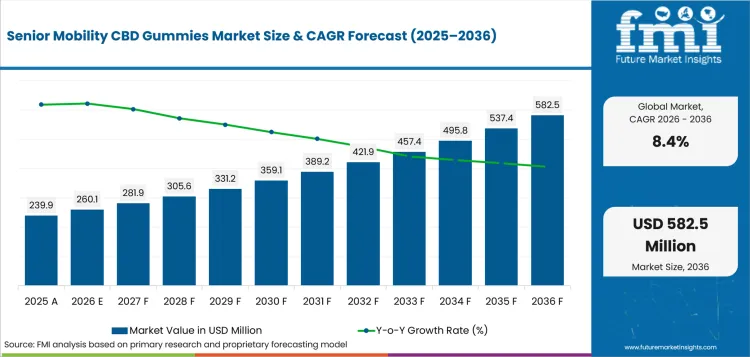
  • Senior Mobility CBD Gummies Market Projected to Reach USD 582.5 Million by 2036 The global senior mobility CBD gummies market is experiencing a notable transition, shifting away from vague, sweeping hemp-derived messaging toward highly structured, demographic-specific formulations.
    Exclusive Discounts on Full Report: https://www.futuremarketinsights.com/reports/senior-mobility-cbd-gummies-market
    Senior Mobility CBD Gummies Market Projected to Reach USD 582.5 Million by 2036 The global senior mobility CBD gummies market is experiencing a notable transition, shifting away from vague, sweeping hemp-derived messaging toward highly structured, demographic-specific formulations. Exclusive Discounts on Full Report: https://www.futuremarketinsights.com/reports/senior-mobility-cbd-gummies-market
    WWW.FUTUREMARKETINSIGHTS.COM
    Senior Mobility CBD Gummies Market : Global Industry Analysis 2016 - 2025 and Opportunity Assessment 2026 - 2036
    Explore the global Senior Mobility CBD Gummies Market with expert analysis on growth drivers, trends, key insights, and forecast outlook to 2036.
    0 Yorumlar 0 hisse senetleri 345 Views 0 önizleme
  • ACME Spine & Orthopedics provides comprehensive Orthopedic Hollywood FL services focused on diagnosing and treating bone, joint, and spine conditions through advanced medical care, personalized treatment plans, and both surgical and non-surgical solutions designed to reduce pain, restore mobility, and improve overall quality of life.
    Read More: https://www.acmespineandortho.com/orthopedic-surgery-hollywood
    Contact us at - (321) 972-2932 and Email - referrals@acmespineandortho.com
    Facebook - https://www.facebook.com/acmespineandortho
    Instagram - https://www.instagram.com/acmespineandortho/
    ACME Spine & Orthopedics provides comprehensive Orthopedic Hollywood FL services focused on diagnosing and treating bone, joint, and spine conditions through advanced medical care, personalized treatment plans, and both surgical and non-surgical solutions designed to reduce pain, restore mobility, and improve overall quality of life. Read More: https://www.acmespineandortho.com/orthopedic-surgery-hollywood Contact us at - (321) 972-2932 and Email - referrals@acmespineandortho.com Facebook - https://www.facebook.com/acmespineandortho Instagram - https://www.instagram.com/acmespineandortho/
    0 Yorumlar 0 hisse senetleri 1K Views 0 önizleme
  • Axial Spondyloarthritis Market Size, Share & Trends, Growth and Forecast

    In today’s fast-paced business environment, organizations must rely on accurate insights and structured data to remain competitive and sustainable. Recognizing this growing demand, Emergen Research has introduced its advanced Axial Spondyloarthritis market research content, a comprehensive solution designed to help businesses understand evolving market trends and make informed strategic decisions. This offering is built to support companies across various industries by providing meaningful insights and practical guidance.

    A key strength of this research lies in its ability to simplify complex data into actionable knowledge. Businesses often struggle with interpreting large volumes of information, but this content is designed to present insights in a clear and structured manner. By focusing on usability, the report ensures that decision-makers can quickly understand the data and apply it effectively to their strategies.

    Axial Spondyloarthritis Market Size and Overview

    The Axial Spondyloarthritis market is expected to grow from an estimated USD 5.8 billion in 2024 to USD 10.8 billion in 2033, at a CAGR of 7.10%.

    The global Axial Spondyloarthritis market size is expected to grow from 5.8 billion by the end of 2024 to 10.8 billion by 2033, registering a revenue CAGR of 7.10% during the forecast period.

    The major Axial Spondyloarthritis market growth factors are advancements of biological and new therapeutic options in the pipeline, and rapid uptake of premium-priced interleukin inhibitors. The rising prevalence of this chronic inflammatory condition and increasing awareness about its diagnosis and treatment is further propelling the market growth.

    Improved diagnostic techniques, such as advanced imaging methods like MRI, have made it easier for healthcare providers to identify axSpA at earlier stages, enabling timely intervention.

    Additionally, the growing focus on autoimmune and inflammatory diseases has led to increased funding for research, resulting in the development of novel biologics and targeted therapies that effectively manage axSpA symptoms and improve patients’ quality of life.

    As per the study published in July 2021 titled 'Investigating Diagnosis, Treatment, and Burden of Disease in Patients with Ankylosing Spondylitis in Central Eastern Europe and the United States: A Real-World Study, the prevalence of ankylosing spondylitis ranged from 9 to 30 per 10,000 persons, which is lower than previous estimates.

    Another key driver is the expanding availability of advanced treatment options, such as tumor necrosis factor (TNF) inhibitors and interleukin-17 (IL-17) inhibitors, which offer significant relief for patients. Rising healthcare expenditures and access to specialty care in emerging markets further fuel the demand for these therapies.

    Moreover, awareness campaigns and patient advocacy groups have contributed to better understanding and early management of the disease, fostering market growth. The combined impact of technological advancements, therapeutic innovation, and growing awareness is driving the expansion of the axial spondyloarthritis market globally. Around 60% to 70% of patients with ankylosing spondylitis (AS) develop irreversible structural changes that result in spinal fusion and reduced spinal mobility.

    Another significant aspect of the Axial Spondyloarthritis market research content is its emphasis on continuous innovation and expert-driven analysis. The research is developed by a team of experienced professionals who possess a deep understanding of industry dynamics. Their insights help businesses uncover hidden opportunities, understand competitive pressures, and anticipate future challenges.

    Request Free Sample Copy (To Understand the Complete Structure of this Report [Summary + TOC]) @ https://www.emergenresearch.com/request-free-sample/4034
    Axial Spondyloarthritis Market Size, Share & Trends, Growth and Forecast In today’s fast-paced business environment, organizations must rely on accurate insights and structured data to remain competitive and sustainable. Recognizing this growing demand, Emergen Research has introduced its advanced Axial Spondyloarthritis market research content, a comprehensive solution designed to help businesses understand evolving market trends and make informed strategic decisions. This offering is built to support companies across various industries by providing meaningful insights and practical guidance. A key strength of this research lies in its ability to simplify complex data into actionable knowledge. Businesses often struggle with interpreting large volumes of information, but this content is designed to present insights in a clear and structured manner. By focusing on usability, the report ensures that decision-makers can quickly understand the data and apply it effectively to their strategies. Axial Spondyloarthritis Market Size and Overview The Axial Spondyloarthritis market is expected to grow from an estimated USD 5.8 billion in 2024 to USD 10.8 billion in 2033, at a CAGR of 7.10%. The global Axial Spondyloarthritis market size is expected to grow from 5.8 billion by the end of 2024 to 10.8 billion by 2033, registering a revenue CAGR of 7.10% during the forecast period. The major Axial Spondyloarthritis market growth factors are advancements of biological and new therapeutic options in the pipeline, and rapid uptake of premium-priced interleukin inhibitors. The rising prevalence of this chronic inflammatory condition and increasing awareness about its diagnosis and treatment is further propelling the market growth. Improved diagnostic techniques, such as advanced imaging methods like MRI, have made it easier for healthcare providers to identify axSpA at earlier stages, enabling timely intervention. Additionally, the growing focus on autoimmune and inflammatory diseases has led to increased funding for research, resulting in the development of novel biologics and targeted therapies that effectively manage axSpA symptoms and improve patients’ quality of life. As per the study published in July 2021 titled 'Investigating Diagnosis, Treatment, and Burden of Disease in Patients with Ankylosing Spondylitis in Central Eastern Europe and the United States: A Real-World Study, the prevalence of ankylosing spondylitis ranged from 9 to 30 per 10,000 persons, which is lower than previous estimates. Another key driver is the expanding availability of advanced treatment options, such as tumor necrosis factor (TNF) inhibitors and interleukin-17 (IL-17) inhibitors, which offer significant relief for patients. Rising healthcare expenditures and access to specialty care in emerging markets further fuel the demand for these therapies. Moreover, awareness campaigns and patient advocacy groups have contributed to better understanding and early management of the disease, fostering market growth. The combined impact of technological advancements, therapeutic innovation, and growing awareness is driving the expansion of the axial spondyloarthritis market globally. Around 60% to 70% of patients with ankylosing spondylitis (AS) develop irreversible structural changes that result in spinal fusion and reduced spinal mobility. Another significant aspect of the Axial Spondyloarthritis market research content is its emphasis on continuous innovation and expert-driven analysis. The research is developed by a team of experienced professionals who possess a deep understanding of industry dynamics. Their insights help businesses uncover hidden opportunities, understand competitive pressures, and anticipate future challenges. Request Free Sample Copy (To Understand the Complete Structure of this Report [Summary + TOC]) @ https://www.emergenresearch.com/request-free-sample/4034
    0 Yorumlar 0 hisse senetleri 3K Views 0 önizleme
  • China Laptop Market Forecast Outlook: Urbanization, Disposable Income and Tech Adoption Impact

    China Laptop Market 2024–2030: A High‑Growth Landscape Fueled by Digital Transformation and Gaming Demand

    Market Estimation & Definition
    The China laptop market has emerged as one of the fastest‑growing regional computing segments globally. Characterized by rapid adoption of portable computing solutions across education, business, personal use, and performance‑driven gaming, this market reflects China’s status as both a leading technology manufacturer and an increasingly affluent consumer base. According to industry estimates, the China laptop market was valued at approximately USD 6.45 billion in 2023 and is forecast to reach nearly USD 15.20 billion by 2030, exhibiting a robust Compound Annual Growth Rate (CAGR) of 13.03 % between 2024 and 2030.

    Laptops are defined as portable personal computers that integrate processing, memory, storage, display, and connectivity within a single compact unit. They serve diverse applications, from basic productivity and multimedia tasks to high‑performance gaming and enterprise computing. Their mobility, versatility, and expanding feature sets continue to underpin widespread demand in China’s tech‑driven economy.

    Request Free Sample Report : https://www.stellarmr.com/report/req_sample/China-Laptop-Market/2097

    Market Growth Drivers & Opportunity
    Several key drivers are propelling the China laptop market forward:

    Urbanization and Rising Incomes: China’s ongoing urbanization and economic growth are enhancing disposable incomes and IT product affordability. Urban consumers increasingly view laptops as essential for work, education, entertainment, and communication.

    Remote Work & Digital Learning: The shift toward flexible work environments and remote learning has reinforced the need for reliable portable computing solutions. Students, freelancers, and professionals all require laptops capable of handling collaborative tools, video conferencing, and multimedia applications.

    Gaming and High‑Performance Devices: A notable trend within the China market is the rising popularity of gaming laptops. Enthusiasts and competitive gamers are demanding powerful hardware, advanced graphics, and enhanced cooling solutions, contributing to elevated sales within this high‑growth segment.

    Broadening Application Areas: Beyond personal use, demand from business and enterprise sectors is on the rise. Organizations upgrading their computing fleets and embracing digital workflows offer opportunities for manufacturers and service providers alike.

    What Lies Ahead: Emerging Trends Shaping the Future
    Several emerging trends are expected to shape the trajectory of the China laptop market:

    Performance and Portability: There is growing consumer preference for laptops that balance high performance with light, slim form factors. This trend supports uptake of ultrabooks and thin‑and‑light models suited to mobile lifestyles and on‑the‑go productivity.

    Integration of Advanced Technologies: The integration of AI acceleration, improved connectivity options (including emerging 5G and Wi‑Fi standards), and enhanced security features is increasingly influencing purchasing decisions.

    Gaming Ecosystem Expansion: As China’s gaming community expands, demand for laptops tailored for immersive experiences — featuring powerful GPUs, high‑refresh‑rate displays, and efficient cooling systems — is on the rise. This positions the market for continued innovation and premium product development.

    Local Brand Strength and Value‑Driven Products: Chinese manufacturers are expanding their influence by offering competitive performance, local customer support, and value‑oriented models. This trend enhances market dynamism and invites international brands to adapt pricing and product positioning strategies.

    Request Free Sample Report : https://www.stellarmr.com/report/req_sample/China-Laptop-Market/2097

    Segmentation Analysis
    The China laptop market is segmented based on type and application:

    By Type:
    • Traditional Laptops — These held approximately 65% market share in 2023 and are favored for their balanced performance and feature sets.
    • 2‑in‑1 Laptops — Convertible devices that offer tablet‑style flexibility alongside laptop functionality, appealing to professionals and students seeking versatility.

    As innovations in performance, form factors, and connectivity continue to influence purchasing decisions, the market is likely to maintain its expansion trajectory. The evolving needs of gaming communities, remote professionals, and students ensure laptops remain vital computing platforms — positioning China as both a production powerhouse and a dynamic consumer market in the global technology ecosystem.

    About us

    Phase 3,Navale IT Zone, S.No. 51/2A/2,

    Office No. 202, 2nd floor,

    Near, Navale Brg,Narhe,

    Pune, Maharashtra 411041

    sales@stellarmr.com

    China Laptop Market Forecast Outlook: Urbanization, Disposable Income and Tech Adoption Impact China Laptop Market 2024–2030: A High‑Growth Landscape Fueled by Digital Transformation and Gaming Demand Market Estimation & Definition The China laptop market has emerged as one of the fastest‑growing regional computing segments globally. Characterized by rapid adoption of portable computing solutions across education, business, personal use, and performance‑driven gaming, this market reflects China’s status as both a leading technology manufacturer and an increasingly affluent consumer base. According to industry estimates, the China laptop market was valued at approximately USD 6.45 billion in 2023 and is forecast to reach nearly USD 15.20 billion by 2030, exhibiting a robust Compound Annual Growth Rate (CAGR) of 13.03 % between 2024 and 2030. Laptops are defined as portable personal computers that integrate processing, memory, storage, display, and connectivity within a single compact unit. They serve diverse applications, from basic productivity and multimedia tasks to high‑performance gaming and enterprise computing. Their mobility, versatility, and expanding feature sets continue to underpin widespread demand in China’s tech‑driven economy. Request Free Sample Report : https://www.stellarmr.com/report/req_sample/China-Laptop-Market/2097 Market Growth Drivers & Opportunity Several key drivers are propelling the China laptop market forward: Urbanization and Rising Incomes: China’s ongoing urbanization and economic growth are enhancing disposable incomes and IT product affordability. Urban consumers increasingly view laptops as essential for work, education, entertainment, and communication. Remote Work & Digital Learning: The shift toward flexible work environments and remote learning has reinforced the need for reliable portable computing solutions. Students, freelancers, and professionals all require laptops capable of handling collaborative tools, video conferencing, and multimedia applications. Gaming and High‑Performance Devices: A notable trend within the China market is the rising popularity of gaming laptops. Enthusiasts and competitive gamers are demanding powerful hardware, advanced graphics, and enhanced cooling solutions, contributing to elevated sales within this high‑growth segment. Broadening Application Areas: Beyond personal use, demand from business and enterprise sectors is on the rise. Organizations upgrading their computing fleets and embracing digital workflows offer opportunities for manufacturers and service providers alike. What Lies Ahead: Emerging Trends Shaping the Future Several emerging trends are expected to shape the trajectory of the China laptop market: Performance and Portability: There is growing consumer preference for laptops that balance high performance with light, slim form factors. This trend supports uptake of ultrabooks and thin‑and‑light models suited to mobile lifestyles and on‑the‑go productivity. Integration of Advanced Technologies: The integration of AI acceleration, improved connectivity options (including emerging 5G and Wi‑Fi standards), and enhanced security features is increasingly influencing purchasing decisions. Gaming Ecosystem Expansion: As China’s gaming community expands, demand for laptops tailored for immersive experiences — featuring powerful GPUs, high‑refresh‑rate displays, and efficient cooling systems — is on the rise. This positions the market for continued innovation and premium product development. Local Brand Strength and Value‑Driven Products: Chinese manufacturers are expanding their influence by offering competitive performance, local customer support, and value‑oriented models. This trend enhances market dynamism and invites international brands to adapt pricing and product positioning strategies. Request Free Sample Report : https://www.stellarmr.com/report/req_sample/China-Laptop-Market/2097 Segmentation Analysis The China laptop market is segmented based on type and application: By Type: • Traditional Laptops — These held approximately 65% market share in 2023 and are favored for their balanced performance and feature sets. • 2‑in‑1 Laptops — Convertible devices that offer tablet‑style flexibility alongside laptop functionality, appealing to professionals and students seeking versatility. As innovations in performance, form factors, and connectivity continue to influence purchasing decisions, the market is likely to maintain its expansion trajectory. The evolving needs of gaming communities, remote professionals, and students ensure laptops remain vital computing platforms — positioning China as both a production powerhouse and a dynamic consumer market in the global technology ecosystem. About us Phase 3,Navale IT Zone, S.No. 51/2A/2, Office No. 202, 2nd floor, Near, Navale Brg,Narhe, Pune, Maharashtra 411041 sales@stellarmr.com

    0 Yorumlar 0 hisse senetleri 4K Views 0 önizleme
  • The Rise of E-Bikes in Bike-Sharing Fleets Across Spain

    Spain Bike Sharing Market: Pedaling Towards Sustainable Urban Mobility

    The Spain Bike Sharing Market is expanding steadily as urban centers in the country embrace sustainable, healthy and low-emission transportation options. According to Stellar Market Research, the Spain bike sharing market was valued at approximately USD 385.04 million in 2024 and is expected to grow at a compound annual growth rate (CAGR) of about 4 % between 2025 and 2032, reaching nearly USD 526.96 million by 2032.

    Bike sharing — a key segment of the shared mobility ecosystem — refers to publicly accessible, short-term bicycle rental services where users can rent and return bikes at convenient locations across a city. These services include both e-bikes and conventional bikes, and can operate under different models such as free-floating, peer-to-peer (P2P), and station-based systems.

    Request Free Sample Report : https://www.stellarmr.com/report/req_sample/Spain-Bike-Sharing-Market/159

    Market Estimation & Definition

    Bike sharing systems provide bicycles for flexible public use, typically integrating mobile apps, GPS tracking, and digital payments to enable convenient rentals across urban areas. These systems support first- and last-mile connectivity, reduce reliance on private motor vehicles, and align with broader sustainability and smart city goals. The Spain bike sharing market’s valuation in 2024 reflects growing adoption in major cities like Madrid and Barcelona, where government-supported programs and private initiatives have made shared bikes an integral part of urban mobility.

    Market Growth Drivers & Opportunity

    The growth of the Spain bike sharing market is driven by several key factors:

    Environmental and Health Awareness: Rising awareness of air pollution, climate change and public health imperatives has oriented commuters toward eco-friendly transport alternatives such as bike sharing. These services help lower emissions and support active lifestyles, aligning with national and EU sustainability agendas.

    Urban Congestion and Mobility Challenges: Cities in Spain are deploying bike sharing to alleviate traffic congestion and provide efficient, flexible mobility options for short trips. Bike sharing reduces dependence on private cars, improve traffic flows and enhances access to employment and urban services.

    Tourism and Local Travel Patterns: Spain’s position as a major tourist destination fuels demand for short-term rentals and flexible travel modes within city centers. Bike sharing appeals to both residents and visitors looking for simple, affordable ways to explore urban spaces.

    Technological Enablement: Integration of mobile applications, QR-based unlocking and real-time mapping enhances user ease and service efficiency, encouraging wider adoption across diverse age groups and commuter profiles.

    Growth opportunities lie in expanding services to smaller cities and suburban regions, developing intermodal integration with public transport, and increasing investments in electric bike (e-bike) fleets, which typically yield higher ridership and longer trips within bike sharing systems.

    What Lies Ahead: Emerging Trends Shaping the Future

    Several emerging trends are influencing the Spain bike sharing market:

    Shift Toward Electric Bikes: Electric bicycles are gaining prominence within shared mobility, offering extended range and easier navigation of hilly terrain in cities like Barcelona and Seville. Electric models often support higher daily distances and enhance overall system use.

    Station Expansion and Integration: Traditional station-based systems — which remain dominant in Spain with approximately 70 % market share — are being expanded to cover wider urban territories and support increased ridership.

    Expansion Beyond Major Cities: Smaller Spanish cities such as Valladolid, Gijón and Santander have launched or expanded their own bike sharing systems to improve local mobility and reduce city emissions, indicating broad market diffusion beyond Madrid and Barcelona.

    Public-Private Partnerships: Collaborations between municipalities and private providers — including operators like PBSC, Movus, Donkey Republic and BICIMAD — are enabling better service coverage, more robust fleets, and improved user experience.

    Request Free Sample Report : https://www.stellarmr.com/report/req_sample/Spain-Bike-Sharing-Market/159


    About us

    Phase 3,Navale IT Zone, S.No. 51/2A/2,

    Office No. 202, 2nd floor,

    Near, Navale Brg,Narhe,

    Pune, Maharashtra 411041

    sales@stellarmr.com
    The Rise of E-Bikes in Bike-Sharing Fleets Across Spain Spain Bike Sharing Market: Pedaling Towards Sustainable Urban Mobility The Spain Bike Sharing Market is expanding steadily as urban centers in the country embrace sustainable, healthy and low-emission transportation options. According to Stellar Market Research, the Spain bike sharing market was valued at approximately USD 385.04 million in 2024 and is expected to grow at a compound annual growth rate (CAGR) of about 4 % between 2025 and 2032, reaching nearly USD 526.96 million by 2032. Bike sharing — a key segment of the shared mobility ecosystem — refers to publicly accessible, short-term bicycle rental services where users can rent and return bikes at convenient locations across a city. These services include both e-bikes and conventional bikes, and can operate under different models such as free-floating, peer-to-peer (P2P), and station-based systems. Request Free Sample Report : https://www.stellarmr.com/report/req_sample/Spain-Bike-Sharing-Market/159 Market Estimation & Definition Bike sharing systems provide bicycles for flexible public use, typically integrating mobile apps, GPS tracking, and digital payments to enable convenient rentals across urban areas. These systems support first- and last-mile connectivity, reduce reliance on private motor vehicles, and align with broader sustainability and smart city goals. The Spain bike sharing market’s valuation in 2024 reflects growing adoption in major cities like Madrid and Barcelona, where government-supported programs and private initiatives have made shared bikes an integral part of urban mobility. Market Growth Drivers & Opportunity The growth of the Spain bike sharing market is driven by several key factors: Environmental and Health Awareness: Rising awareness of air pollution, climate change and public health imperatives has oriented commuters toward eco-friendly transport alternatives such as bike sharing. These services help lower emissions and support active lifestyles, aligning with national and EU sustainability agendas. Urban Congestion and Mobility Challenges: Cities in Spain are deploying bike sharing to alleviate traffic congestion and provide efficient, flexible mobility options for short trips. Bike sharing reduces dependence on private cars, improve traffic flows and enhances access to employment and urban services. Tourism and Local Travel Patterns: Spain’s position as a major tourist destination fuels demand for short-term rentals and flexible travel modes within city centers. Bike sharing appeals to both residents and visitors looking for simple, affordable ways to explore urban spaces. Technological Enablement: Integration of mobile applications, QR-based unlocking and real-time mapping enhances user ease and service efficiency, encouraging wider adoption across diverse age groups and commuter profiles. Growth opportunities lie in expanding services to smaller cities and suburban regions, developing intermodal integration with public transport, and increasing investments in electric bike (e-bike) fleets, which typically yield higher ridership and longer trips within bike sharing systems. What Lies Ahead: Emerging Trends Shaping the Future Several emerging trends are influencing the Spain bike sharing market: Shift Toward Electric Bikes: Electric bicycles are gaining prominence within shared mobility, offering extended range and easier navigation of hilly terrain in cities like Barcelona and Seville. Electric models often support higher daily distances and enhance overall system use. Station Expansion and Integration: Traditional station-based systems — which remain dominant in Spain with approximately 70 % market share — are being expanded to cover wider urban territories and support increased ridership. Expansion Beyond Major Cities: Smaller Spanish cities such as Valladolid, Gijón and Santander have launched or expanded their own bike sharing systems to improve local mobility and reduce city emissions, indicating broad market diffusion beyond Madrid and Barcelona. Public-Private Partnerships: Collaborations between municipalities and private providers — including operators like PBSC, Movus, Donkey Republic and BICIMAD — are enabling better service coverage, more robust fleets, and improved user experience. Request Free Sample Report : https://www.stellarmr.com/report/req_sample/Spain-Bike-Sharing-Market/159 About us Phase 3,Navale IT Zone, S.No. 51/2A/2, Office No. 202, 2nd floor, Near, Navale Brg,Narhe, Pune, Maharashtra 411041 sales@stellarmr.com
    0 Yorumlar 0 hisse senetleri 3K Views 0 önizleme
  • Grid‑Scale Storage: Supporting Renewable Adoption and Grid Stability

    Energy Storage Market: Powering the Global Energy Transition

    The Energy Storage Market is rapidly becoming an essential component of the global energy ecosystem as countries, utilities, and businesses strive to integrate renewable energy sources and enhance grid reliability. Energy storage systems (ESS) allow electricity — whether from intermittent solar, wind, or other sources — to be stored and released when needed, enabling better load balancing, grid stability, and greater energy independence. According to Stellar Market Research, the energy storage market was valued at about USD 29.69 billion in 2025 and is projected to grow at a compound annual growth rate (CAGR) of around 19 % from 2026 to 2032, reaching approximately USD 100.33 billion by 2032.

    Request Free Sample Report : https://www.stellarmr.com/report/req_sample/Energy-Storage-Market/291

    Market Estimation & Definition

    The energy storage market includes a variety of systems and technologies designed to capture electrical energy for later use. These systems support renewable energy integration, peak demand management, grid stabilization, backup power, and electrification of transportation — making them critical for modern and future energy infrastructures. Technologies commonly deployed include batteries, pumped‑storage hydroelectricity (PSH), thermal energy storage (TES), flywheel energy storage (FES), and other mechanical or chemical storage solutions.

    Energy storage is vital for overcoming the variability of renewable sources such as solar and wind, enabling energy generated during peak production to be stored and dispatched when required. This functionality enhances grid flexibility and supports sustainability goals.

    Request Free Sample Report : https://www.stellarmr.com/report/req_sample/Energy-Storage-Market/291

    Market Growth Drivers & Opportunity

    Several key drivers are propelling the energy storage market:

    Renewable Energy Integration: As global renewable energy generation — particularly solar and wind — increases, the need for storage solutions that smooth out supply fluctuations grows accordingly. Storage systems enable grid operators to balance variable generation with demand, ensuring reliability.

    Falling Costs and Incentives: The cost of energy storage solutions, especially battery technologies, has significantly declined in recent years — in some cases dropping by more than 70 % since 2013 — thanks to advancements in manufacturing and scale economies. Government incentives and policy support further lower the cost barrier and spur investments.

    Electric Mobility and Electrification: The growth of electric vehicles (EVs) and electrification of transportation continues to drive demand for energy storage systems. EV battery production and stationary storage technologies share many common components, creating synergies across markets.

    Urbanization and Industrial Growth: Rapid urbanization and rising energy demand in emerging economies increase the requirement for reliable, scalable energy infrastructure, including storage solutions that can support both residential and industrial needs.

    Opportunities also arise from behind‑the‑meter storage solutions for homes and businesses, microgrids in remote areas, and hybrid storage systems that combine multiple technologies to optimize performance across applications.

    However, high initial investment costs and unclear regulatory frameworks in some regions can present challenges that slow adoption, especially in developing markets where financing and policy support may lag.

    What Lies Ahead: Emerging Trends Shaping the Future

    Future growth in the energy storage market will be shaped by several prominent trends:

    Advanced Battery Technologies: Lithium‑ion batteries currently dominate the market due to their high energy density, efficiency, and decreasing cost. Continued innovation in battery chemistry and manufacturing — including solid‑state, flow, and next‑generation batteries — will further improve performance and reduce lifecycle costs.

    Grid‑Scale and Distributed Storage Expansion: Large‑scale battery installations at grid and utility levels are rapidly expanding, while distributed storage systems for commercial, industrial, and residential users are gaining traction as energy prices and reliability concerns rise.
    .

    About us

    Phase 3,Navale IT Zone, S.No. 51/2A/2,

    Office No. 202, 2nd floor,

    Near, Navale Brg,Narhe,

    Pune, Maharashtra 411041

    sales@stellarmr.com

    Grid‑Scale Storage: Supporting Renewable Adoption and Grid Stability Energy Storage Market: Powering the Global Energy Transition The Energy Storage Market is rapidly becoming an essential component of the global energy ecosystem as countries, utilities, and businesses strive to integrate renewable energy sources and enhance grid reliability. Energy storage systems (ESS) allow electricity — whether from intermittent solar, wind, or other sources — to be stored and released when needed, enabling better load balancing, grid stability, and greater energy independence. According to Stellar Market Research, the energy storage market was valued at about USD 29.69 billion in 2025 and is projected to grow at a compound annual growth rate (CAGR) of around 19 % from 2026 to 2032, reaching approximately USD 100.33 billion by 2032. Request Free Sample Report : https://www.stellarmr.com/report/req_sample/Energy-Storage-Market/291 Market Estimation & Definition The energy storage market includes a variety of systems and technologies designed to capture electrical energy for later use. These systems support renewable energy integration, peak demand management, grid stabilization, backup power, and electrification of transportation — making them critical for modern and future energy infrastructures. Technologies commonly deployed include batteries, pumped‑storage hydroelectricity (PSH), thermal energy storage (TES), flywheel energy storage (FES), and other mechanical or chemical storage solutions. Energy storage is vital for overcoming the variability of renewable sources such as solar and wind, enabling energy generated during peak production to be stored and dispatched when required. This functionality enhances grid flexibility and supports sustainability goals. Request Free Sample Report : https://www.stellarmr.com/report/req_sample/Energy-Storage-Market/291 Market Growth Drivers & Opportunity Several key drivers are propelling the energy storage market: Renewable Energy Integration: As global renewable energy generation — particularly solar and wind — increases, the need for storage solutions that smooth out supply fluctuations grows accordingly. Storage systems enable grid operators to balance variable generation with demand, ensuring reliability. Falling Costs and Incentives: The cost of energy storage solutions, especially battery technologies, has significantly declined in recent years — in some cases dropping by more than 70 % since 2013 — thanks to advancements in manufacturing and scale economies. Government incentives and policy support further lower the cost barrier and spur investments. Electric Mobility and Electrification: The growth of electric vehicles (EVs) and electrification of transportation continues to drive demand for energy storage systems. EV battery production and stationary storage technologies share many common components, creating synergies across markets. Urbanization and Industrial Growth: Rapid urbanization and rising energy demand in emerging economies increase the requirement for reliable, scalable energy infrastructure, including storage solutions that can support both residential and industrial needs. Opportunities also arise from behind‑the‑meter storage solutions for homes and businesses, microgrids in remote areas, and hybrid storage systems that combine multiple technologies to optimize performance across applications. However, high initial investment costs and unclear regulatory frameworks in some regions can present challenges that slow adoption, especially in developing markets where financing and policy support may lag. What Lies Ahead: Emerging Trends Shaping the Future Future growth in the energy storage market will be shaped by several prominent trends: Advanced Battery Technologies: Lithium‑ion batteries currently dominate the market due to their high energy density, efficiency, and decreasing cost. Continued innovation in battery chemistry and manufacturing — including solid‑state, flow, and next‑generation batteries — will further improve performance and reduce lifecycle costs. Grid‑Scale and Distributed Storage Expansion: Large‑scale battery installations at grid and utility levels are rapidly expanding, while distributed storage systems for commercial, industrial, and residential users are gaining traction as energy prices and reliability concerns rise. . About us Phase 3,Navale IT Zone, S.No. 51/2A/2, Office No. 202, 2nd floor, Near, Navale Brg,Narhe, Pune, Maharashtra 411041 sales@stellarmr.com

    0 Yorumlar 0 hisse senetleri 4K Views 0 önizleme
  • Europe Wireless Charging Market Outlook 2025–2032: Growth Trends and Forecast

    Europe Wireless Charging Market Accelerates, Fueled by Electric Vehicle Boom and Smart City Integration
    Market valued at USD 2.21 billion in 2024, projected to soar to USD 8.48 billion by 2032 with an 18.30% CAGR.

    A Continent Unplugging
    The Europe Wireless Charging Market is experiencing rapid and transformative growth, driven by the region's decisive shift towards electric mobility, digitalization, and sustainable urban development. Wireless charging, a technology enabling devices to be powered via electromagnetic fields without physical cables, is evolving from a consumer electronics convenience into a critical component of modern infrastructure. The market, valued at USD 2.21 billion in 2024, is on a high-growth trajectory, projected to reach USD 8.48 billion by 2032, advancing at a remarkable Compound Annual Growth Rate (CAGR) of 18.30%. This surge is primarily powered by Europe's position as the world's second-largest electric vehicle (EV) market and a continent-wide push for smart, integrated energy solutions.

    Purchase This Research Report at up to 30% Off @ https://www.stellarmr.com/report/req_sample/europe-wireless-charging-market/2327

    Market Estimation & Definition
    The Europe Wireless Charging Market encompasses the development, manufacturing, and deployment of systems that transfer energy from a transmitter to a receiver across an air gap. Key technologies include inductive, resonant, and radio frequency (RF) charging. The market is defined by its applications across diverse industry verticals, most notably the automotive sector for EV charging, consumer electronics for smartphones and wearables, and industrial settings for powering robots and machinery. Its valuation reflects the technology's growing integration into both private consumption and public infrastructure, supported by stringent EU sustainability goals and digital innovation initiatives.

    Market Growth Drivers & Opportunity
    The market's expansion is propelled by a powerful synergy between automotive electrification and supportive public policy. The rapid adoption of electric vehicles across Europe, with EVs now accounting for over 19% of new car sales, is the single most significant driver. This creates a direct and substantial demand for convenient, automated charging solutions, with industry leaders like BMW, Volvo, and Renault actively investing in and evaluating wireless systems. Concurrently, the European Commission's strategic initiatives for smart cities (e.g., CIVITAS, EIT Urban Mobility) and the circular economy are creating a fertile regulatory and funding environment that incentivizes the integration of wireless charging into urban furniture, public transport, and building infrastructure.

    Significant market opportunities are emerging in industrial automation and healthcare. The industrial segment is poised for the highest CAGR, driven by the need for autonomous charging stations for robots and automated guided vehicles (AGVs) in smart factories. In healthcare, the demand for sterile, cable-free power for medical devices presents a high-value, reliability-critical application that is set to grow as facilities modernize.

    What Lies Ahead: Emerging Trends Shaping the Future
    The future of wireless charging in Europe is being defined by higher-power applications and deeper ecosystem integration. A dominant trend is the development and commercialization of high-power wireless EV charging systems, with companies like WiTricity, Hevo, and Momentum Dynamics competing to enable convenient home, fleet, and eventual dynamic (in-motion) charging. This technology promises to revolutionize EV ownership by enabling "opportunistic charging" and allowing for smaller vehicle batteries. Furthermore, the seamless integration of charging into the built environment is a key trend. Wireless pads are being embedded into furniture, work surfaces, and public infrastructure like airport lounges and cafe tables, transforming spaces into ubiquitous, invisible power sources as part of the broader smart city vision.

    Segmentation Analysis
    The market structure reveals a clear leader in application and diverse technological approaches:

    By Industry Vertical: The Automotive segment held the largest market share in 2024. This dominance is directly tied to the high unit cost of wireless EV chargers and Europe's leadership in automotive electrification, where 70% of charging currently occurs at home or work—ideal scenarios for wireless technology.


    About us

    Phase 3,Navale IT Zone, S.No. 51/2A/2,

    Office No. 202, 2nd floor,

    Near, Navale Brg,Narhe,

    Pune, Maharashtra 411041

    sales@stellarmr.com
    Europe Wireless Charging Market Outlook 2025–2032: Growth Trends and Forecast Europe Wireless Charging Market Accelerates, Fueled by Electric Vehicle Boom and Smart City Integration Market valued at USD 2.21 billion in 2024, projected to soar to USD 8.48 billion by 2032 with an 18.30% CAGR. A Continent Unplugging The Europe Wireless Charging Market is experiencing rapid and transformative growth, driven by the region's decisive shift towards electric mobility, digitalization, and sustainable urban development. Wireless charging, a technology enabling devices to be powered via electromagnetic fields without physical cables, is evolving from a consumer electronics convenience into a critical component of modern infrastructure. The market, valued at USD 2.21 billion in 2024, is on a high-growth trajectory, projected to reach USD 8.48 billion by 2032, advancing at a remarkable Compound Annual Growth Rate (CAGR) of 18.30%. This surge is primarily powered by Europe's position as the world's second-largest electric vehicle (EV) market and a continent-wide push for smart, integrated energy solutions. Purchase This Research Report at up to 30% Off @ https://www.stellarmr.com/report/req_sample/europe-wireless-charging-market/2327 Market Estimation & Definition The Europe Wireless Charging Market encompasses the development, manufacturing, and deployment of systems that transfer energy from a transmitter to a receiver across an air gap. Key technologies include inductive, resonant, and radio frequency (RF) charging. The market is defined by its applications across diverse industry verticals, most notably the automotive sector for EV charging, consumer electronics for smartphones and wearables, and industrial settings for powering robots and machinery. Its valuation reflects the technology's growing integration into both private consumption and public infrastructure, supported by stringent EU sustainability goals and digital innovation initiatives. Market Growth Drivers & Opportunity The market's expansion is propelled by a powerful synergy between automotive electrification and supportive public policy. The rapid adoption of electric vehicles across Europe, with EVs now accounting for over 19% of new car sales, is the single most significant driver. This creates a direct and substantial demand for convenient, automated charging solutions, with industry leaders like BMW, Volvo, and Renault actively investing in and evaluating wireless systems. Concurrently, the European Commission's strategic initiatives for smart cities (e.g., CIVITAS, EIT Urban Mobility) and the circular economy are creating a fertile regulatory and funding environment that incentivizes the integration of wireless charging into urban furniture, public transport, and building infrastructure. Significant market opportunities are emerging in industrial automation and healthcare. The industrial segment is poised for the highest CAGR, driven by the need for autonomous charging stations for robots and automated guided vehicles (AGVs) in smart factories. In healthcare, the demand for sterile, cable-free power for medical devices presents a high-value, reliability-critical application that is set to grow as facilities modernize. What Lies Ahead: Emerging Trends Shaping the Future The future of wireless charging in Europe is being defined by higher-power applications and deeper ecosystem integration. A dominant trend is the development and commercialization of high-power wireless EV charging systems, with companies like WiTricity, Hevo, and Momentum Dynamics competing to enable convenient home, fleet, and eventual dynamic (in-motion) charging. This technology promises to revolutionize EV ownership by enabling "opportunistic charging" and allowing for smaller vehicle batteries. Furthermore, the seamless integration of charging into the built environment is a key trend. Wireless pads are being embedded into furniture, work surfaces, and public infrastructure like airport lounges and cafe tables, transforming spaces into ubiquitous, invisible power sources as part of the broader smart city vision. Segmentation Analysis The market structure reveals a clear leader in application and diverse technological approaches: By Industry Vertical: The Automotive segment held the largest market share in 2024. This dominance is directly tied to the high unit cost of wireless EV chargers and Europe's leadership in automotive electrification, where 70% of charging currently occurs at home or work—ideal scenarios for wireless technology. About us Phase 3,Navale IT Zone, S.No. 51/2A/2, Office No. 202, 2nd floor, Near, Navale Brg,Narhe, Pune, Maharashtra 411041 sales@stellarmr.com

    0 Yorumlar 0 hisse senetleri 5K Views 0 önizleme
  • South America Motorcycle Market Size To Grow At A CAGR Of 8.33% In The Forecast Period Of 2025-2032

    South America Motorcycle Market Accelerates Toward USD 58.47 Billion by 2032

    Strong 8.33% CAGR Fueled by Post-Pandemic Commuting Shift and Burgeoning Electric Segment

    A new industry analysis reveals robust and accelerating growth for the South America Motorcycle market, a vital sector for personal mobility and transportation across the continent. Having navigated recent economic headwinds, the region's motorcycle industry is now experiencing a powerful rebound, driven by fundamental shifts in commuting habits and the exciting emergence of electric two-wheelers.

    Purchase This Research Report at up to 30% Off @ https://www.stellarmr.com/report/req_sample/South-America-Motorcycle-Market/858

    Market Estimation & Definition
    The South America Motorcycle market encompasses a diverse range of two and three-wheeled motor vehicles, including mopeds, scooters, standards, cruisers, sports bikes, and adventure touring models. Valued for their affordability, efficiency, and maneuverability in congested urban environments, motorcycles serve as critical daily transportation for millions. According to the report, the market was valued at USD 30.83 Billion in 2024. It is projected to grow at a strong Compound Annual Growth Rate (CAGR) of 8.33% from 2025 to 2032, reaching USD 58.47 Billion by 2032. This near-doubling of market size signals a period of dynamic expansion and transformation.

    Market Growth Drivers & Opportunity
    The market's rapid ascent is powered by powerful and complementary trends. A primary driver is the post-pandemic shift in commuting preferences, where consumers increasingly view personal two-wheelers as an ideal, socially distanced alternative to crowded public transport. This was vividly demonstrated in Brazil, where motorbike sales surged by 85% in March 2021. Concurrently, the region is witnessing the explosive growth of the electric motorcycle and scooter segment, with countries like Argentina reporting sales increases of over 500% for certain electric models in early 2022, signaling a major new growth frontier.

    Significant opportunities are unfolding due to increasing urbanization and chronic traffic congestion in major cities, which make motorcycles a practical and time-saving solution. Furthermore, the growing popularity of motorcycles among female riders is expanding the consumer base, with manufacturers responding by introducing new models, particularly in the moped and scooter segments, tailored to this demographic.

    About us

    Phase 3,Navale IT Zone, S.No. 51/2A/2,

    Office No. 202, 2nd floor,

    Near, Navale Brg,Narhe,

    Pune, Maharashtra 411041

    sales@stellarmr.com

    South America Motorcycle Market Size To Grow At A CAGR Of 8.33% In The Forecast Period Of 2025-2032 South America Motorcycle Market Accelerates Toward USD 58.47 Billion by 2032 Strong 8.33% CAGR Fueled by Post-Pandemic Commuting Shift and Burgeoning Electric Segment A new industry analysis reveals robust and accelerating growth for the South America Motorcycle market, a vital sector for personal mobility and transportation across the continent. Having navigated recent economic headwinds, the region's motorcycle industry is now experiencing a powerful rebound, driven by fundamental shifts in commuting habits and the exciting emergence of electric two-wheelers. Purchase This Research Report at up to 30% Off @ https://www.stellarmr.com/report/req_sample/South-America-Motorcycle-Market/858 Market Estimation & Definition The South America Motorcycle market encompasses a diverse range of two and three-wheeled motor vehicles, including mopeds, scooters, standards, cruisers, sports bikes, and adventure touring models. Valued for their affordability, efficiency, and maneuverability in congested urban environments, motorcycles serve as critical daily transportation for millions. According to the report, the market was valued at USD 30.83 Billion in 2024. It is projected to grow at a strong Compound Annual Growth Rate (CAGR) of 8.33% from 2025 to 2032, reaching USD 58.47 Billion by 2032. This near-doubling of market size signals a period of dynamic expansion and transformation. Market Growth Drivers & Opportunity The market's rapid ascent is powered by powerful and complementary trends. A primary driver is the post-pandemic shift in commuting preferences, where consumers increasingly view personal two-wheelers as an ideal, socially distanced alternative to crowded public transport. This was vividly demonstrated in Brazil, where motorbike sales surged by 85% in March 2021. Concurrently, the region is witnessing the explosive growth of the electric motorcycle and scooter segment, with countries like Argentina reporting sales increases of over 500% for certain electric models in early 2022, signaling a major new growth frontier. Significant opportunities are unfolding due to increasing urbanization and chronic traffic congestion in major cities, which make motorcycles a practical and time-saving solution. Furthermore, the growing popularity of motorcycles among female riders is expanding the consumer base, with manufacturers responding by introducing new models, particularly in the moped and scooter segments, tailored to this demographic. About us Phase 3,Navale IT Zone, S.No. 51/2A/2, Office No. 202, 2nd floor, Near, Navale Brg,Narhe, Pune, Maharashtra 411041 sales@stellarmr.com
    0 Yorumlar 0 hisse senetleri 2K Views 0 önizleme
  • According to our latest research, the Global eVTOL Flight Test Insurance market size was valued at $145 million in 2024 and is projected to reach $765 million by 2033, expanding at a CAGR of 20.5% during 2024–2033. The primary driver for this robust growth trajectory is the rapid commercialization and technological advancement of electric vertical takeoff and landing (eVTOL) aircraft, which are revolutionizing urban air mobility and necessitating specialized insurance products for flight testing phases. As these next-generation aircraft move from concept to operational reality, comprehensive insurance coverage for flight testing has become an essential risk management tool for manufacturers, operators, and regulators, fueling market expansion globally.
    https://researchintelo.com/report/evtol-flight-test-insurance-market
    According to our latest research, the Global eVTOL Flight Test Insurance market size was valued at $145 million in 2024 and is projected to reach $765 million by 2033, expanding at a CAGR of 20.5% during 2024–2033. The primary driver for this robust growth trajectory is the rapid commercialization and technological advancement of electric vertical takeoff and landing (eVTOL) aircraft, which are revolutionizing urban air mobility and necessitating specialized insurance products for flight testing phases. As these next-generation aircraft move from concept to operational reality, comprehensive insurance coverage for flight testing has become an essential risk management tool for manufacturers, operators, and regulators, fueling market expansion globally. https://researchintelo.com/report/evtol-flight-test-insurance-market
    RESEARCHINTELO.COM
    eVTOL Flight Test Insurance Market Research Report 2033
    According to our latest research, the Global eVTOL Flight Test Insurance market size was valued at $145 million in 2024 and is projected to reach $765 million by 2033, expanding at a CAGR of 20.5% during 2024–2033.
    0 Yorumlar 0 hisse senetleri 2K Views 0 önizleme
  • High-Nickel Cathode Materials Market to Power Next-Generation Batteries

    The global High-Nickel Ternary Cathode Materials market is a cornerstone of advanced battery technology, essential for achieving higher energy density in electric vehicles and energy storage systems. Projected to grow at a significant CAGR through 2029, the market's expansion is tightly coupled with the global transition to electric mobility and the demand for longer-range, more efficient batteries.

    Download FREE Sample Report: https://www.24chemicalresearch.com/download-sample/250066/global-highnickel-ternary-cathode-materials-forecast-market-2023-2030-558

    High-Nickel Cathode Materials Market to Power Next-Generation Batteries The global High-Nickel Ternary Cathode Materials market is a cornerstone of advanced battery technology, essential for achieving higher energy density in electric vehicles and energy storage systems. Projected to grow at a significant CAGR through 2029, the market's expansion is tightly coupled with the global transition to electric mobility and the demand for longer-range, more efficient batteries. Download FREE Sample Report: https://www.24chemicalresearch.com/download-sample/250066/global-highnickel-ternary-cathode-materials-forecast-market-2023-2030-558
    Sample Report: High-Nickel Ternary Cathode Materials Market, Global Outlook and Forecast 2023-2030
    Download Sample Report PDF : This report aims to provide a comprehensive presentation of the global market for High-Nickel Ternary Cathode Materials, with both quantitative and qualitative analysis, to help readers develop business/growth strategies, assess the market competitive situation, analyze their position in the current marketplace, and make informed business decisions regarding High-Nickel Ternary Cathode ...
    0 Yorumlar 0 hisse senetleri 2K Views 0 önizleme
Arama Sonuçları