• https://m2squareconsultancy.com/reports/medical-electronics-market
    https://m2squareconsultancy.com/reports/medical-electronics-market
    0 Comments 0 Shares 141 Views 0 Reviews

  • Ваш путь к идеальному телевизору начинается в RU-Electronics

    Онлайн-магазин RU-Electronics – большая площадка для выбора аудио-видео, цифровой и бытовой техники. Тут предложены товары от популярных брендов, а каталог подобран таким образом, чтобы каждый потребитель – от студента, какой ищет первый телевизор в арендованную квартиру, до взыскательного аудиофила и собственника домашнего кинотеатра – смог найти то, что требуется. Телевизор Samsung QE75QN80HAUXPY https://ru-electronics.ru/televizor-samsung-qe75qn80h/ и прочие модели и марки для вас с официальной гарантией качества, быстрой доставкой и по лучшей цене!
    Ваш путь к идеальному телевизору начинается в RU-Electronics Онлайн-магазин RU-Electronics – большая площадка для выбора аудио-видео, цифровой и бытовой техники. Тут предложены товары от популярных брендов, а каталог подобран таким образом, чтобы каждый потребитель – от студента, какой ищет первый телевизор в арендованную квартиру, до взыскательного аудиофила и собственника домашнего кинотеатра – смог найти то, что требуется. Телевизор Samsung QE75QN80HAUXPY https://ru-electronics.ru/televizor-samsung-qe75qn80h/ и прочие модели и марки для вас с официальной гарантией качества, быстрой доставкой и по лучшей цене!
    RU-ELECTRONICS.RU
    Телевизор Samsung QE75QN80HAUXPY
    Телевизор Samsung QE75QN80HUXPY.это 75-дюймовый 4K-телевизор на платформе Tizen с технологией QLED. Частота обновления до 240 Гц, поддержка технологий ALLM, VRR и FreeSync Premium Pro. Модель имеет четырехканальную аудиосистему с поддержкой Dolby Atmos и технологией отслеживания звука, оснащена четырьмя портами HDMI 2.1, двумя USB 2.0, Wi-Fi 6E и Bluetooth 5.3. Премиальная модель для домашнего кинотеатра.
    0 Comments 0 Shares 101 Views 0 Reviews
  • https://www.theinsightpartners.com/reports/flexible-electronics-market
    https://www.theinsightpartners.com/reports/flexible-electronics-market
    WWW.THEINSIGHTPARTNERS.COM
    Flexible Electronics Market Size, Share & Forecast 2030
    Flexible Electronics market is forecast to reach US$ 57.69 Bn by 2030, rising from US$ 25.86 Bn in 2022, with a CAGR of 10.6%. Market growth remains in focus.
    0 Comments 0 Shares 114 Views 0 Reviews
  • The global Infrared Camera Market is on a rapid growth trajectory, expanding from USD 8.24 Billion in 2024 to reach USD 15.68 Billion by 2032 at an 8.37% CAGR, according to the latest strategic analysis by Maximize Market Research.

    Once confined to high-budget defense programs, thermal imaging is now a cornerstone of smart manufacturing and autonomous systems:

    Predictive Maintenance & Industry 4.0: 24/7 condition monitoring across high-voltage electrical assets, rotating machinery, and continuous process plants to stop downtime before it occurs.

    Defense & Counter-UAS: Uncooled microbolometers and cooled MWIR sensors powering next-gen soldier optics, armored vehicle sights, and anti-drone tracking suites.

    Automotive ADAS & Autonomous Mobility: Thermal sensor fusion delivering zero-lux pedestrian detection and penetrating adverse weather beyond the reach of standard RGB cameras or LiDAR.

    Optical Gas Imaging (OGI): Real-time visualization of fugitive methane and VOC leaks to meet stringent global emissions compliance.

    Discover full market dynamics, technology segmentation, and competitive benchmarking:

    Download PDF Brochure: https://www.maximizemarketresearch.com/request-sample/30953/

    Read the Complete Strategic Report: https://www.maximizemarketresearch.com/market-report/global-infrared-camera-market/30953/

    #InfraredCamera #ThermalImaging #PredictiveMaintenance #Industry40 #DefenseTech #ADAS #Optoelectronics #MachineVision #MarketResearch #MaximizeMarketResearch
    The global Infrared Camera Market is on a rapid growth trajectory, expanding from USD 8.24 Billion in 2024 to reach USD 15.68 Billion by 2032 at an 8.37% CAGR, according to the latest strategic analysis by Maximize Market Research. Once confined to high-budget defense programs, thermal imaging is now a cornerstone of smart manufacturing and autonomous systems: Predictive Maintenance & Industry 4.0: 24/7 condition monitoring across high-voltage electrical assets, rotating machinery, and continuous process plants to stop downtime before it occurs. Defense & Counter-UAS: Uncooled microbolometers and cooled MWIR sensors powering next-gen soldier optics, armored vehicle sights, and anti-drone tracking suites. Automotive ADAS & Autonomous Mobility: Thermal sensor fusion delivering zero-lux pedestrian detection and penetrating adverse weather beyond the reach of standard RGB cameras or LiDAR. Optical Gas Imaging (OGI): Real-time visualization of fugitive methane and VOC leaks to meet stringent global emissions compliance. Discover full market dynamics, technology segmentation, and competitive benchmarking: 📥 Download PDF Brochure: https://www.maximizemarketresearch.com/request-sample/30953/ 📊 Read the Complete Strategic Report: https://www.maximizemarketresearch.com/market-report/global-infrared-camera-market/30953/ #InfraredCamera #ThermalImaging #PredictiveMaintenance #Industry40 #DefenseTech #ADAS #Optoelectronics #MachineVision #MarketResearch #MaximizeMarketResearch
    WWW.MAXIMIZEMARKETRESEARCH.COM
    Request Sample
    for Request Sample fill the form
    0 Comments 0 Shares 1K Views 0 Reviews
  • The Living Room Screen Is No Longer Just a Television

    4K displays have crossed a major threshold. What used to be a passive panel for evening broadcasts is now an intelligent, edge-computing hub for the connected home.

    A few shifts redefining the global 4K TV Market:

    Mini-LED & OLED Maturation: Advanced local dimming and quantum-dot OLED panels are delivering studio-grade contrast and peak brightness at increasingly accessible price points.

    Large-Format Migration: Falling mother-glass production costs have accelerated consumer adoption of 65-inch, 75-inch, and 85-inch displays.

    On-Device AI Upscaling: Dedicated neural processors reconstruct legacy HD content frame by frame, rendering sports and older titles with near-native 4K sharpness.

    Monetization Beyond Hardware: Operating platforms are evolving into long-term revenue engines powered by Connected TV (CTV) advertising, integrated FAST channels, and unified Matter-enabled smart home controls.

    For display makers and ecosystem developers, the mandate is clear: long-term brand equity will belong to platforms that blend superior picture silicon with intuitive, low-latency software experiences.

    Explore the complete market assessment and growth analysis:

    https://www.maximizemarketresearch.com/market-report/global-4k-tv-market/63245/

    #4KTV #SmartTV #DisplayTechnology #MiniLED #OLED #ConsumerElectronics #MarketResearch
    The Living Room Screen Is No Longer Just a Television 4K displays have crossed a major threshold. What used to be a passive panel for evening broadcasts is now an intelligent, edge-computing hub for the connected home. A few shifts redefining the global 4K TV Market: Mini-LED & OLED Maturation: Advanced local dimming and quantum-dot OLED panels are delivering studio-grade contrast and peak brightness at increasingly accessible price points. Large-Format Migration: Falling mother-glass production costs have accelerated consumer adoption of 65-inch, 75-inch, and 85-inch displays. On-Device AI Upscaling: Dedicated neural processors reconstruct legacy HD content frame by frame, rendering sports and older titles with near-native 4K sharpness. Monetization Beyond Hardware: Operating platforms are evolving into long-term revenue engines powered by Connected TV (CTV) advertising, integrated FAST channels, and unified Matter-enabled smart home controls. For display makers and ecosystem developers, the mandate is clear: long-term brand equity will belong to platforms that blend superior picture silicon with intuitive, low-latency software experiences. Explore the complete market assessment and growth analysis: https://www.maximizemarketresearch.com/market-report/global-4k-tv-market/63245/ #4KTV #SmartTV #DisplayTechnology #MiniLED #OLED #ConsumerElectronics #MarketResearch
    WWW.MAXIMIZEMARKETRESEARCH.COM
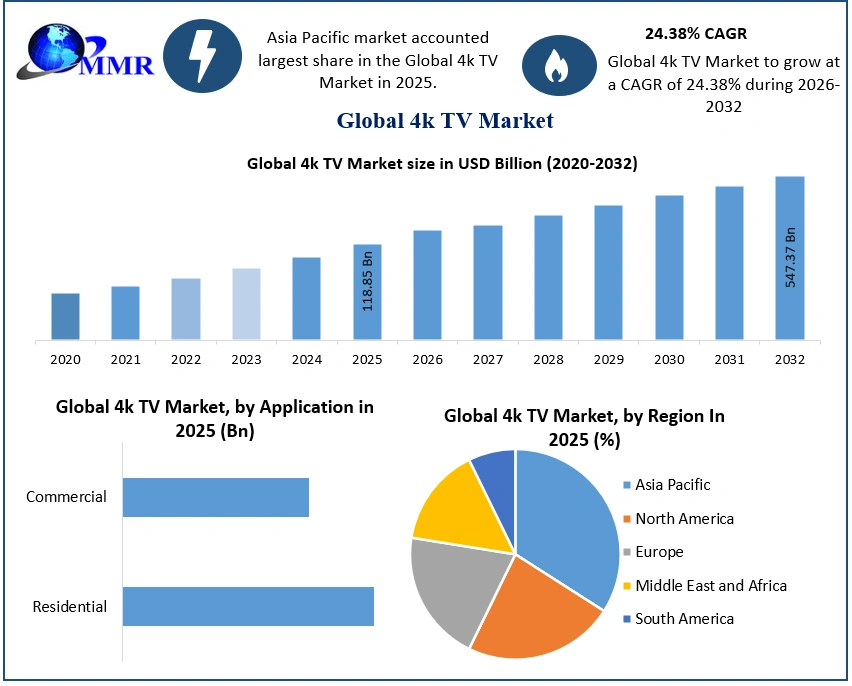
    4K TV Market: Increasing Consumer Demand, the Proliferation of Content, Falling Prices and Improved Accessibility
    The 4k TV Market size was valued at USD 118.85 Billion in 2025 and the total 4k TV revenue is expected to grow at a CAGR of 24.38%
    0 Comments 0 Shares 1K Views 0 Reviews
  • **HID Headlight Market Summary**

    According to Intel Market Research, the global HID Headlight market was valued at **USD 2.869 billion in 2025** and is projected to reach **USD 4.294 billion by 2034**, growing at a **CAGR of 6.1%** during the forecast period. The market's growth is driven by increasing demand for enhanced vehicle visibility, stricter automotive safety regulations, and the growing adoption of premium lighting technologies across passenger and commercial vehicles.

    HID (High-Intensity Discharge) headlights are advanced gas-discharge lighting systems that use xenon and argon gases energized by a high-voltage electrical arc. Compared to traditional halogen bulbs, HID headlights provide brighter illumination, improved energy efficiency, longer operational life, and lower overall maintenance costs. Their ability to deliver superior road visibility has made them a preferred choice in premium and high-performance vehicles.

    A key factor supporting market growth is the rising consumer preference for improved nighttime driving safety. HID headlights can produce significantly higher light output than conventional halogen systems, enabling drivers to detect obstacles, road signs, and hazards more effectively. As consumers increasingly prioritize safety and comfort, automakers are integrating advanced lighting solutions into their vehicle offerings.

    Government regulations promoting energy-efficient automotive technologies also contribute to market expansion. HID systems consume less power than traditional lighting technologies, helping manufacturers meet fuel efficiency and emission reduction targets. In addition, the integration of HID lighting with advanced driver-assistance systems (ADAS) is creating new opportunities for innovation and enhancing vehicle safety performance.

    Despite these advantages, the market faces several challenges. HID headlight systems have higher initial costs compared to halogen alternatives, making adoption more difficult in budget vehicle segments. Installation, replacement, and maintenance expenses can also be significantly higher. Furthermore, modern vehicle electrification and evolving automotive architectures require complex engineering solutions to ensure compatibility, increasing development costs for manufacturers.

    The market also faces competition from LED lighting technologies. LEDs offer lower energy consumption, longer service life, and greater design flexibility, making them increasingly attractive to automotive manufacturers. As LED costs continue to decline, they may limit the long-term growth potential of HID systems. To remain competitive, HID manufacturers are focusing on technological improvements, cost optimization, and hybrid lighting solutions.

    Significant growth opportunities exist within the aftermarket sector, particularly in emerging economies where vehicle owners seek affordable performance and safety upgrades. HID retrofit kits allow consumers to upgrade existing halogen systems, creating strong demand among enthusiasts and drivers looking for enhanced visibility and premium styling.

    The market is segmented by type into Xenon Arc Lamps and Metal Halide Variants, with Xenon Arc Lamps accounting for the largest share due to their superior brightness and efficiency. By application, passenger cars represent the leading segment, driven by growing consumer demand for advanced safety features and premium vehicle aesthetics. OEMs remain the dominant end-user category as manufacturers continue integrating HID systems into vehicle designs from the production stage.

    Leading companies operating in the market include **Philips (Signify), OSRAM (ams OSRAM), Morimoto, BWD, NARVA, Nilight, Xenon Depot, Underground Lighting, Arcmen Optoelectronics, POPNOW, Foshan FSL Autotech, Guangzhou Aoke Electronics, and Guangdong Lingxun Microelectronics**. These companies are investing in research and development, strategic partnerships, and product innovation to strengthen their market positions. Overall, the HID Headlight market is expected to maintain steady growth as demand for high-performance automotive lighting solutions continues to rise worldwide.

    **Read the full report:** https://www.intelmarketresearch.com/machinery-and-equipment/723/hid-headlight-2025-2034
    **HID Headlight Market Summary** According to Intel Market Research, the global HID Headlight market was valued at **USD 2.869 billion in 2025** and is projected to reach **USD 4.294 billion by 2034**, growing at a **CAGR of 6.1%** during the forecast period. The market's growth is driven by increasing demand for enhanced vehicle visibility, stricter automotive safety regulations, and the growing adoption of premium lighting technologies across passenger and commercial vehicles. HID (High-Intensity Discharge) headlights are advanced gas-discharge lighting systems that use xenon and argon gases energized by a high-voltage electrical arc. Compared to traditional halogen bulbs, HID headlights provide brighter illumination, improved energy efficiency, longer operational life, and lower overall maintenance costs. Their ability to deliver superior road visibility has made them a preferred choice in premium and high-performance vehicles. A key factor supporting market growth is the rising consumer preference for improved nighttime driving safety. HID headlights can produce significantly higher light output than conventional halogen systems, enabling drivers to detect obstacles, road signs, and hazards more effectively. As consumers increasingly prioritize safety and comfort, automakers are integrating advanced lighting solutions into their vehicle offerings. Government regulations promoting energy-efficient automotive technologies also contribute to market expansion. HID systems consume less power than traditional lighting technologies, helping manufacturers meet fuel efficiency and emission reduction targets. In addition, the integration of HID lighting with advanced driver-assistance systems (ADAS) is creating new opportunities for innovation and enhancing vehicle safety performance. Despite these advantages, the market faces several challenges. HID headlight systems have higher initial costs compared to halogen alternatives, making adoption more difficult in budget vehicle segments. Installation, replacement, and maintenance expenses can also be significantly higher. Furthermore, modern vehicle electrification and evolving automotive architectures require complex engineering solutions to ensure compatibility, increasing development costs for manufacturers. The market also faces competition from LED lighting technologies. LEDs offer lower energy consumption, longer service life, and greater design flexibility, making them increasingly attractive to automotive manufacturers. As LED costs continue to decline, they may limit the long-term growth potential of HID systems. To remain competitive, HID manufacturers are focusing on technological improvements, cost optimization, and hybrid lighting solutions. Significant growth opportunities exist within the aftermarket sector, particularly in emerging economies where vehicle owners seek affordable performance and safety upgrades. HID retrofit kits allow consumers to upgrade existing halogen systems, creating strong demand among enthusiasts and drivers looking for enhanced visibility and premium styling. The market is segmented by type into Xenon Arc Lamps and Metal Halide Variants, with Xenon Arc Lamps accounting for the largest share due to their superior brightness and efficiency. By application, passenger cars represent the leading segment, driven by growing consumer demand for advanced safety features and premium vehicle aesthetics. OEMs remain the dominant end-user category as manufacturers continue integrating HID systems into vehicle designs from the production stage. Leading companies operating in the market include **Philips (Signify), OSRAM (ams OSRAM), Morimoto, BWD, NARVA, Nilight, Xenon Depot, Underground Lighting, Arcmen Optoelectronics, POPNOW, Foshan FSL Autotech, Guangzhou Aoke Electronics, and Guangdong Lingxun Microelectronics**. These companies are investing in research and development, strategic partnerships, and product innovation to strengthen their market positions. Overall, the HID Headlight market is expected to maintain steady growth as demand for high-performance automotive lighting solutions continues to rise worldwide. **Read the full report:** https://www.intelmarketresearch.com/machinery-and-equipment/723/hid-headlight-2025-2034
    0 Comments 0 Shares 4K Views 0 Reviews
  • Ultra-High Purity SiC Market Report 2024–2032: USD 32.8 Million Valuation with 15.9% Growth Driven by Semiconductor & Advanced Electronics Demand


    The global 99.99% or Above SIC market was valued at US$ 32.8 million in 2024 and is projected to reach US$ 107.2 million by 2032, exhibiting a robust CAGR of 15.9% during the forecast period.

    Get Full Report Here: https://www.24chemicalresearch.com/reports/269402/global-or-above-sic-forecast-market-2024-2030-725
    Ultra-High Purity SiC Market Report 2024–2032: USD 32.8 Million Valuation with 15.9% Growth Driven by Semiconductor & Advanced Electronics Demand The global 99.99% or Above SIC market was valued at US$ 32.8 million in 2024 and is projected to reach US$ 107.2 million by 2032, exhibiting a robust CAGR of 15.9% during the forecast period. Get Full Report Here: https://www.24chemicalresearch.com/reports/269402/global-or-above-sic-forecast-market-2024-2030-725
    WWW.24CHEMICALRESEARCH.COM
    99.99? or Above SIC Market, Global Outlook and Forecast 2026-2033
    99.99? or Above SIC Global 99.99% or Above SIC market was valued at USD 652.8M in 2024 and projected to reach USD 1.24B by 2032, at 9.1% CAGR.
    0 Comments 0 Shares 813 Views 0 Reviews
  • Embedded Die Packaging Technology Market Forecast, Trend Analysis & Competition Tracking - Global Market Insights 2024 to 2034

    In today’s fast-paced business environment, organizations must rely on accurate insights and structured data to remain competitive and sustainable. Recognizing this growing demand, Emergen Research has introduced its advanced Embedded Die Packaging Technology market research content, a comprehensive solution designed to help businesses understand evolving market trends and make informed strategic decisions. This offering is built to support companies across various industries by providing meaningful insights and practical guidance.

    A key strength of this research lies in its ability to simplify complex data into actionable knowledge. Businesses often struggle with interpreting large volumes of information, but this content is designed to present insights in a clear and structured manner. By focusing on usability, the report ensures that decision-makers can quickly understand the data and apply it effectively to their strategies.

    Embedded Die Packaging Technology Market Size and Overview

    The Embedded Die Packaging Technology Market is expected to grow from an estimated USD 70.2 billion in 2024 to USD 384.5 billion in 2033, at a CAGR of 20.80%.

    The global Embedded Die Packaging Technology Market size is expected to grow from 70.2 billion by the end of 2024 to 384.5 billion by 2033, registering a revenue CAGR of 20.80% during the forecast period.

    The Embedded Die Packaging Technology Market is anticipated to grow due to factors such as rising demand for miniaturized electronic devices, government support for semiconductor innovation, and increasing adoption of advanced packaging in IoT and 5G applications. The global drive to improve semiconductor technology is one of the most important reasons for the embedded die packaging technology market.

    Government policies and funding initiatives have been pivotal in the adoption process of this high-end packaging solution. A clear example of such an initiative has been the U.S. CHIPS and Science Act of 2022, which committed $52.7 billion to boost the domestic ecosystem of semiconductor manufacturing.

    Much of these funds are allocated to research and development for advanced packaging techniques, and embedded die technologies fall in this category. The goals of the act encourage research into smaller, higher-performing chips packaged in compact systems-embedded die systems.

    In the same way, in Europe, the EU Chips Act has dedicated €43 billion to fortify the region's semiconductor capacity. The act particularly underlines advanced packaging techniques, including embedded die technology, to realize greater energy efficiency, miniaturization, and integration.

    This initiative targets the doubling of the semiconductor market share of Europe to 20% by 2030, where embedded die packaging is crucial to achieving the objectives. Additionally, reports from SEMI (Semiconductor Equipment and Materials International) highlight the effect of embedded die packaging technology on manufacturing efficiency.

    In 2023, semiconductor production efficiency was found to increase by 12% with the use of embedded die solutions, while material and energy costs relating to traditional packaging techniques decreased drastically. Embedded die packaging, for instance, is reported to reduce power consumption by 20-30%. According to NIST, it helps meet the energy sustainability goals globally and aids in developing environmentally friendly products. Governments of China, Japan, and South Korea have started big semiconductor development programs to capture the world market for electronics.

    It is seen in the Made in China 2025 initiative, for instance, which focuses on investing heavily in advanced semiconductor manufacturing technologies, including embedded die packaging, which will reduce imports and position China as a leader in microelectronics.

    Government-supported initiatives provide an enabling environment and have placed the adoption of this technology at the core of future electronics and semiconductor industries. By enabling miniaturization and enhancing performance, embedded die packaging addresses the growing need for compact, efficient, and multifunctional devices across industries, including automotive, telecommunications, and consumer electronics.

    Another significant aspect of the Embedded Die Packaging Technology market research content is its emphasis on continuous innovation and expert-driven analysis. The research is developed by a team of experienced professionals who possess a deep understanding of industry dynamics. Their insights help businesses uncover hidden opportunities, understand competitive pressures, and anticipate future challenges.

    Request Free Sample Copy (To Understand the Complete Structure of this Report [Summary + TOC]) @ https://www.emergenresearch.com/request-free-sample/4010

    Embedded Die Packaging Technology Market Forecast, Trend Analysis & Competition Tracking - Global Market Insights 2024 to 2034 In today’s fast-paced business environment, organizations must rely on accurate insights and structured data to remain competitive and sustainable. Recognizing this growing demand, Emergen Research has introduced its advanced Embedded Die Packaging Technology market research content, a comprehensive solution designed to help businesses understand evolving market trends and make informed strategic decisions. This offering is built to support companies across various industries by providing meaningful insights and practical guidance. A key strength of this research lies in its ability to simplify complex data into actionable knowledge. Businesses often struggle with interpreting large volumes of information, but this content is designed to present insights in a clear and structured manner. By focusing on usability, the report ensures that decision-makers can quickly understand the data and apply it effectively to their strategies. Embedded Die Packaging Technology Market Size and Overview The Embedded Die Packaging Technology Market is expected to grow from an estimated USD 70.2 billion in 2024 to USD 384.5 billion in 2033, at a CAGR of 20.80%. The global Embedded Die Packaging Technology Market size is expected to grow from 70.2 billion by the end of 2024 to 384.5 billion by 2033, registering a revenue CAGR of 20.80% during the forecast period. The Embedded Die Packaging Technology Market is anticipated to grow due to factors such as rising demand for miniaturized electronic devices, government support for semiconductor innovation, and increasing adoption of advanced packaging in IoT and 5G applications. The global drive to improve semiconductor technology is one of the most important reasons for the embedded die packaging technology market. Government policies and funding initiatives have been pivotal in the adoption process of this high-end packaging solution. A clear example of such an initiative has been the U.S. CHIPS and Science Act of 2022, which committed $52.7 billion to boost the domestic ecosystem of semiconductor manufacturing. Much of these funds are allocated to research and development for advanced packaging techniques, and embedded die technologies fall in this category. The goals of the act encourage research into smaller, higher-performing chips packaged in compact systems-embedded die systems. In the same way, in Europe, the EU Chips Act has dedicated €43 billion to fortify the region's semiconductor capacity. The act particularly underlines advanced packaging techniques, including embedded die technology, to realize greater energy efficiency, miniaturization, and integration. This initiative targets the doubling of the semiconductor market share of Europe to 20% by 2030, where embedded die packaging is crucial to achieving the objectives. Additionally, reports from SEMI (Semiconductor Equipment and Materials International) highlight the effect of embedded die packaging technology on manufacturing efficiency. In 2023, semiconductor production efficiency was found to increase by 12% with the use of embedded die solutions, while material and energy costs relating to traditional packaging techniques decreased drastically. Embedded die packaging, for instance, is reported to reduce power consumption by 20-30%. According to NIST, it helps meet the energy sustainability goals globally and aids in developing environmentally friendly products. Governments of China, Japan, and South Korea have started big semiconductor development programs to capture the world market for electronics. It is seen in the Made in China 2025 initiative, for instance, which focuses on investing heavily in advanced semiconductor manufacturing technologies, including embedded die packaging, which will reduce imports and position China as a leader in microelectronics. Government-supported initiatives provide an enabling environment and have placed the adoption of this technology at the core of future electronics and semiconductor industries. By enabling miniaturization and enhancing performance, embedded die packaging addresses the growing need for compact, efficient, and multifunctional devices across industries, including automotive, telecommunications, and consumer electronics. Another significant aspect of the Embedded Die Packaging Technology market research content is its emphasis on continuous innovation and expert-driven analysis. The research is developed by a team of experienced professionals who possess a deep understanding of industry dynamics. Their insights help businesses uncover hidden opportunities, understand competitive pressures, and anticipate future challenges. Request Free Sample Copy (To Understand the Complete Structure of this Report [Summary + TOC]) @ https://www.emergenresearch.com/request-free-sample/4010
    0 Comments 0 Shares 5K Views 0 Reviews
  • Metal Cutting Machine Market Forecast, Trend Analysis & Competition Tracking - Global Metal Cutting Machine Market Insights 2024 to 2042

    Global Metal Cutting Machine Market research report delivers a comprehensive analysis of the market outlook, regulatory framework, and macro- and micro-economic factors influencing the growth of the industry. The market was valued at USD 5.96 billion in 2024 and is projected to reach USD 11.10 billion by 2034, registering a CAGR of 5.30% during the forecast period. The report is formulated through extensive primary and secondary research to provide accurate insights into market size, share, revenue generation, and future growth prospects. It offers a detailed evaluation of evolving technologies such as CNC systems, automation, and Industry 4.0 integration, which are significantly transforming manufacturing processes.

    Get a sample of the report @ https://www.emergenresearch.com/request-sample/2658

    Leading Players Analyzed in the Report are:
    TRUMPF
    AMADA Co. Ltd
    ESAB Corporation
    Bystronic Laser AG
    WARD Jet
    Nissan Tanaka Corporation
    Coherent Corp
    Messer Cutting System
    Omax Corporation
    Flow International Corporation
    Others

    Key manufacturers and vendors are extensively profiled in the report, covering their product portfolios, production capacities, revenue streams, and strategic initiatives. Analytical tools such as SWOT analysis, Porter’s Five Forces analysis, and investment feasibility studies are included to provide a holistic view of the competitive landscape. Companies are focusing on mergers & acquisitions, partnerships, and product innovations to strengthen their market position and expand their global footprint. The report also outlines potential opportunities and threats that may influence market growth during the forecast period.

    The report further evaluates key market trends and provides an in-depth segmentation analysis. One of the major drivers is the growing adoption of Computer Numerical Control (CNC) machines, which enhance precision and productivity. Automation and robotics integration are also gaining traction, enabling real-time monitoring and predictive maintenance. Additionally, rising industrialization in emerging economies and increasing demand from automotive and aerospace industries are fueling market expansion. However, high initial investment costs, fluctuating raw material prices, and regulatory challenges are key restraints affecting market growth.

    Segmentation based on Types:
    • Laser Cutting Machine
    • Waterjet Cutting Machine
    • Plasma Cutting Machine
    • Flame Cutting Machine
    • Others

    Segmentation based on Applications:
    • Automotive
    • Defense & Aerospace
    • Construction
    • Marine
    • Electrical & Electronics
    • Others

    Among product types, laser cutting machines dominate the market due to their high precision, speed, and ability to handle complex geometries. Meanwhile, waterjet cutting machines are expected to witness the fastest growth owing to their versatility and eco-friendly cold cutting process, which prevents thermal damage and reduces waste.

    The study further focuses on a detailed regional analysis to understand growth patterns across major geographies. Asia Pacific holds the largest market share, driven by rapid industrialization, strong manufacturing capabilities, and increasing adoption of advanced technologies in countries such as China, India, Japan, and South Korea. North America is expected to register the fastest growth due to significant investments in research & development and widespread adoption of automation technologies across industries.

    Regional Landscape:

    • North America (U.S., Canada, Mexico)
    • Europe (U.K., Germany, France, Italy, Rest of EU)
    • Asia Pacific (China, India, Japan, South Korea, Rest of APAC)
    • Latin America (Brazil, Rest of LATAM)
    • Middle East & Africa (UAE, Saudi Arabia, South Africa, Rest of MEA)

    To know more about the report, visit @ https://www.emergenresearch.com/industry-report/metal-cutting-machine-market

    Key points covered in the report:
    • Comprehensive overview of the market with detailed insights into growth trends and future outlook
    • Market segmentation based on product types, applications, and regions for better understanding
    • Analysis of key drivers such as automation, CNC adoption, and Industry 4.0 integration
    • Evaluation of restraints including high capital investment and raw material price volatility
    • Technological advancements such as IoT-enabled systems and robotic automation
    • Competitive landscape with detailed profiling of leading players and their strategies
    • Historical analysis and forecast outlook highlighting revenue growth and expansion opportunities
    • Identification of emerging opportunities and investment hotspots across regions

    Request customization of the report @ https://www.emergenresearch.com/request-for-customization/2658


    Metal Cutting Machine Market Forecast, Trend Analysis & Competition Tracking - Global Metal Cutting Machine Market Insights 2024 to 2042 Global Metal Cutting Machine Market research report delivers a comprehensive analysis of the market outlook, regulatory framework, and macro- and micro-economic factors influencing the growth of the industry. The market was valued at USD 5.96 billion in 2024 and is projected to reach USD 11.10 billion by 2034, registering a CAGR of 5.30% during the forecast period. The report is formulated through extensive primary and secondary research to provide accurate insights into market size, share, revenue generation, and future growth prospects. It offers a detailed evaluation of evolving technologies such as CNC systems, automation, and Industry 4.0 integration, which are significantly transforming manufacturing processes. Get a sample of the report @ https://www.emergenresearch.com/request-sample/2658 Leading Players Analyzed in the Report are: TRUMPF AMADA Co. Ltd ESAB Corporation Bystronic Laser AG WARD Jet Nissan Tanaka Corporation Coherent Corp Messer Cutting System Omax Corporation Flow International Corporation Others Key manufacturers and vendors are extensively profiled in the report, covering their product portfolios, production capacities, revenue streams, and strategic initiatives. Analytical tools such as SWOT analysis, Porter’s Five Forces analysis, and investment feasibility studies are included to provide a holistic view of the competitive landscape. Companies are focusing on mergers & acquisitions, partnerships, and product innovations to strengthen their market position and expand their global footprint. The report also outlines potential opportunities and threats that may influence market growth during the forecast period. The report further evaluates key market trends and provides an in-depth segmentation analysis. One of the major drivers is the growing adoption of Computer Numerical Control (CNC) machines, which enhance precision and productivity. Automation and robotics integration are also gaining traction, enabling real-time monitoring and predictive maintenance. Additionally, rising industrialization in emerging economies and increasing demand from automotive and aerospace industries are fueling market expansion. However, high initial investment costs, fluctuating raw material prices, and regulatory challenges are key restraints affecting market growth. Segmentation based on Types: • Laser Cutting Machine • Waterjet Cutting Machine • Plasma Cutting Machine • Flame Cutting Machine • Others Segmentation based on Applications: • Automotive • Defense & Aerospace • Construction • Marine • Electrical & Electronics • Others Among product types, laser cutting machines dominate the market due to their high precision, speed, and ability to handle complex geometries. Meanwhile, waterjet cutting machines are expected to witness the fastest growth owing to their versatility and eco-friendly cold cutting process, which prevents thermal damage and reduces waste. The study further focuses on a detailed regional analysis to understand growth patterns across major geographies. Asia Pacific holds the largest market share, driven by rapid industrialization, strong manufacturing capabilities, and increasing adoption of advanced technologies in countries such as China, India, Japan, and South Korea. North America is expected to register the fastest growth due to significant investments in research & development and widespread adoption of automation technologies across industries. Regional Landscape: • North America (U.S., Canada, Mexico) • Europe (U.K., Germany, France, Italy, Rest of EU) • Asia Pacific (China, India, Japan, South Korea, Rest of APAC) • Latin America (Brazil, Rest of LATAM) • Middle East & Africa (UAE, Saudi Arabia, South Africa, Rest of MEA) To know more about the report, visit @ https://www.emergenresearch.com/industry-report/metal-cutting-machine-market Key points covered in the report: • Comprehensive overview of the market with detailed insights into growth trends and future outlook • Market segmentation based on product types, applications, and regions for better understanding • Analysis of key drivers such as automation, CNC adoption, and Industry 4.0 integration • Evaluation of restraints including high capital investment and raw material price volatility • Technological advancements such as IoT-enabled systems and robotic automation • Competitive landscape with detailed profiling of leading players and their strategies • Historical analysis and forecast outlook highlighting revenue growth and expansion opportunities • Identification of emerging opportunities and investment hotspots across regions Request customization of the report @ https://www.emergenresearch.com/request-for-customization/2658
    0 Comments 0 Shares 7K Views 0 Reviews
  • Global Semiconductor Lasers Market Expands Rapidly with Surge in Optical Communication, AR/VR, and Medical Applications

    The global semiconductor lasers market is witnessing strong growth momentum, driven by the rapid expansion of high-speed communication networks, advancements in medical technologies, and increasing adoption across emerging applications such as LiDAR, AR/VR devices, and industrial automation. Semiconductor lasers, known for their compact size, high efficiency, and cost-effectiveness, are becoming indispensable components in modern digital infrastructure and advanced electronic systems.

    Request Free Sample Report : https://www.stellarmr.com/report/req_sample/semiconductor-lasers-market/2296

    Market Estimation & Definition

    The semiconductor lasers market was valued at approximately USD 8.18 billion in 2024 and is projected to reach nearly USD 21.46 billion by 2032, growing at a CAGR of about 12.80% during the forecast period.

    Semiconductor lasers are specialized diode lasers built from heavily doped p-type and n-type semiconductor materials such as gallium arsenide (GaAs) and indium phosphide (InP), which enable efficient light emission. These lasers are widely used in optical communication, healthcare devices, defense applications, sensors, and consumer electronics. Their ability to deliver high-speed data transmission and precision makes them essential in next-generation digital and photonic systems.

    The increasing shift toward optical technologies and photonics-based systems is accelerating the role of semiconductor lasers as core enabling components across multiple industries.

    Market Growth Drivers & Opportunity

    A key driver for market expansion is the rising demand for high-speed data transfer and optical communication systems. With increasing internet usage, cloud computing, and the proliferation of IoT devices, fiber-optic communication networks rely heavily on semiconductor lasers to deliver high bandwidth and low-latency data transmission.

    Another major growth factor is the rapid adoption of semiconductor lasers in emerging technologies such as autonomous vehicles, LiDAR systems, and AR/VR devices. These technologies require precise optical sensing and projection capabilities, creating new opportunities for semiconductor laser integration.

    Healthcare applications also represent a significant growth avenue. Semiconductor lasers are increasingly used in ophthalmology, dermatology, dentistry, and surgical procedures due to their accuracy and minimal invasiveness. Additionally, defense and aerospace sectors are contributing to market demand through applications such as target marking, range finding, and advanced laser systems.

    Continuous investment in R&D, product innovation, and telecommunications infrastructure—particularly 5G and future 6G networks—is expected to unlock new revenue streams for industry players.

    What Lies Ahead: Emerging Trends Shaping the Future

    The semiconductor lasers market is being reshaped by several transformative trends. One of the most prominent is the rapid advancement of high-power and energy-efficient laser technologies, enabling new industrial and medical applications. Manufacturers are focusing on improving output power, efficiency, and compact design to enhance product performance and reliability.

    Another key trend is the integration of semiconductor lasers into data centers and high-performance computing systems. Vertical-cavity surface-emitting lasers (VCSELs) are becoming widely used for optical interconnects and high-speed data transmission in modern data infrastructure.

    The expansion of smart cities, AI-driven systems, and cloud computing platforms is also increasing the demand for advanced optical components. Additionally, the growing use of blue and green lasers for display technologies and precision manufacturing is creating new avenues for market expansion.

    Request Free Sample Report : https://www.stellarmr.com/report/req_sample/semiconductor-lasers-market/2296

    Press Release Conclusion

    The global semiconductor lasers market is poised for robust expansion as digital transformation, high-speed communication, and advanced healthcare technologies continue to evolve. The increasing integration of optical systems in telecommunications, data centers, consumer electronics, and industrial applications is creating sustained demand for semiconductor lasers.

    With ongoing technological advancements, expanding 5G infrastructure, and rising adoption of AI-driven and photonics-based systems, the semiconductor lasers market is expected to deliver strong long-term growth opportunities. Industry participants focusing on innovation, efficiency, and application diversification will be best positioned to capitalize on the next wave of market development.

    About us

    Phase 3,Navale IT Zone, S.No. 51/2A/2,

    Office No. 202, 2nd floor,

    Near, Navale Brg,Narhe,

    Pune, Maharashtra 411041

    sales@stellarmr.com
    Global Semiconductor Lasers Market Expands Rapidly with Surge in Optical Communication, AR/VR, and Medical Applications The global semiconductor lasers market is witnessing strong growth momentum, driven by the rapid expansion of high-speed communication networks, advancements in medical technologies, and increasing adoption across emerging applications such as LiDAR, AR/VR devices, and industrial automation. Semiconductor lasers, known for their compact size, high efficiency, and cost-effectiveness, are becoming indispensable components in modern digital infrastructure and advanced electronic systems. Request Free Sample Report : https://www.stellarmr.com/report/req_sample/semiconductor-lasers-market/2296 Market Estimation & Definition The semiconductor lasers market was valued at approximately USD 8.18 billion in 2024 and is projected to reach nearly USD 21.46 billion by 2032, growing at a CAGR of about 12.80% during the forecast period. Semiconductor lasers are specialized diode lasers built from heavily doped p-type and n-type semiconductor materials such as gallium arsenide (GaAs) and indium phosphide (InP), which enable efficient light emission. These lasers are widely used in optical communication, healthcare devices, defense applications, sensors, and consumer electronics. Their ability to deliver high-speed data transmission and precision makes them essential in next-generation digital and photonic systems. The increasing shift toward optical technologies and photonics-based systems is accelerating the role of semiconductor lasers as core enabling components across multiple industries. Market Growth Drivers & Opportunity A key driver for market expansion is the rising demand for high-speed data transfer and optical communication systems. With increasing internet usage, cloud computing, and the proliferation of IoT devices, fiber-optic communication networks rely heavily on semiconductor lasers to deliver high bandwidth and low-latency data transmission. Another major growth factor is the rapid adoption of semiconductor lasers in emerging technologies such as autonomous vehicles, LiDAR systems, and AR/VR devices. These technologies require precise optical sensing and projection capabilities, creating new opportunities for semiconductor laser integration. Healthcare applications also represent a significant growth avenue. Semiconductor lasers are increasingly used in ophthalmology, dermatology, dentistry, and surgical procedures due to their accuracy and minimal invasiveness. Additionally, defense and aerospace sectors are contributing to market demand through applications such as target marking, range finding, and advanced laser systems. Continuous investment in R&D, product innovation, and telecommunications infrastructure—particularly 5G and future 6G networks—is expected to unlock new revenue streams for industry players. What Lies Ahead: Emerging Trends Shaping the Future The semiconductor lasers market is being reshaped by several transformative trends. One of the most prominent is the rapid advancement of high-power and energy-efficient laser technologies, enabling new industrial and medical applications. Manufacturers are focusing on improving output power, efficiency, and compact design to enhance product performance and reliability. Another key trend is the integration of semiconductor lasers into data centers and high-performance computing systems. Vertical-cavity surface-emitting lasers (VCSELs) are becoming widely used for optical interconnects and high-speed data transmission in modern data infrastructure. The expansion of smart cities, AI-driven systems, and cloud computing platforms is also increasing the demand for advanced optical components. Additionally, the growing use of blue and green lasers for display technologies and precision manufacturing is creating new avenues for market expansion. Request Free Sample Report : https://www.stellarmr.com/report/req_sample/semiconductor-lasers-market/2296 Press Release Conclusion The global semiconductor lasers market is poised for robust expansion as digital transformation, high-speed communication, and advanced healthcare technologies continue to evolve. The increasing integration of optical systems in telecommunications, data centers, consumer electronics, and industrial applications is creating sustained demand for semiconductor lasers. With ongoing technological advancements, expanding 5G infrastructure, and rising adoption of AI-driven and photonics-based systems, the semiconductor lasers market is expected to deliver strong long-term growth opportunities. Industry participants focusing on innovation, efficiency, and application diversification will be best positioned to capitalize on the next wave of market development. About us Phase 3,Navale IT Zone, S.No. 51/2A/2, Office No. 202, 2nd floor, Near, Navale Brg,Narhe, Pune, Maharashtra 411041 sales@stellarmr.com
    0 Comments 0 Shares 8K Views 0 Reviews
  • According to our latest research, the Global PU Adhesive market size was valued at $9.7 billion in 2024 and is projected to reach $17.5 billion by 2033, expanding at a robust CAGR of 6.8% during the forecast period 2025–2033. The primary factor fueling this remarkable growth is the surging demand for high-performance bonding solutions across diverse industries such as automotive, construction, packaging, and electronics. Polyurethane (PU) adhesives are increasingly favored due to their superior flexibility, strong adhesion properties, and resistance to chemicals and moisture, making them indispensable in both industrial and commercial applications. The expanding scope of PU adhesive applications, coupled with ongoing technological advancements, is expected to further solidify their dominance in the global adhesives market over the coming decade.
    https://researchintelo.com/report/pu-adhesive-market
    According to our latest research, the Global PU Adhesive market size was valued at $9.7 billion in 2024 and is projected to reach $17.5 billion by 2033, expanding at a robust CAGR of 6.8% during the forecast period 2025–2033. The primary factor fueling this remarkable growth is the surging demand for high-performance bonding solutions across diverse industries such as automotive, construction, packaging, and electronics. Polyurethane (PU) adhesives are increasingly favored due to their superior flexibility, strong adhesion properties, and resistance to chemicals and moisture, making them indispensable in both industrial and commercial applications. The expanding scope of PU adhesive applications, coupled with ongoing technological advancements, is expected to further solidify their dominance in the global adhesives market over the coming decade. https://researchintelo.com/report/pu-adhesive-market
    RESEARCHINTELO.COM
    PU Adhesive Market Research Report 2033
    According to our latest research, the Global PU Adhesive market size was valued at $9.7 billion in 2024 and is projected to reach $17.5 billion by 2033, expanding at a robust CAGR of 6.8% during the forecast period 2025–2033.
    0 Comments 0 Shares 1K Views 0 Reviews
  • According to our latest research, the Global Grinding and Polishing Machine market size was valued at $2.8 billion in 2024 and is projected to reach $4.6 billion by 2033, expanding at a CAGR of 5.3% during 2024–2033. This robust growth trajectory is primarily driven by the rapid adoption of advanced automation technologies across manufacturing and industrial sectors, which is significantly enhancing productivity and precision in surface finishing applications worldwide. As industries increasingly demand high-quality surface finishes and tighter tolerances, grinding and polishing machines are becoming indispensable tools in sectors ranging from automotive and aerospace to electronics and construction. The convergence of digitalization, Industry 4.0, and the need for operational efficiency is further propelling the global grinding and polishing machine market forward, making it a focal point for both established manufacturers and emerging players seeking to capitalize on the evolving industrial landscape.https://researchintelo.com/report/grinding-and-polishing-machine-market
    According to our latest research, the Global Grinding and Polishing Machine market size was valued at $2.8 billion in 2024 and is projected to reach $4.6 billion by 2033, expanding at a CAGR of 5.3% during 2024–2033. This robust growth trajectory is primarily driven by the rapid adoption of advanced automation technologies across manufacturing and industrial sectors, which is significantly enhancing productivity and precision in surface finishing applications worldwide. As industries increasingly demand high-quality surface finishes and tighter tolerances, grinding and polishing machines are becoming indispensable tools in sectors ranging from automotive and aerospace to electronics and construction. The convergence of digitalization, Industry 4.0, and the need for operational efficiency is further propelling the global grinding and polishing machine market forward, making it a focal point for both established manufacturers and emerging players seeking to capitalize on the evolving industrial landscape.https://researchintelo.com/report/grinding-and-polishing-machine-market
    RESEARCHINTELO.COM
    Grinding and Polishing Machine Market Research Report 2033
    According to our latest research, the Global Grinding and Polishing Machine market size was valued at $2.8 billion in 2024 and is projected to reach $4.6 billion by 2033, expanding at a CAGR of 5.3% during 2024–2033.
    0 Comments 0 Shares 2K Views 0 Reviews
More Results