


The Virtual Battlefield: An Introduction to Immersive Military and Defense Technology
Defining the New Paradigm of Digital Warfare and Training
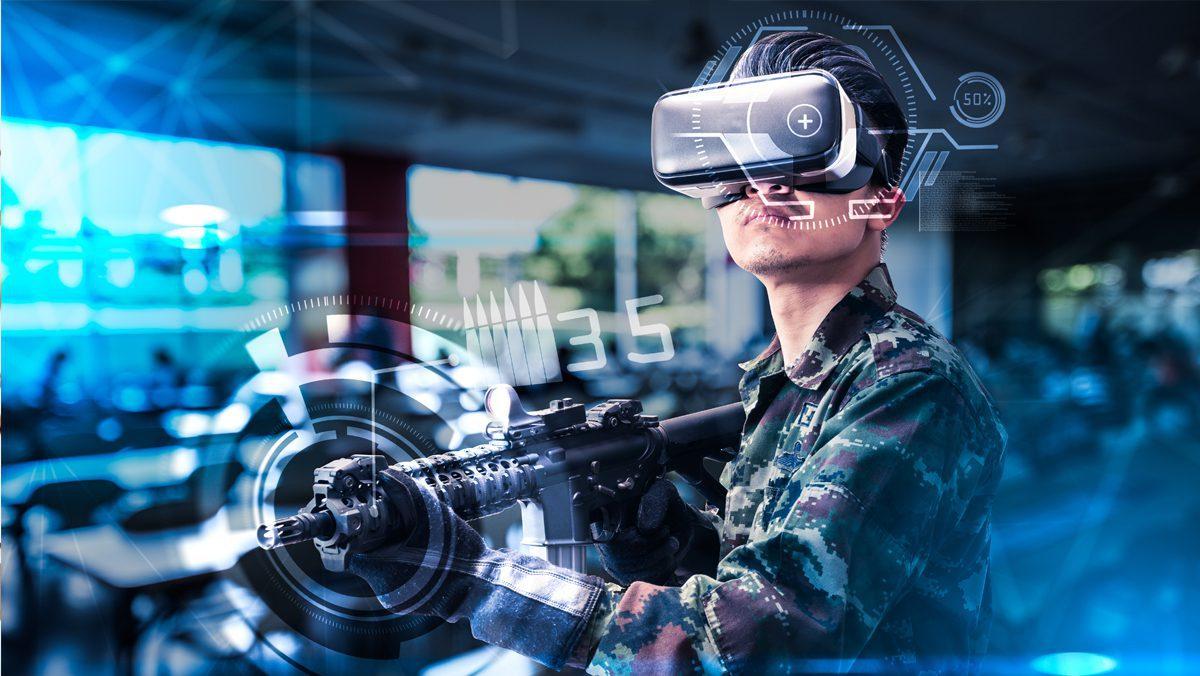
In the quest for superior readiness and operational effectiveness, global defense forces are increasingly turning towards a revolutionary suite of digital tools. The Immersive Technology In Military & Defense industry represents this new frontier, leveraging virtual reality (VR), augmented reality (AR), and mixed reality (MR) to fundamentally reshape how soldiers train, plan, and execute missions. By creating realistic, interactive, and data-rich digital environments, these technologies offer a safe, cost-effective, and highly efficient alternative to traditional training methods. They allow personnel to experience and rehearse complex, high-stakes scenarios—from flying a fighter jet to coordinating a squad-level ambush—in a controlled setting. This shift from physical to virtual training is not just an upgrade; it is a strategic imperative designed to build a smarter, faster, and more lethal fighting force prepared for the complexities of modern warfare.
Virtual Reality (VR): Creating Fully Synthetic Training Worlds
Virtual Reality stands as a cornerstone of immersive military training, offering the ability to completely replace a user's physical surroundings with a computer-generated world. Through the use of VR headsets and haptic feedback systems, personnel can be fully immersed in photorealistic simulations of any environment imaginable. This is most prominently used in advanced flight simulators, where pilots can practice complex maneuvers and emergency procedures without risking multi-million-dollar aircraft. In the infantry, VR allows soldiers to conduct virtual patrols, practice urban combat tactics, and engage with intelligent, AI-driven adversaries. The key benefits are risk-free repetition and exposure. A soldier can rehearse a dangerous room-clearing procedure dozens of times in VR, building muscle memory and confidence that directly translates to improved performance and survival in a real-world engagement, all while saving millions in ammunition and logistical costs.
Augmented Reality (AR): Overlaying Intelligence onto the Real World
Where VR replaces reality, Augmented Reality enhances it. AR technology is rapidly moving from the training ground to the live battlefield, serving as a powerful tool for enhancing situational awareness. This is most commonly seen in heads-up displays (HUDs) for pilots and ground troops. By wearing AR glasses or a helmet-mounted visor, a soldier can see critical digital information projected directly onto their field of view. This data can include navigation waypoints, the real-time locations of friendly forces (blue force tracking), identified enemy targets, and live video feeds from overhead drones. This capability prevents soldiers from having to look down at a screen or map, allowing them to remain focused on their surroundings while receiving critical intelligence. AR is also revolutionizing maintenance, enabling remote experts to guide field technicians through complex repairs with holographic instructions.
Mixed Reality (MR): Blending Physical and Digital Worlds for Strategy
Mixed Reality represents the sophisticated convergence of the physical and digital realms, allowing users to interact with virtual objects as if they were physically present. In the military context, MR is a game-changer for collaborative mission planning and command and control. Using MR headsets like Microsoft’s HoloLens, a group of commanders can gather around a physical table and see a detailed, interactive 3D holographic map of the terrain. They can collaboratively plot troop movements, visualize lines of sight, and wargame different strategic approaches in a shared, interactive space. This provides a level of intuitive understanding and strategic depth that is impossible to achieve with flat, two-dimensional maps. MR allows leadership to grasp the complexities of the battlefield in three dimensions, leading to better-coordinated plans and a higher probability of mission success.
The Core Value: Enhancing Readiness, Safety, and Cost-Effectiveness
The fundamental value proposition driving the adoption of immersive technologies is threefold: enhanced readiness, improved safety, and significant cost savings. These systems enable military forces to train for scenarios that are too dangerous, expensive, or logistically complex to replicate in the real world, such as responding to a chemical attack or conducting a large-scale amphibious landing. By providing frequent, realistic, and data-driven training, immersive technology accelerates the learning curve, improves cognitive skills under pressure, and ensures that personnel are better prepared for the rigors of actual combat. This leads to a more capable and resilient force. Ultimately, the investment in virtual and augmented reality is an investment in human performance, ensuring that soldiers, sailors, and airmen are given the best possible preparation to execute their missions successfully and return home safely.
➤ In-Depth Market Studies by Market Research Future:

 English
 French
 Spanish
 Portuguese
 Deutsch
 Turkish
 Dutch
Dutch
 Italiano
 Russian
 Romaian
 Portuguese (Brazil)
 Greek
Greek