


How to Spot Fake Parts When Booking an Apple iPhone Repair
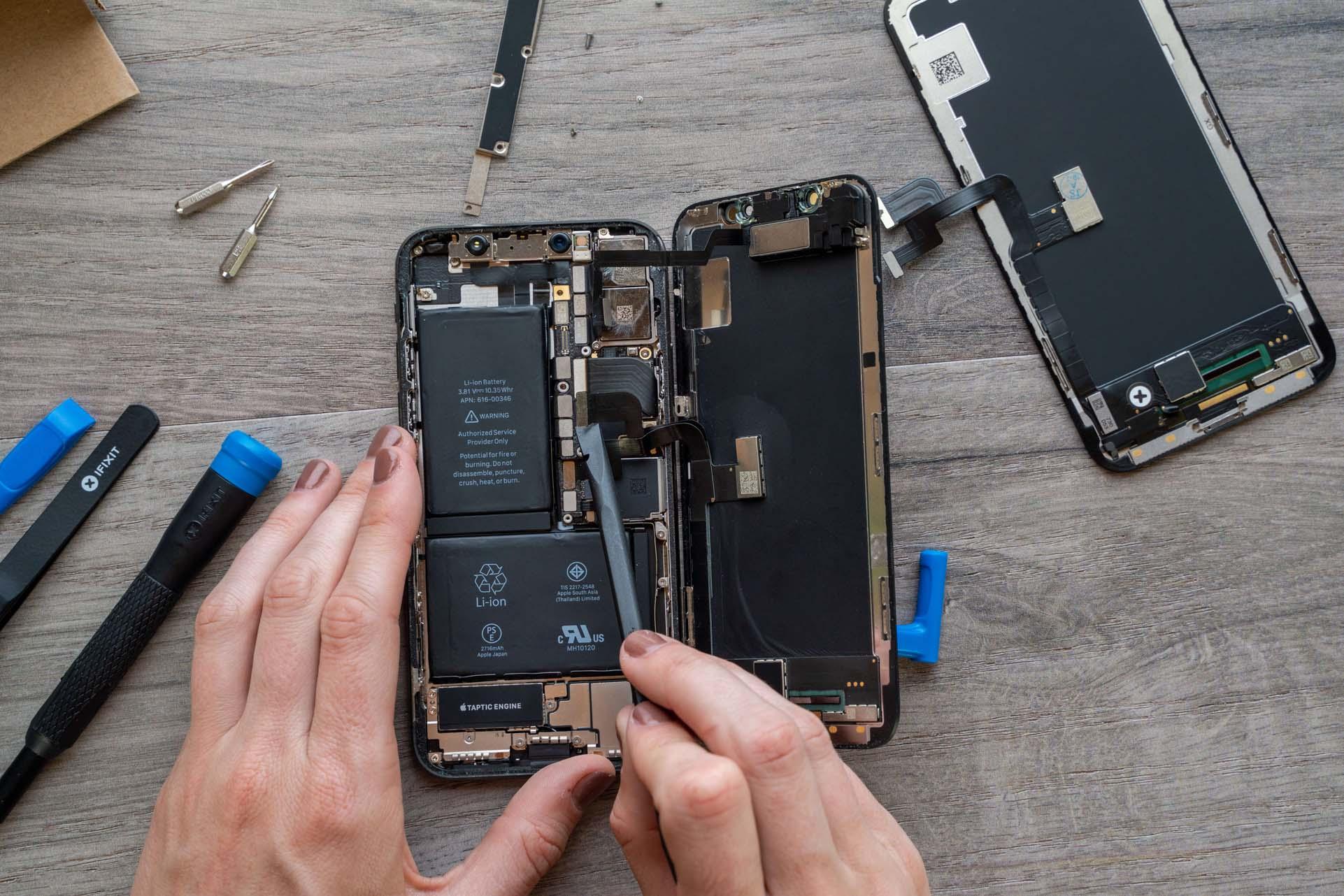
Dubai is a city of luxury and high standards. We drive high-performance cars, we live in architectural marvels, and we demand the best from our technology. The iPhone is the undisputed king of smartphones in the UAE. It is a symbol of reliability and premium engineering.
But what happens when that premium device breaks?
When your screen shatters or your battery dies, you enter the vast and often murky world of apple iphone repair. In Dubai, you have hundreds of options. From the glitzy official stores in the mega-malls to the small, crowded shops in Satwa and Bur Dubai, everyone promises to fix your phone. They all claim to offer the "best price" and "original parts."
Here is the uncomfortable truth: the market is flooded with counterfeit components.
Using fake parts is not just about saving a few Dirhams. It is a gamble with the safety and longevity of your device. A fake battery can catch fire. A fake screen can damage your eyesight or drain your battery in hours. A fake charging port can short-circuit your motherboard.
For the average consumer, telling the difference between a high-quality component and a cheap knockoff is difficult. The counterfeiters are getting better at making parts look real on the outside. However, they cannot fake the internal engineering.
This guide is your weapon against deception. We will teach you how to spot fake parts, understand the warning signs in your iOS settings, and ensure that when you book an apple iphone repair, you are getting exactly what you paid for.
The "Unknown Part" Warning: Your First Line of Defense
Apple knows that the counterfeit market is a problem. In recent years, they have built detection systems directly into the operating system to help users identify non-genuine repairs.
If you have an iPhone XR, XS, or newer (including the iPhone 11, 12, 13, 14, and 15 series), your phone has a built-in lie detector.
How to Check
After a repair, go to Settings > General > About. Look for a section called Parts and Service History.
The Good Sign: If the repair was done using a genuine part and calibrated correctly, you might see a message saying "Genuine Apple Part." Or, in many high-quality third-party repairs, you might simply see no message at all if the technician moved the original serialization chips (more on that later).
The Bad Sign: If you see a warning triangle and the message "Unknown Part", this is a major red flag. This message appears if the installed part is:
-
Non-genuine (a fake or aftermarket copy).
-
Used (taken from another iPhone).
-
Not functioning correctly.
While some honest independent shops use high-quality aftermarket parts that trigger this message (and they should warn you beforehand), if a shop promised you a "100% Original Apple" repair and you see this message, you have been lied to.
Spotting a Fake Screen: The Visual Tests
The display is the most expensive component of your phone. It is also the most commonly counterfeited. A fake screen might look fine when the phone is off, but the moment you turn it on, the differences become obvious if you know where to look.
1. The True Tone Test
Apple introduced "True Tone" technology to adjust the screen's color temperature based on the ambient light in the room.
-
The Test: Open Control Center. Long-press the brightness slider. You should see three buttons: Dark Mode, Night Shift, and True Tone.
-
The Fake: If the True Tone button is missing or won't toggle on, the screen is likely a cheap copy. Alternatively, the technician was lazy and failed to use a programming tool to transfer the serial number from your old screen to the new one. Either way, it is a sign of a sub-standard apple iphone repair.
2. The Brightness and Color Accuracy
Original Apple screens use high-grade OLED panels (on iPhone X and newer) that deliver deep blacks and vibrant colors.
-
The Fake: Cheap screens often use LCD technology instead of OLED. This means "black" pixels still emit a faint grey light. Colors will look washed out or have a strange blue tint.
-
The Sun Test: Take the phone outside into the Dubai midday sun. An original screen will pump up brightness so you can still read maps or messages. A fake screen will be almost impossible to see because it lacks the necessary nits (brightness output).
3. The "Chin" Bezel
Look closely at the black border at the bottom of the screen.
-
The Fake: Manufacturing an edge-to-edge screen is expensive. Counterfeiters often use a slightly thicker border at the bottom (the "chin") to hide the connector cables. If the black border is not perfectly uniform all the way around, it is a low-quality replica.
4. The Water Droplet Test
Original screens have a high-quality oleophobic (oil-repellent) coating. This makes the glass feel smooth and resists fingerprints.
-
The Test: Place a single drop of water on the screen.
-
The Result: On a high-quality screen, the water will bead up into a tight, round sphere. On a cheap fake screen, the water will spread out flat and messy because the glass lacks the expensive coating.
Spotting a Fake Battery: The Safety Risk
While a bad screen is annoying, a bad battery is dangerous. In the heat of the UAE, a poorly manufactured lithium-ion battery is a fire hazard.
1. Battery Health Indicators
Go to Settings > Battery > Battery Health & Charging.
-
The Standard: A new battery should show "Maximum Capacity: 100%."
-
The Fake: If the phone shows a "Service" message, or just a dash (--), or if it refuses to display the percentage, the battery lacks the proper communication chip. The phone cannot talk to the battery to verify its safety.
2. The "Jump" Effect
Pay attention to how the battery drains.
-
The Fake: Does the battery drop from 40% to 10% in a few minutes? Does the phone shut down randomly even when it says it has 20% charge left? These are signs of a low-quality cell with high internal resistance. A genuine or premium battery drains linearly and predictably.
3. Overheating
It is normal for a phone to get warm during charging or heavy gaming.
-
The Fake: If your phone gets uncomfortably hot while doing basic tasks like texting or browsing Instagram, the battery is likely struggling to manage the voltage. This is a critical warning sign that the apple iphone repair was performed with dangerous parts.
Understanding the Terminology: Don't Be Fooled
Shops in Dubai use a lot of jargon to confuse customers. Understanding these terms is crucial to navigating the price differences.
-
Original / Genuine / Service Pack: This should mean a part manufactured by Apple or their direct suppliers (like Foxconn). It is the most expensive and best quality.
-
OEM (Original Equipment Manufacturer): These are parts made by the same factories that supply Apple, but they might lack the Apple logo. They are essentially the same quality as original but cost slightly less.
-
Refurbished (Refurb): This is an original Apple screen where the glass broke, but the underlying LCD/OLED panel was fine. A factory replaced the glass. These are excellent quality if done right, as the display panel is still original.
-
High Copy / Grade A / Aftermarket: These are clones. They are not made by Apple. They are made by third-party factories. The quality ranges from "decent" to "terrible." This is usually the "cheapest price" option.
A dishonest shop will install a "High Copy" screen but charge you the "Original" price. A professional shop will give you the choice and explain the difference honestly.
5 Questions to Ask Your Technician
Before you hand over your device for an apple iphone repair, ask these questions to test their honesty.
1. "Does this screen support True Tone?" If they hesitate or say "no need," walk away. A professional has the programmer tool to restore True Tone.
2. "What kind of warranty do you offer?" If they say "checking warranty only" (meaning once you leave the shop, it is your problem), do not use them. A reputable shop offers at least 3 to 6 months.
3. "Will I see the 'Unknown Part' message?" If they are using an aftermarket part, they should tell you "Yes, you will see the message, but the part works perfectly." Honesty is key. If they say "No message" but install a fake part that does trigger the message, they have lied.
4. "Do you replace the water-resistant seal?" Opening an iPhone destroys the factory seal. A good shop applies a new adhesive gasket. A bad shop just closes the phone, leaving it vulnerable to sweat and rain.
5. "Can I see the part before you install it?" Ask to see the replacement screen or battery. Does it look high quality? Is the packaging professional?
Why "Cheap" is Expensive
We all love a bargain. But in electronics, the lowest price usually costs the most in the long run.
Imagine you save AED 150 by choosing a cheap shop for a battery replacement.
-
Two months later, the battery swells up due to the heat.
-
The swelling pushes against the screen from the inside.
-
Your expensive OLED screen cracks under the pressure.
-
Now you need a new battery (AED 200) and a new screen (AED 600).
That AED 150 saving just cost you AED 800.
Professional apple iphone repair is an investment in the longevity of your device. It keeps the resale value high. When you eventually upgrade, a phone with a genuine screen and healthy battery will sell for a much higher price on Dubizzle or trade-in programs.
The Techfix Promise
At Techfix, we have built our reputation in Business Bay on radical transparency. We know that trust is the hardest thing to earn and the easiest thing to lose.
When you book an apple iphone repair with us, here is our guarantee:
-
Honest Grading: We will explain exactly what options are available (Original vs. Premium OEM). We never disguise a copy part as an original.
-
Programmed Perfection: We transfer your True Tone data. We spot-weld battery BMS boards (on applicable models) to maintain battery health visibility where possible.
-
Warranty: We stand behind our parts. If a screen glitches or a battery fails, we replace it.
-
Security: We respect your data and your device. Repairs are done in a professional, ESD-safe environment.
Your iPhone is a masterpiece of engineering. Don't pollute it with fake parts. Choose a partner who understands the difference between "fixed" and "restored."

 English
 Arabic
 French
 Spanish
 Portuguese
 Deutsch
 Dutch
Dutch
 Italiano
 Russian
 Romaian
 Portuguese (Brazil)
 Greek
Greek