


TMJ Physical Therapy Near Me: Understanding Rehabilitation Approaches for Better Jaw Function and Comfort
Jaw discomfort can make ordinary activities such as eating, speaking, yawning, and smiling more difficult than expected. These problems may develop gradually or appear after an injury, prolonged muscle tension, or repeated habits such as clenching and teeth grinding. The temporomandibular joints connect the lower jaw to the skull and allow the mouth to open, close, and move from side to side. When the joints or surrounding muscles do not function properly, individuals may experience stiffness, clicking sounds, facial soreness, headaches, and restricted movement. Finding TMJ Physical Therapy Near Me can help individuals explore rehabilitation options designed to address these functional difficulties and improve everyday comfort.
Temporomandibular joint disorders affect people differently, which means treatment should reflect each person's symptoms, physical limitations, and recovery goals. Some individuals primarily experience muscle tightness, while others struggle with limited mouth opening, discomfort during chewing, or tension extending into the neck and shoulders. Physical therapy focuses on evaluating these concerns and developing an appropriate plan to improve movement and muscular coordination. Treatment may include targeted exercises, gentle manual techniques, posture education, and practical recommendations for managing daily habits. Understanding these rehabilitation approaches can help patients make informed decisions about their care and take an active role in improving jaw function.
Understanding TMJ Disorders and Common Symptoms
Temporomandibular joint disorders, often referred to as TMD, involve problems affecting the jaw joints, surrounding muscles, and related structures. These components work together to support smooth and controlled movement during everyday activities. When irritation, muscle overactivity, joint restrictions, or movement coordination problems develop, normal jaw function may become uncomfortable. Common symptoms include pain near the jaw joint, clicking or popping sounds, difficulty opening the mouth fully, facial muscle tenderness, and discomfort while chewing. Some people also report headaches, ear-area discomfort, or neck tension. Symptoms may become more noticeable during stressful periods or after activities that place repeated demands on the jaw. A proper evaluation is important because clicking sounds alone do not necessarily indicate a disorder requiring treatment. Identifying the symptoms that affect daily function helps healthcare professionals determine whether physical therapy or another form of care may be appropriate.
How Physical Therapy Assessment Guides Treatment
A comprehensive assessment provides the foundation for an effective rehabilitation program. During an initial appointment, a physical therapist may discuss the patient's medical history, previous injuries, symptom duration, daily activities, and specific difficulties with jaw movement. The therapist may observe how the mouth opens and closes, evaluate jaw movement patterns, and assess tenderness in the muscles surrounding the face and jaw. Neck mobility, shoulder positioning, and posture may also be examined because these areas can influence overall muscular tension. The assessment helps identify functional limitations and establish measurable treatment goals. For example, one patient may want to improve comfortable mouth opening, while another may need support with chewing or reducing muscle discomfort. A personalized evaluation ensures that treatment decisions are based on the individual's presentation rather than a general approach applied to everyone.
Therapeutic Exercises for Improved Jaw Mobility
Therapeutic exercises are commonly used to improve jaw movement, coordination, and muscular control. Depending on the patient's condition, a physical therapist may introduce gentle mouth-opening exercises, controlled side-to-side movements, relaxation techniques, or activities that encourage smoother jaw motion. These exercises are designed to address specific movement limitations without placing unnecessary stress on the joint. Some patients may benefit from learning how to open their mouths without excessive deviation, while others may need exercises that improve coordination between different muscle groups. Proper technique is important because aggressive stretching or repeated movements beyond a comfortable range can aggravate symptoms. A therapist can demonstrate each activity, explain how frequently it should be performed, and adjust the program as the patient progresses. Consistent practice within recommended limits may help individuals develop better movement control and improve their ability to complete everyday tasks comfortably.
Manual Therapy for Muscle Tension and Restricted Movement
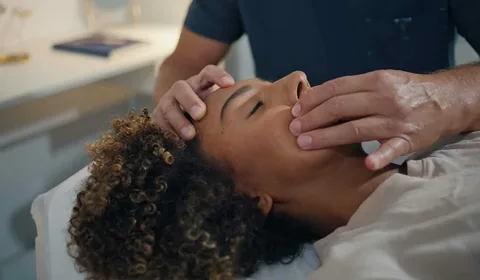
Manual therapy may be included when muscle tightness, tenderness, or movement restrictions contribute to jaw-related symptoms. A qualified physical therapist may use gentle hands-on techniques to address selected muscles around the jaw, face, neck, and upper shoulders. These techniques are intended to improve comfort and support movement when muscular restrictions are present. Treatment may also address related neck and upper-back limitations when the assessment suggests that these areas contribute to the patient's symptoms. The therapist adjusts the techniques according to individual needs, sensitivity, and response to treatment. Manual therapy is generally most useful when combined with appropriate exercises and education rather than used as the only treatment method. Patients should communicate any discomfort during a session so that the therapist can modify the approach. This individualized care helps keep rehabilitation focused on functional improvements and the patient's ability to move more comfortably.
The Connection Between Jaw Function, Neck Mobility, and Posture
The jaw does not work independently from the rest of the upper body. Muscles in the face, neck, shoulders, and upper back contribute to head positioning and movement coordination. Prolonged forward-head posture, extended computer use, and frequently looking down at mobile devices may increase muscular demands around the neck and shoulders. In some individuals, these habits may contribute to tension that accompanies jaw discomfort. Physical therapy may therefore include neck mobility exercises, upper-back strengthening, and posture education as part of a broader treatment plan. Patients can also learn how to arrange their workstations, position screens at comfortable heights, and take regular movement breaks. Improving awareness of posture may help reduce unnecessary strain during daily activities. Although posture is not the cause of every TMJ problem, addressing related movement patterns can be valuable when these factors are identified during an assessment.
Daily Habits That Can Support Jaw Comfort
Small changes in everyday habits may help reduce unnecessary stress on the jaw joints and surrounding muscles. Repeated clenching, teeth grinding, chewing gum for extended periods, biting hard objects, and frequently eating very tough foods can increase demands on the jaw. Patients may benefit from recognizing when these habits occur and learning strategies to reduce them. During periods of increased discomfort, temporarily choosing softer foods may make chewing more manageable. Relaxation exercises and awareness of jaw positioning can also help individuals avoid keeping their muscles unnecessarily tense throughout the day. Stress may contribute to clenching in some people, making appropriate relaxation practices an additional consideration. When teeth grinding, dental problems, or bite-related concerns are suspected, consultation with a dentist may be recommended. These daily adjustments can complement professional rehabilitation and help patients maintain healthier movement habits between appointments.
Choosing the Right Rehabilitation Provider
Selecting an appropriate physical therapy provider is an important step for individuals experiencing persistent jaw discomfort or movement restrictions. Patients should look for a qualified professional who understands temporomandibular disorders and can evaluate the relationship between jaw movement, muscle function, posture, and neck mobility. A useful treatment experience includes a detailed assessment, clearly explained goals, and a rehabilitation plan that reflects the patient's individual needs. Patients should also feel comfortable discussing their symptoms, asking questions, and reporting changes throughout treatment. When searching for TMJ Physical Therapy Near Me, it is helpful to ask whether the provider has experience treating jaw-related conditions and how progress is monitored. Communication with dentists, physicians, or other healthcare professionals may also be appropriate when symptoms suggest concerns beyond the scope of physical therapy. Choosing a provider who emphasizes individualized care can help patients understand their treatment options and participate confidently in the recovery process.
Conclusion
TMJ-related discomfort can affect several aspects of daily life, but a structured rehabilitation program may help improve movement, reduce muscular tension, and support better jaw function. Physical therapy can combine targeted exercises, appropriate manual techniques, posture guidance, and practical lifestyle recommendations to address individual functional limitations. Because symptoms and contributing factors vary, professional assessment is essential for selecting suitable treatment strategies and setting realistic recovery goals. TMJ Physical Therapy Near Me can be a useful starting point for individuals seeking professional guidance and personalized rehabilitation for jaw-related concerns. With consistent participation, appropriate home care, and communication with healthcare providers, patients can work toward improved comfort and greater confidence in everyday activities.

 Arabic
 French
 Spanish
 Portuguese
 Deutsch
 Turkish
 Dutch
 Italiano
 Russian
 Romaian
 Portuguese (Brazil)
 Greek