


I Got Addicted to PokéRogue After “One More Run” (and I’m Not Even Sorry)
The first time I booted up Pokerogue , I honestly didn’t expect much. I figured it would be a quick Pokémon-style diversion—pick a team, fight some battles, move on. Instead, I ended up in this weirdly tense cycle of “play, lose, learn, repeat.” My first few runs felt less like strategic Pokémon battles and more like watching my plan crumble in real time… in between laughing at how fast things escalated.
The PokéRogue loop: battles, biomes, and a team that actually matters
What surprised me about PokéRogue right away is that it mixes Pokémon battles with roguelite progression. Each run throws you into different encounters—wild Pokémon, trainers, and eventually those tougher boss-style fights—often across changing biomes. It’s not “one story path,” it’s more like the game keeps re-rolling your situation and testing how flexible you can be.
I also noticed the run flow nudges you to think ahead, because you’re not just choosing “who looks cool.” Even the starter Pokémon have costs, and your team composition depends on planning around that value system. My mistake on run one was picking what I thought was a strong lineup… then realizing I’d accidentally created a team that couldn’t cover problems that showed up later in the run.
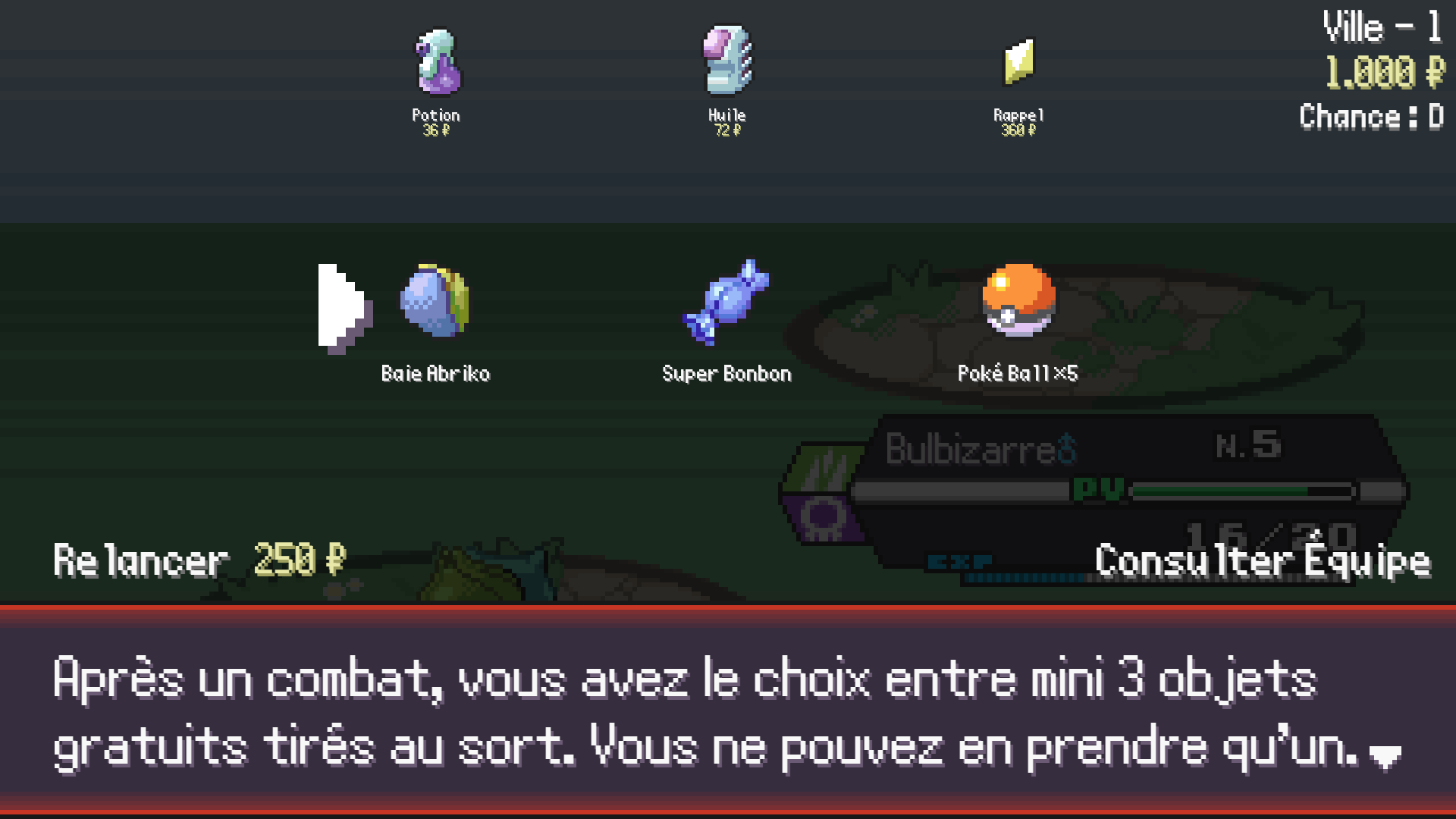
And healing? Yeah, I learned that the hard way. There aren’t traditional Pokémon Centers in PokéRogue, so you rely heavily on items you find or earn. Once I started treating items like part of my strategy instead of “stuff I’ll use later,” runs felt less doomed.
Catching Pokémon and building toward something bigger
Catching Pokémon during a run changed the whole vibe for me. It’s not just “cool, I caught it”—it actually contributes to future progression. Over time, I began to care about what I captured, not only because it helps right now, but because it can strengthen what I’m able to pick later as a starter Pokémon.
I also got more aware of the RPG-y details: abilities, different moves, and how stats/IVs influence survival and damage. I’ll be honest—my first attempts were pretty “vibes-based.” Then I started getting taken apart by trainers and boss encounters that felt like they were asking, “Okay, but do you understand your Pokémon yet?”
The item effect: sometimes your run is decided by what you grab
Items can genuinely swing everything. I used to grab whatever looked useful and hope for the best. After a couple failed runs, I started paying attention to how certain rewards changed my options—whether it was improving survivability, making captures easier, or letting me push through tougher segments.
That’s where PokéRogue really hooked me: it makes you adapt constantly. You can’t just autopilot your way through.
Daily Run: the challenge that keeps the game fresh
Then I tried Daily Run. It’s a recurring challenge with a shared daily setup, which made it feel like I was stepping into the same test as other players—same concept, different outcomes depending on your choices. I liked that it wasn’t just “endless mode energy,” but a focused attempt that still scratches the roguelite itch.
Using the PokéRogue Dex (instead of guessing)
At some point, I stopped trusting my memory and started using the Pokerogue Dex . It’s not something I consult every single fight, but whenever I’m stuck deciding between Pokémon, I check it. What I like is that it helps me confirm stuff I’d otherwise be guessing about—like Pokémon types, abilities, base stats, starter costs, evolution conditions, available moves, and even biome information (basically where certain Pokémon show up).
That changed how I build a Pokémon team. I’m no longer just picking “the strongest thing I recognize.” I’m checking whether a Pokémon’s evolution path and move options actually fit the run I’m trying to survive.
Lessons I learned the messy way (so you don’t have to)
After enough wipeouts, a few things clicked for me:
I stopped clinging to one plan—because runs change, and your team has to change with them.
I started respecting starter costs more seriously, since they limit what you can bring.
I started using items with intention, not panic-hoarding.
And I became way more willing to catch Pokémon I initially overlooked, because future runs can benefit from what you’ve built.
Final thoughts: come try PokéRogue (and play together)
I didn’t expect to get attached to PokéRogue, especially considering it’s a fan-made Pokémon browser game built around this “battle now, grow for later” loop. But here I am—closing the game after a loss and immediately thinking, “Okay… next run, I’ll do it differently.”
If you’ve been curious, don’t overthink it. Jump in, try a few runs, and use the PokéRogue Dex when you need clarity instead of guessing. Then, if you’re down, grab a friend and share your catches and team ideas—because nothing beats comparing what messed you up and what finally clicked.

 Arabic
 French
 Spanish
 Portuguese
 Deutsch
 Turkish
 Dutch
Dutch
 Italiano
 Russian
 Romaian
 Portuguese (Brazil)
 Greek
Greek