


The Technical SEO Checklist We Run on Every New Client
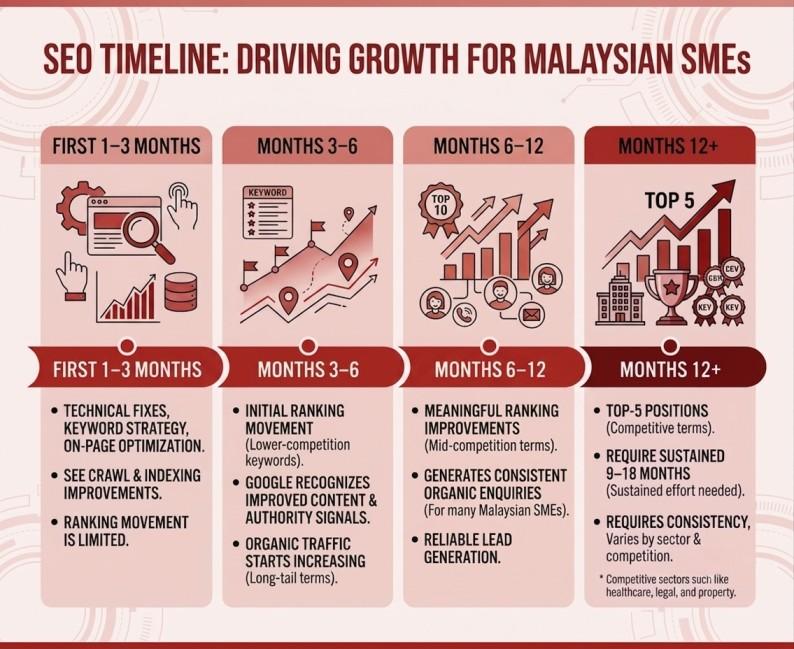
When a new client comes to us, the first thing we do isn't keyword research or content planning—it's a full technical SEO audit. Because no matter how strong your content strategy is, it won't deliver results if the foundations are broken. Working with an experienced SEO company means addressing the structural issues that quietly undermine rankings before anything else.
This checklist covers everything we review when onboarding a new client: from site speed and crawlability to schema markup and security. It's the same process we've used to help businesses recover lost rankings, improve organic traffic, and build a site that search engines actually want to index. By the end of this post, you'll know exactly what to look for—and where most websites tend to fall short.
Site Speed, Mobile Responsiveness, and Core Web Vitals
Google uses page experience as a ranking signal, which means slow, clunky websites pay the price in the SERPs. The first thing we check is Core Web Vitals—Google's set of metrics that measure loading speed (Largest Contentful Paint), interactivity (Interaction to Next Paint), and visual stability (Cumulative Layout Shift).
Alongside this, we run a full mobile responsiveness check. With mobile accounting for the majority of global web traffic, a site that doesn't adapt to smaller screens is leaving rankings on the table. Common fixes at this stage include compressing images, enabling browser caching, minifying CSS and JavaScript, and switching to a faster hosting provider where necessary.
XML Sitemaps, Robots.txt, and URL Structure
These three elements form the backbone of how search engines discover and interpret your site. An XML sitemap tells Google which pages to crawl; a misconfigured one can mean important pages are never indexed. We check that sitemaps are submitted to Google Search Console, kept up to date, and free of broken or redirected URLs.
The robots.txt file, meanwhile, tells crawlers which pages to avoid. It's a small file that can cause enormous problems when incorrectly configured—we've seen clients accidentally blocking their entire site from being indexed.
URL structure is the final piece here. Clean, descriptive URLs improve both usability and crawlability. We flag anything that's overly complex, contains unnecessary parameters, or lacks a consistent canonicalisation strategy to prevent duplicate content issues.
Crawlability, Indexation, and Internal Linking
Getting search engines to crawl your site efficiently is half the battle. We use tools like Screaming Frog and Google Search Console to identify crawl errors, blocked resources, and pages that are inadvertently excluded from the index.
Internal linking is often underestimated. A well-structured internal linking strategy helps Google understand which pages are most important and distributes link equity throughout the site. Poor site architecture—think orphaned pages with no internal links pointing to them—means valuable content simply won't rank as well as it should.
We also audit for duplicate content at this stage. Whether it's caused by trailing slashes, HTTP vs HTTPS variations, or www vs non-www versions of the site, duplicate content dilutes ranking potential and confuses search engines about which version to prioritise.
On-Page Technical Factors: Meta Tags, Schema, and Image Optimisation
Technical SEO isn't just about what happens under the hood—it also covers the on-page elements that influence how your content appears in search results.
We audit every page's meta titles and descriptions to ensure they're within character limits, include target keywords naturally, and are written to encourage clicks. Duplicate or missing meta tags are flagged and rewritten.
Schema markup is next. Structured data helps search engines understand the context of your content and can unlock rich results—star ratings, FAQs, event details—that significantly improve click-through rates. We identify which schema types are relevant to each client and implement them where they're missing.
Image optimisation rounds out this section. Oversized images slow down page load times, and missing alt text is a missed opportunity for both accessibility and SEO. We compress images, implement lazy loading, and ensure every image has a descriptive, keyword-relevant alt attribute.
Site Health: HTTPS, Broken Links, and Security
A secure site is a trustworthy site—both to users and to Google. We verify that SSL certificates are correctly installed and that all pages are served over HTTPS without mixed content warnings.
From there, we run a broken link audit. Broken internal links damage user experience and waste crawl budget; broken external links can harm credibility. Both are flagged and fixed.
We also check for 404 errors and ensure that redirect chains are resolved. A page that bounces through multiple redirects before landing loses both authority and speed. Finally, we conduct a basic security audit to identify any signs of malware or suspicious code that could trigger manual penalties from Google.
Monitoring, Reporting, and Ongoing Maintenance
Technical SEO isn't a one-time task—it's an ongoing commitment. The final stage of our checklist ensures clients have the right tools in place to track progress and catch new issues before they escalate.
We set up or audit Google Search Console and Google Analytics, ensuring data is flowing correctly and key reports are configured. From there, we establish a regular reporting cadence so clients can see how their organic visibility is trending over time.
Staying current with Google's algorithm updates is equally important. Core updates can shift rankings significantly, and what worked 12 months ago may need revisiting today. Our ongoing maintenance schedule includes quarterly technical audits, monthly crawl reports, and continuous monitoring of Core Web Vitals performance.
Build on Solid Ground—Then Scale
Technical SEO is the foundation everything else sits on. Get it wrong and your content, backlinks, and keyword strategy will all underperform. Get it right and you give every other element of your marketing a genuine chance to succeed.
The checklist outlined above represents the core of what we review for every new client—and it's the same process that's helped businesses across industries recover rankings, reduce crawl waste, and grow organic traffic sustainably.
If you'd like to know how your site holds up, we offer a comprehensive technical SEO audit that covers every element on this list. Get in touch today to find out where the opportunities are and what it would take to fix them.

 Arabic
 French
 Spanish
 Portuguese
 Deutsch
 Turkish
 Dutch
Dutch
 Italiano
 Russian
 Romaian
 Portuguese (Brazil)
 Greek
Greek