


PTO Solar Approval: What Actually Slows Projects Down
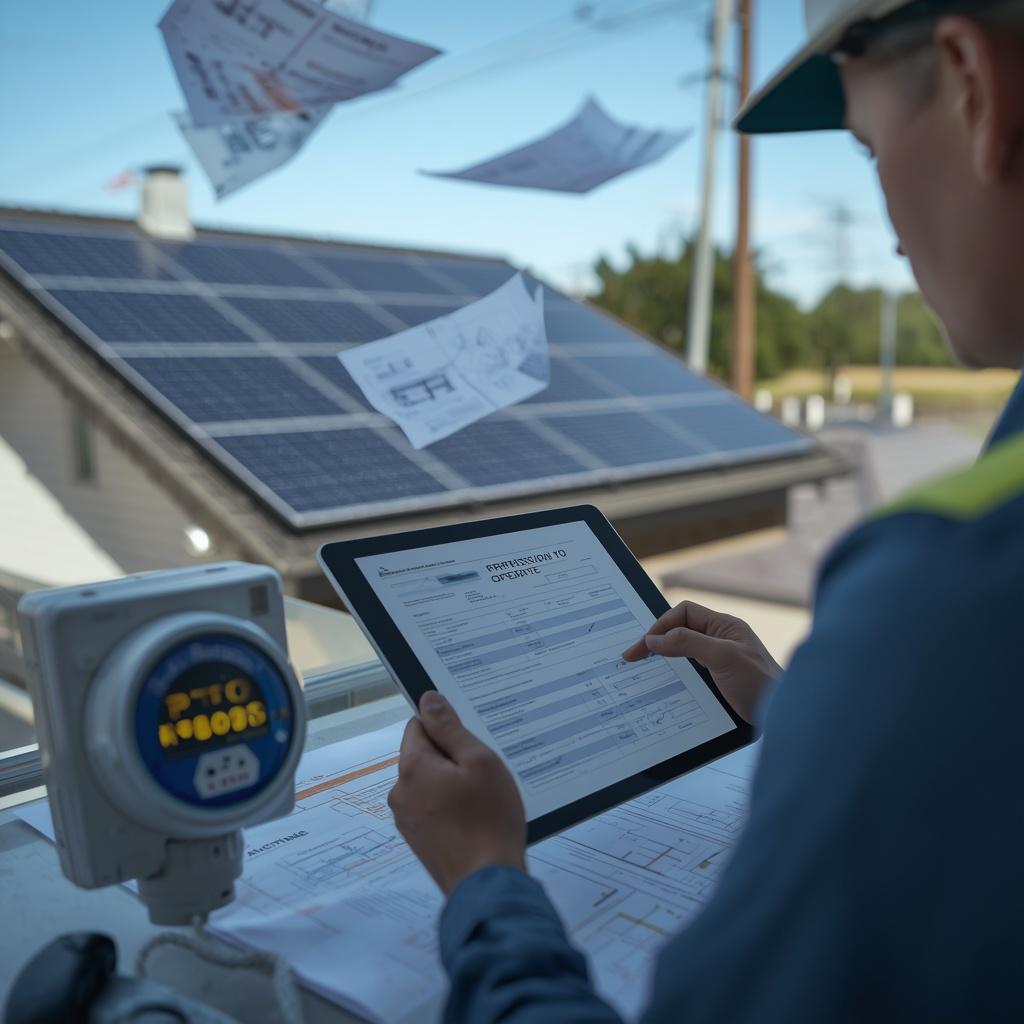
A system can pass city inspection, look flawless on the roof, and still sit dark for weeks because of one missing step: pto solar approval. This final utility sign-off, often shortened to permission to operate, is the moment a system is legally allowed to send power to the grid, and it trips up more projects than most installers expect. At PTOEdge, this stage gets treated as seriously as the design phase itself, since a rejected or incomplete submission can undo weeks of otherwise smooth progress. Because utilities work from their own separate checklist, understanding what they actually want to see is often the difference between a system that activates on schedule and one that stalls indefinitely.
Homeowners tend to assume that once a city inspector signs off, the system is ready to go, but utilities run an entirely independent review. They verify metering equipment, interconnection agreements, and safety documentation before granting final approval, and they rarely explain what's missing beyond a generic rejection notice. Consequently, installers who understand utility expectations upfront tend to move through this stage far faster than those who treat it as an afterthought.
Before You Read Further, Fix This First
If your team keeps losing days to utility back-and-forth, the fastest fix is usually a conversation, not another spreadsheet. Book a quick call with the PTOEdge team and find out where your current process is quietly costing you time.
Understanding the Utility's Side of the Process
Utilities aren't trying to be difficult; they're protecting grid stability, and that means every interconnected system has to meet specific technical standards. Reviewers check that the installed equipment matches what was originally proposed, that metering is configured correctly, and that all safety disconnects are properly labeled. Because these requirements often differ from what a city building department checks, a plan set that satisfies local code doesn't automatically satisfy the utility.
Why Solar Plan Sets Still Matter at This Stage
Even after construction wraps up, accurate solar plan sets continue to play a role, since utilities cross-reference the original design against the as-built system during final review. Discrepancies between what was submitted and what actually got installed are one of the most common reasons interconnection gets delayed. As a result, keeping solar plan sets updated throughout construction, rather than treating them as a one-time submission, helps this final review go far more smoothly.
Structural and electrical accuracy matters just as much at this stage as it did during permitting, particularly for larger residential and commercial arrays. Precise pv plan sets give utility engineers confidence that the interconnection won't create unexpected load issues on the local grid. Keeping pv plan sets consistent from the first submission through the final inspection avoids the kind of last-minute scrambling that pushes activation dates back by weeks.
The Paperwork Utilities Actually Request
Every utility has its own interconnection portal, its own required forms, and its own turnaround expectations, which makes this stage feel inconsistent even to experienced installers. A complete submission usually needs the final inspection card, an updated single-line diagram, proof of insurance, and sometimes a copy of the signed interconnection agreement. Missing just one of these documents is often enough to send an application to the back of the review queue.
Where a Solar Stamping Service Fits Into Final Review
If any design changes happened during construction, updated drawings may need a fresh engineering signature before the utility will accept them. This is where a dedicated solar stamping service becomes useful again, since it confirms the as-built system still meets structural and electrical code even after field adjustments. Leaning on an established solar stamping service keeps this step from becoming a bottleneck when timelines are already tight.
Solar panel stamping isn't limited to the initial design phase, either, because plenty of jurisdictions require re-stamped drawings whenever equipment substitutions occur mid-project. Handling Solar panel stamping correctly the second time around, if it's needed, prevents a small field change from turning into a major utility delay. Coordinating Solar panel stamping alongside the final inspection keeps every document aligned before it reaches a reviewer's desk.
Local Rules Still Shape the Timeline
Even at the utility stage, geography plays a bigger role than most people realize, since investor-owned utilities, municipal utilities, and co-ops all operate under different regulatory frameworks. What counts as a complete submission in one service territory might be missing key elements somewhere else entirely. Because of this, installers working across multiple regions need documentation practices flexible enough to satisfy several different reviewers at once.
Where PTO Solar Support Becomes Essential
This regional variation is exactly why dependable pto solar support matters so much for installers scaling into new markets. Rather than relearning each utility's quirks from scratch, working with a team that already tracks these differences through pto solar support keeps submissions moving even in unfamiliar territories. That kind of consistency becomes increasingly valuable as project volume grows and timelines get tighter.
For installers based in Southern California, thorough solar permit services San Diego teams offer a useful case study, since that region layers coastal wind requirements and fire code amendments on top of standard utility rules. Partnering with solar permit services San Diego professionals rely on shows how much local familiarity can shorten an otherwise unpredictable review cycle.
From Proposal to Interconnection: Keeping Everything Aligned
Long before utility review even begins, the numbers a homeowner agreed to need to match what actually gets built and interconnected. A carefully prepared solar sales proposal sets accurate expectations about system size, projected savings, and estimated timelines from day one. Because mismatches between the original solar sales proposal and the final installed system can raise red flags during utility review, keeping these documents aligned protects both the installer's reputation and the homeowner's trust.
Once a project reaches the design phase, Permit Design & AHJ Compliance work still needs to anticipate how the utility will eventually review the system, not just how the city will. Building this awareness into Permit Design & AHJ Compliance from the start prevents rework later, since utility-specific requirements are far easier to satisfy when they're planned for early rather than patched in after the fact.
Comprehensive PTO Services and Why They Matter
Given how many moving pieces exist in this final stage, many installers now rely on comprehensive pto services to manage the entire interconnection process rather than handling it internally. A dedicated pto services team tracks utility-specific portals, follows up on stalled applications, and catches missing documentation before it causes a rejection. That proactive monitoring often shaves weeks off a timeline that would otherwise depend on a homeowner or contractor remembering to follow up.
Broader permission to operate services extend beyond just paperwork submission, since they also involve troubleshooting rejected applications and resubmitting corrected documentation quickly. Choosing established permission to operate services means someone is actively managing communication with the utility, rather than leaving the homeowner to navigate an unfamiliar portal alone.
Related Permitting and Compliance Topics Worth Knowing
Beyond the utility stage itself, several related topics tend to come up constantly for both installers and homeowners navigating solar projects. Knowing where to find reliable guidance on these subjects saves time and prevents costly assumptions.
- PTO application paperwork should be gathered early rather than assembled at the last minute, since utilities frequently request supporting documents that take time to compile; a well-organized PTO application process avoids this scramble entirely.
- Solar Installer Growth depends heavily on predictable turnaround times, since installers who can promise reliable activation dates win more referrals; supporting sustainable Solar Installer Growth requires infrastructure that scales smoothly with demand.
- A general solar permit service review determines whether a project needs a full permit at all, and this comprehensive solar permit service guide explains when exceptions apply.
- Broader pv permit services knowledge helps installers standardize submissions across multiple jurisdictions, and this same pv permit services resource covers the fundamentals every team should know.
- Understanding solar net metering helps homeowners see how their system's production translates into actual bill credits, and this guide to solar net metering explains the mechanics clearly.
- Because solar panels net metering rules vary by state and utility, checking current solar panels net metering policies before finalizing a proposal keeps savings estimates realistic.
- Projects that include storage need to plan for battery energy storage permitting early, since fire code requirements for battery placement have grown stricter in many areas; this breakdown of battery energy storage permitting covers what to expect.
- Homeowners in governed communities should also review hoa solar panel guidelines before installation begins, since aesthetic restrictions can affect panel placement even after a permit is approved; this resource on hoa solar panel guidelines explains what's typically allowed.
Bringing the Final Stage Together
Reaching permission to operate isn't the end of a checklist; it's the culmination of every accurate drawing, every correctly stamped document, and every properly filed form that came before it. Projects that struggle at this stage usually trace their problems back to inconsistencies introduced earlier, whether in the original design, a mid-project change, or a proposal that didn't quite match the final build. Because these pieces build on each other, treating documentation as an ongoing responsibility, rather than a series of disconnected tasks, produces far more predictable outcomes.
Ultimately, the goal is a system that activates on time and starts delivering savings without unnecessary delay. Careful, consistent handling of paperwork throughout the entire process, from proposal to final interconnection, is what separates installers who scale smoothly from those who stay stuck fighting the same avoidable delays project after project.
Tired of chasing utility portals for status updates? See how PTOEdge handles interconnection from start to finish and get a clearer picture of what a managed process actually looks like.
Frequently Asked Questions
What does PTO mean in solar projects?
PTO stands for permission to operate, the final utility approval that legally allows a solar system to send power to the grid.
Why would a utility reject a PTO application?
Utilities commonly reject applications due to mismatched equipment details, missing inspection documents, or incomplete interconnection paperwork.
Do I need updated plan sets if equipment changes during installation?
Yes, most utilities require updated plan sets and possibly a new engineering stamp whenever installed equipment differs from the original submission.
How does net metering affect my final utility approval?
Net metering itself doesn't delay PTO approval, but the utility does verify that metering equipment is configured correctly before granting it.
Can HOA restrictions affect PTO timelines?
HOA approval typically happens before installation, so it doesn't usually affect the utility's PTO review once the system is built and inspected.
 Dutch
Dutch
 English
 Arabic
 French
 Spanish
 Portuguese
 Deutsch
 Turkish
 Italiano
 Russian
 Romaian
 Portuguese (Brazil)
 Greek
Greek