


Plant Chocolate Protein Powder Market Value to Exceed USD 4.2 Billion by 2036, Says FMI
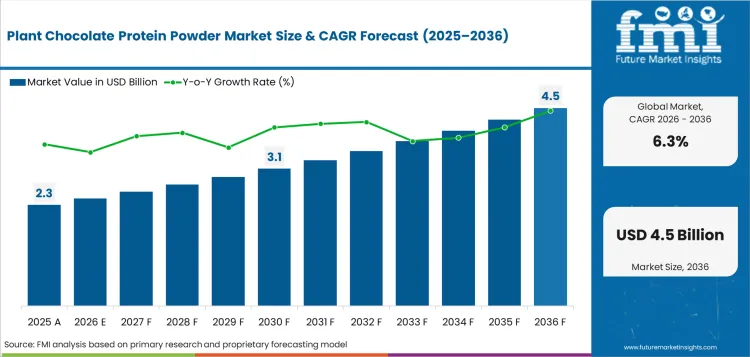
NEWARK, Del., June 9, 2026 — The global Plant Chocolate Protein Powder Market is projected to expand significantly through 2036, reaching USD 4.20 billion by 2036, driven by growing demand for vegan sports nutrition, dairy-free protein supplementation, and plant-based wellness products. According to Future Market Insights (FMI), the market is expected to grow at a CAGR of 6.3% between 2026 and 2036, creating an incremental opportunity of approximately USD 1.92 billion during the forecast period.
The increasing adoption of plant-based diets, rising lactose intolerance awareness, and growing interest in sustainable protein sources are contributing to robust demand for chocolate-flavored plant protein powders worldwide. Manufacturers continue to innovate with improved taste, texture, amino acid profiles, and clean-label formulations to attract fitness enthusiasts, athletes, and health-conscious consumers.
Chocolate remains the preferred flavor category within plant protein powders due to its superior ability to mask earthy notes associated with pea, rice, and seed proteins while supporting repeat purchases and consumer satisfaction.
👉 Get Detailed Market Forecasts, Competitive Benchmarking, and Pricing Trends : https://www.futuremarketinsights.com/reports/sample/rep-gb-33036
Key Plant Chocolate Protein Powder Market Highlights
• Market Value (2025): USD 2.18 Billion
• Forecast Market Value (2036): USD 4.20 Billion
• CAGR (2026 to 2036): 6.3%
• Incremental Opportunity (2026–2036): USD 1.92 Billion
• Leading Protein Source: Pea Protein Blends
• Pea Protein Blend Share (2026): 41.0%
• Leading Claim Type: Organic
• Organic Claim Share (2026): 36.0%
• Leading Packaging Format: Tubs
• Tub Packaging Share (2026): 62.0%
• Leading Distribution Channel: E-commerce
• E-commerce Share (2026): 46.0%
• Fastest Growing Markets: India (8.4%) and China (7.9%)
• Key Market Participants: Orgain, Vega, Garden of Life, OWYN, PlantFusion, Sprout Living
Growing consumer preference for sustainable nutrition, clean-label ingredients, and dairy-free protein alternatives is expected to support long-term market expansion through 2036.
Rising Demand for Dairy-Free Protein Supplements Supports Market Growth
The plant chocolate protein powder market is benefiting from increasing consumer demand for dairy-free protein solutions that support active lifestyles, weight management, and everyday nutrition.
As vegan, flexitarian, and lactose-sensitive consumers seek alternatives to whey and casein protein, plant-based formulations continue gaining popularity. Chocolate flavor remains a key purchase driver because it effectively improves taste and texture while enhancing consumer acceptance.
Manufacturers are increasingly introducing multi-source protein blends that combine pea, rice, hemp, pumpkin seed, and soy proteins to improve amino acid coverage and product functionality.
Analyst Viewpoint
“Plant chocolate protein powder is not simply a vegan alternative to whey protein. Consumer purchasing decisions increasingly depend on taste, texture, ingredient transparency, and testing credibility. Brands that successfully combine superior flavor performance with verified safety standards and nutritional quality will be best positioned to strengthen consumer trust and long-term loyalty,” said Nandini Roy Choudhury, Principal Consultant at Future Market Insights.
Technological Innovations Driving Product Development
Manufacturers are investing heavily in formulation technologies, ingredient sourcing programs, and quality assurance systems to improve product performance and consumer confidence.
Key innovations include:
• Advanced flavor masking technologies
• Multi-source protein optimization systems
• Improved amino acid balancing techniques
• Heavy-metal screening and testing programs
• Enhanced cocoa sourcing protocols
• Clean-label formulation development
• Organic ingredient certification programs
• Sustainable packaging initiatives
• AI-enabled quality monitoring systems
• Subscription-based e-commerce fulfillment models
These advancements are helping manufacturers improve taste, consistency, and product transparency while strengthening competitiveness across the plant protein category.
Regional Market Analysis
North America
North America remains one of the largest markets for plant chocolate protein powder due to high sports nutrition consumption, growing vegan populations, and widespread adoption of dietary supplements.
The United States is projected to expand at a CAGR of 6.2% through 2036, supported by strong demand for plant-based performance nutrition and increasing emphasis on product testing and ingredient transparency.
Europe
Europe continues to maintain a strong position in the global market due to growing consumer interest in sustainable nutrition, organic products, and clean-label formulations.
Germany is expected to expand at 5.5% CAGR through 2036, supported by premium wellness trends and increasing demand for plant-based protein supplementation.
Asia Pacific
Asia Pacific is emerging as the fastest-growing region as urban consumers increasingly adopt fitness-focused lifestyles and protein supplementation.
India is forecast to grow at 8.4% CAGR, while China is expected to expand at 7.9% CAGR through 2036, driven by rising sports nutrition awareness, growing vegetarian populations, and expanding e-commerce penetration.
Segment Analysis
Pea Protein Blends Lead Market Demand
The Pea Protein Blend segment is expected to account for approximately 41.0% of total market demand in 2026.
The segment benefits from:
• Neutral flavor profile
• Strong compatibility with chocolate formulations
• Broad dairy-free appeal
• Improved digestibility
• Growing sports nutrition demand
Pea protein continues to dominate plant-based protein formulations due to its versatility and favorable nutritional profile.
Organic Claims Lead Consumer Preference
The Organic segment is projected to account for approximately 36.0% of market demand in 2026.
Growth is supported by:
• Rising clean-label preferences
• Consumer trust in certified ingredients
• Premium product positioning
• Growing health-conscious demographics
• Increased transparency expectations
Organic certification continues to serve as a key differentiator across plant protein brands.
Tubs Dominate Packaging Formats
The Tub Packaging segment is expected to account for approximately 62.0% of market demand in 2026.
The segment benefits from:
• Lower cost per serving
• Convenience for daily users
• Improved product storage
• Strong subscription compatibility
• High-volume purchasing behavior
Tub formats remain the preferred packaging option among regular protein powder consumers.
E-commerce Leads Distribution Channels
The E-commerce segment is expected to account for approximately 46.0% of market demand in 2026.
The segment benefits from:
• Subscription purchasing models
• Direct-to-consumer sales growth
• Wider product availability
• Personalized marketing capabilities
• Improved customer retention
Online channels continue to strengthen their role as the primary purchasing destination for protein powder consumers.
Supply Chain Expansion Creates New Opportunities
Growing investments in plant protein processing, cocoa sourcing programs, ingredient traceability, and direct-to-consumer fulfillment infrastructure are creating significant opportunities for market participants.
Emerging opportunities include:
• Organic product development
• Multi-source protein innovations
• Functional wellness formulations
• Sustainable packaging solutions
• Subscription commerce expansion
• Personalized nutrition products
• Third-party testing certifications
• Emerging market penetration strategies
Companies investing in taste optimization, transparent testing programs, and clean-label innovation are expected to strengthen their competitive positions throughout the forecast period.
Competitive Landscape
The global plant chocolate protein powder market remains highly competitive, with companies focusing on flavor performance, nutritional quality, ingredient transparency, and distribution expansion.
Key Market Participants
Major Global Players
• Orgain
• Vega
• Garden of Life
• OWYN
• PlantFusion
• Sprout Living
• Sunwarrior
• Aloha
• Nutiva
• Vivo Life
Industry participants continue investing in:
• Product portfolio expansion
• Organic certification programs
• Flavor innovation
• E-commerce growth strategies
• Third-party testing initiatives
• Global market expansion
Recent Industry Developments
• Vega introduced updated plant-based protein formulations focused on taste and performance optimization.
• Orgain expanded its chocolate plant protein portfolio with multiple protein-content offerings.
• Leading brands increased investment in third-party testing and heavy-metal monitoring programs.
• Industry participants continue introducing multi-source protein blends to improve amino acid profiles and consumer acceptance.
Market Drivers
Key factors accelerating market growth include:
• Rising vegan and flexitarian populations
• Growing dairy-free nutrition demand
• Expansion of sports nutrition consumption
• Increasing health and wellness awareness
• Growing e-commerce penetration
• Improved flavor technologies
• Rising clean-label preferences
• Expansion of organic product offerings
Challenges Facing Industry Participants
Despite strong growth prospects, the market faces several challenges:
• Heavy-metal testing concerns
• Cocoa price volatility
• Raw material sourcing fluctuations
• Regulatory compliance requirements
• Taste and texture optimization challenges
• Competitive pricing pressures
• Consumer skepticism regarding plant protein quality
Nevertheless, ongoing investments in formulation science, testing transparency, ingredient innovation, and sustainable sourcing are expected to support long-term market growth through 2036.
About Future Market Insights (FMI)
Future Market Insights is a leading provider of market intelligence, consulting services, and syndicated research reports. FMI delivers actionable insights across food and beverage, consumer goods, healthcare, chemicals, biotechnology, industrial products, and emerging technologies, helping organizations identify growth opportunities and make informed strategic decisions in rapidly evolving markets.
Contact
Future Market Insights Inc.
Christiana Corporate
200 Continental Drive, Suite 401
Newark, Delaware 19713, USA
Email: sales@futuremarketinsights.com
Website: www.futuremarketinsights.com
 Spanish
 English
 Arabic
 French
 Portuguese
 Deutsch
 Turkish
 Dutch
 Italiano
 Russian
 Romaian
 Portuguese (Brazil)
 Greek